What Time Of Year Are Whales In Hervey Bay?
Humpback whales rest in Hervey Bay between July and October, with operator season windows inside that span. Here is how the dates, prices and cruise formats compare.
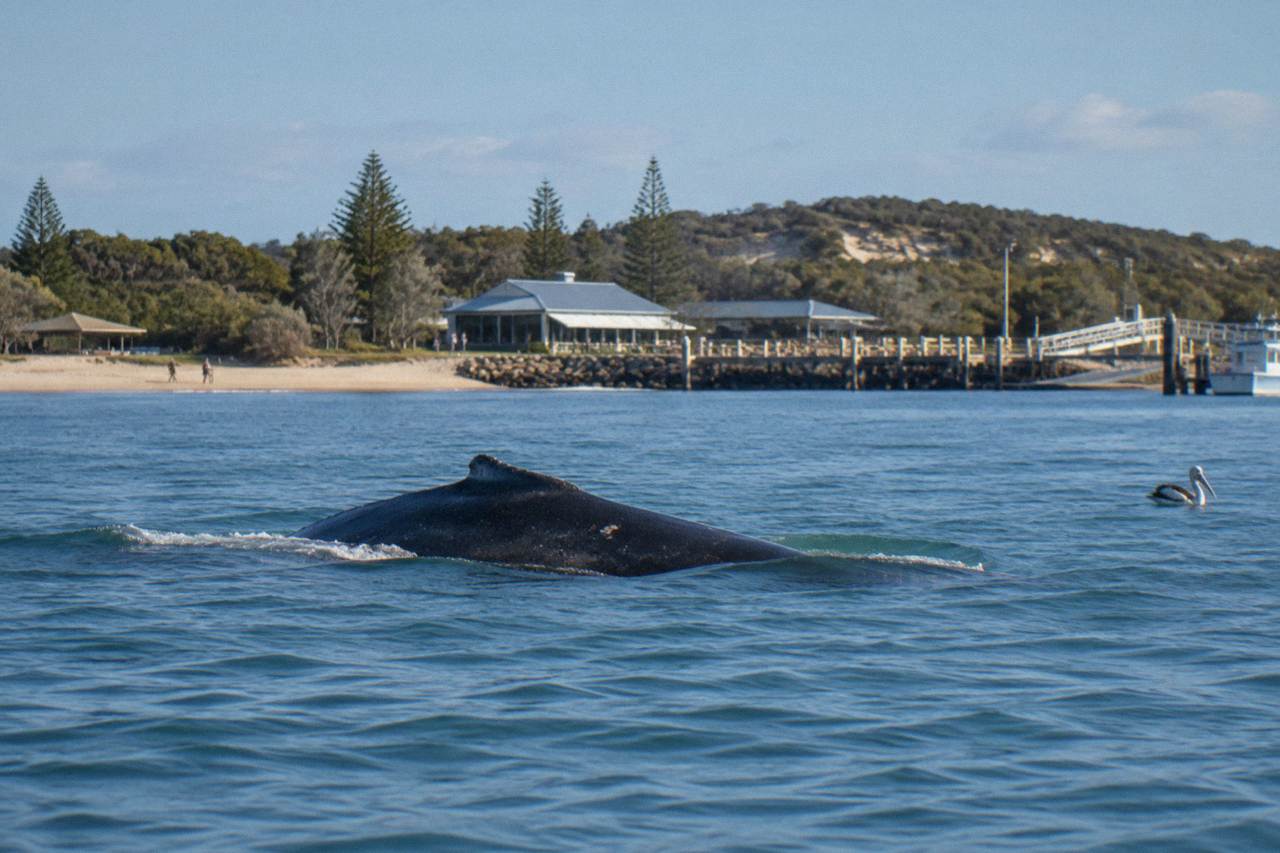
Humpback whales do not simply pass Hervey Bay on their way north. They pull in, rest, and turn the bay into a nursery stopover, which is why this stretch of the Queensland coast has a whale season rather than a whale moment. The season runs inside July to October, with the broader migration visible from June to November, and each cruise operator publishes its own window inside that span. Those windows, not the whales, decide which trips are bookable on any given date.
The practical answer sits with the operators. The half-day whale cruise on the Tasman Venture catamaran, the Spirit of Hervey Bay cruise and the remote island and whale experience by boat all run on operator-published schedules, and all of them include the months when the bay is at its best. This article lays out the season dates, what changes between peak and shoulder weeks, what a cruise costs, and the rules that shape every trip on the water.
What Time Of Year Are Whales In Hervey Bay?
Humpback whales rest in Hervey Bay from July to October, with the peak in August and September. Operators publish their own windows inside that span: one runs July 12 to October 31, another July 11 to October 25, a third the full July 1 to October 31. Broader migration activity shows from June to November, but the bay's famous close encounters cluster in the middle four months.
The reason Hervey Bay works differently from other whale watching ports is geography. The bay sits sheltered behind the top of K'gari, and the migrating humpbacks swing in close to the island's western beach to rest on their southern journey. Rather than blowing past at speed, they linger. One industry figure puts more than 30 percent of the roughly 21,000 east coast migrating humpbacks resting in Hervey Bay across July to October, which is why a single half-day cruise can reasonably expect whales rather than hope for them.
That resting behaviour is what the local cruise fleet is built around. The four and a half hour Spirit of Hervey Bay catamaran cruise, the roughly four hour Tasman Venture whale cruise and the nine hour remote island and whale experience by boat all depart from Hervey Bay itself, so the season dates on their live listings are the dates that matter for planning. None of the whale cruises on this roster depart from Brisbane; if you are starting there, the honest answer is that you drive or fly to Hervey Bay first, because that is where the boats and the whales both are.
Sightings are wild, and no honest article will promise a whale on a given day. What the season dates do promise is availability: outside the operator windows, the whale cruises simply do not run, and the booking pages show nothing to book. Inside them, you are choosing between formats, group sizes and time on the water, which is what the rest of this article compares.
Why The Bay Gets Its Own Whale Season
Hervey Bay is a rest stop, not a corridor. The humpbacks pause inside the sheltered water west of K'gari on their southern migration, often with calves, and that pause compresses the action into a dependable July to October window. The peak lands in August and September, when mother and calf pairs dominate the sightings and the boats run at their fullest.
The southern migration is the key. Humpbacks travel north past the Queensland coast through winter to breed, and the animals heading back south with newborn calves take the sheltered route behind K'gari to feed and rest. A calf born weeks earlier needs calm water to build strength before the long swim to Antarctica, and the bay provides it. That is why the middle of the season, August and September, is when the close, slow, surface-level encounters the region is known for tend to happen.
The season also overlaps with the island side of the region. The nine hour remote island and whale experience by boat combines a K'gari beach landing with whale watching on the way, which only makes sense inside the same July to October window. Travellers pairing a K'gari day tour with a whale cruise should book both around the same weeks, because the coach day tours with lunch run year round while the whale boats do not. The Hervey Bay whale watching tours guide breaks the full cruise roster down boat by boat.
Timing a trip around the season is really a question of which weeks inside the window suit you, and that comes down to crowds, weather and what you want from the water. Before that, the operator windows deserve a proper look, because they are not identical.
How The Operator Season Windows Differ
The four main Hervey Bay operators publish overlapping but not identical windows. One runs July 12 to October 31, another July 11 to October 25, a third the full July 1 to October 31 with a sightings guarantee inside July 15 to October 9, and the fourth July 15 to October 15. Booking early or late in the season means checking which boats are still running.
The differences at the edges matter more than they look. A traveller set on the first week of July has fewer boats to choose from, because two of the four operators have not started yet. Someone visiting in late October faces the same squeeze in reverse. The middle of the season, August and September, is when every boat on the roster is on the water, and that is also when the peak encounters cluster.
| Operator | Published Season Window | Notes |
|---|---|---|
| Spirit of Hervey Bay | July 12 to October 31 | Peak August to September; sightings guarantee inside the season or next trip free |
| Tasman Venture | July 11 to October 25 | Roughly four hour half-day cruises |
| Pacific Whale Foundation | July 1 to October 31 | Guaranteed sightings July 15 to October 9; roughly three hour cruises |
| Hervey Bay Whale Watch | July 15 to October 15 | Half-day cruises on the Quick Cat II |
These windows are operator-published and can shift between seasons, so the live listing is always the final word on any given date. What the table shows is the shape of the season: everything converges on August and September, and the edges belong to whichever operators start first and finish last.
The Spirit of Hervey Bay cruise illustrates what a season window buys you. The catamaran runs about four and a half hours, carries pickup from central Hervey Bay, and is rated 4.8 from 526 reviews, from A$155 per person. One guest review on the listing describes the boat's many viewing points and a captain who was extremely informative, and adds that the whales came right up to the boat. That is the experience the window protects: a boat designed for viewing, running every day the whales are reliably in the bay.
What A Whale Cruise Actually Costs And Includes
The whale cruises on this roster run from A$119 to A$269 per person, and the price tracks time on the water rather than whale quality. A three hour research-led cruise starts at A$119, half-day catamaran cruises start at A$155, and the nine hour remote island and whale experience starts at A$269 with lunch included. Every one of them carries free cancellation, with the exact cutoff shown on each listing.
The price ladder is honest and simple. At the bottom, the three hour research-led whale cruise run by the Pacific Whale Foundation's eco operation, rated 4.8 from 735 reviews, from A$119 per person, suits travellers who want the whales without giving up a whole day. In the middle, the two half-day catamarans, the Tasman Venture cruise and the Spirit of Hervey Bay cruise, both from A$155, add an hour or more and a bigger boat. At the top, the nine hour remote island and whale experience by boat, rated 4.9 from 503 reviews, from A$269 per person, turns the cruise into a full day that includes a K'gari beach landing and lunch.
| Cruise | Duration | From Price | Rating | Pickup |
|---|---|---|---|---|
| Research-led whale cruise | About 3 hours | A$119 | 4.8 from 735 reviews | No |
| Half-day humpback cruise | 4 to 5 hours | A$120 | 4.8 from 255 reviews | No |
| Tasman Venture whale cruise | About 4 hours | A$155 | 4.9 from 590 reviews | Yes |
| Spirit of Hervey Bay cruise | About 4.5 hours | A$155 | 4.8 from 526 reviews | Yes |
| Remote island and whale experience | About 9 hours | A$269 | 4.9 from 503 reviews | Yes |
The Tasman Venture whale cruise is the one this site features for the season, and the guest reviews explain why. One describes learning so much about the whales from friendly staff, with a morning tea on board; another calls it an absolute must do and the great end to a honeymoon. The listing states pickup is included and lunch is not, so the roughly four hour runtime covers a half day on the water with the crew handling the interpretation. You can read the full breakdown on the Hervey Bay whale cruise page.
What the from-prices do not capture is the format difference. The nine hour remote island and whale experience is the only cruise on the roster that puts you on a K'gari beach as well as on the water, which makes it the pick for travellers who want the island and the whales in one booking rather than two. Everyone else is choosing between three hours and five, and between a boat with pickup and one where you make your own way to the marina.
Peak Weeks Versus Shoulder Weeks
Peak season is August to September, when every operator is running and mother and calf pairs dominate the bay. Shoulder weeks in July and October mean fewer boats, smaller crowds and a real chance of the same encounters, at the cost of more schedule risk at the very edges of each operator's window. There is no bad month inside the season, only trade-offs. If you're weighing those trade-offs against weather, crowds and stinger season on K'gari, our month-by-month guide to the best time to visit Fraser Island covers the whole picture.
The peak is popular for a reason. August and September combine the highest concentration of resting whales with mild winter weather, and the Queensland school holiday break in late June and early July sits just before it, so the peak weeks avoid the biggest family crowds while catching the best wildlife weeks. Hervey Bay's winter climate helps too: the long-term averages put July's mean maximum at 21.8 C, which is pleasant boat weather by almost any standard.
Shoulder weeks reward flexibility. Early July means the first arrivals and the boats that started earliest; mid October means calves that have grown visibly bigger since August. The trade-off is scheduling: at the edges, a single operator's closing date can remove your preferred boat from the options, and rough weather days are handled by the operator's rescheduling policy rather than your plans. Free cancellation comes with every whale cruise on this roster, with the exact cutoff shown on each listing that makes a shoulder-week booking low risk.
Crowd levels on the water are regulated in a way many first-time visitors do not expect. The whale watching regulations limit how many vessels can be near a single whale, and boats take turns at the better encounters rather than swarming them. One guest review of the Spirit of Hervey Bay cruise notes the boat had many viewing points and was not overcrowded, which reflects both the vessel design and the managed approach the skippers work under. The best time to visit Fraser Island guide covers the wider regional calendar if you are pairing the whales with an island stay.
The Rules That Shape Every Cruise
Every whale cruise in the bay operates under approach rules that shape what you will see. Vessels must stay at least 100 m from a whale, or 300 m when three or more boats are nearby, and inside that zone they travel at a maximum of four knots with no sudden manoeuvres. Swimmers are held to a 30 m limit. These rules protect the whales and, in practice, produce the calm, close encounters the bay is known for.
The rules matter because they explain the rhythm of a cruise. The skipper cannot chase a whale, cut off its path or separate a mother from her calf. What a boat can do is position itself, hold still, and let the whales decide to approach, and resting humpbacks in a calm bay frequently do exactly that. The reviews on the local listings, whales that came right up to the boat, plenty of whales, describe the outcome of that patient approach rather than luck.
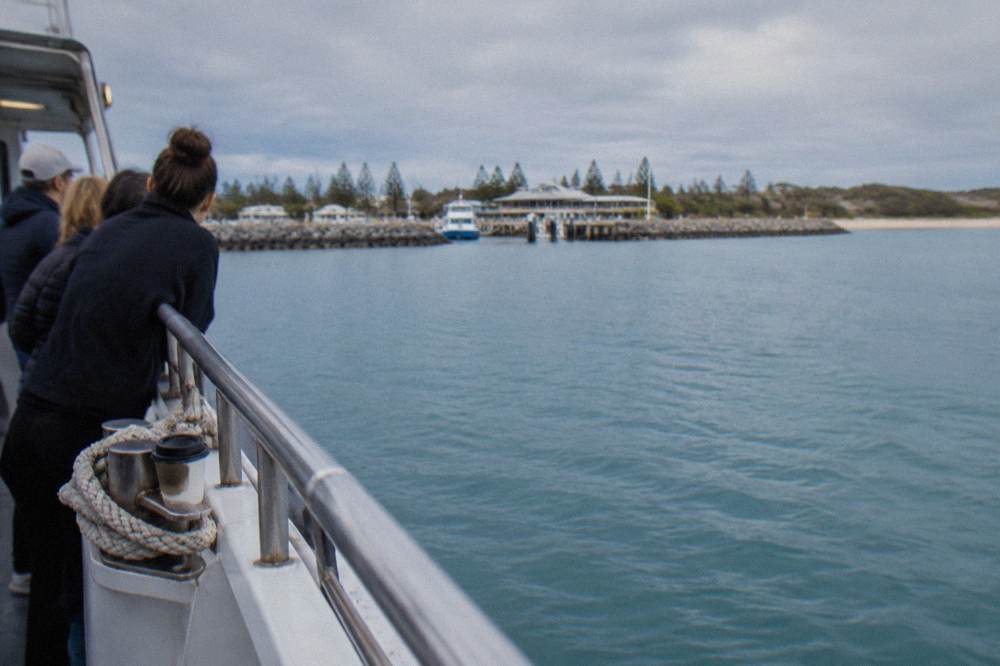
The regulation detail is published by the regional whale watching body: no head-on approach, no herding, no separating mother and calf pairs, and idle motors inside the approach zone. The whale watch regulations page sets out the full framework, and the official Queensland tourism page on Hervey Bay whale watching confirms the June to November presence window with the July to October core.
For travellers, the practical takeaway is simple: the rules are why the encounters feel unhurried. A boat that shadowed a whale at speed would produce worse viewing, not better, and the operators here have built their seasons around that fact. The crew's interpretation, the hydrophones, the viewing decks and the four hours on the water are all designed around whales that choose to come close.
Can You Swim With Whales In Hervey Bay?
Swim with whales trips exist in Hervey Bay, but they are a different product from the watching cruises on this roster, and they carry their own limits. Swimmers are held to a 30 m approach limit, operators set a minimum age of 13, and swims happen only on the whales' terms, never with mothers and calves. No whale cruise on this roster is a swim tour; the roster's whale products are all watching formats.
The distinction is worth spelling out because the marketing blurs it. A swim tour puts a small group in the water on a floating line while the boat holds position, and the whales either approach or they do not. Operators in the bay publish a minimum age of 13 for these trips, and swimming with mothers and calves is prohibited. The experience is genuinely wild: no operator can promise a swim, only the opportunity.
The watching cruises are the right product for most visitors, and not only because they suit all ages. The half-day catamarans carry hydrophones so you hear the whales as well as see them, multiple viewing decks so a surfacing on the far side does not mean a missed look, and crews whose whole job is interpretation. A review of the Tasman Venture cruise praises how much the staff taught about the whales; that is the product working as designed.
The remote island and whale experience sits in between the two formats. It is a watching cruise, but it adds the remote K'gari beach landing, which means a day that covers whales, sand and lunch in one booking. For a traveller deciding between a dedicated whale cruise and an island day tour inside the season, it is the one product that removes the choice, and the Hervey Bay operators guide lists the current windows for every operator in one place.
Planning A Trip Around The Season
Plan the dates first and the boat second. Pick August or September for the peak weeks with every operator running, or the shoulder weeks for thinner crowds. Book a cruise with free cancellation up to 24 hours before start, stay in Hervey Bay the night before an early departure, and if you are coming from Brisbane, allow the travel day, because no whale cruise on this roster departs from there.
The season is the anchor for the whole trip because it constrains everything else. A Hervey Bay base for two or three nights inside the window lets you take a whale cruise and still leave a spare morning in case weather moves a departure. The half-day formats finish by early afternoon, which leaves room for the Hervey Bay foreshore or a short K'gari add-on, and the nine hour remote island and whale experience fills a full day on its own.
Pairing the whales with the island is the classic regional itinerary, and the season makes the pairing easy. The coach day tours with lunch and the small group 4WD day tours run year round from Hervey Bay, Rainbow Beach and Noosa, so a July to October trip can stack a whale cruise and an island day tour in either order. The what is the best month to visit Fraser Island article works through the same calendar from the island side, including the school holiday blocks that crowd both the boats and the lakes.
This is where Kgari Island Tours earns its keep as a planning resource: the whale season dates, the cruise roster and the island day tours are all in one place, so the itinerary builds itself once the dates are fixed. Book the whale cruise early for the peak weeks, hold the island day tour flexible, and let the operator windows do the scheduling work.
The one planning mistake worth avoiding is treating the season as open-ended. The boats stop when the operators say they stop, and a late October trip can find half the fleet already wrapped for the year. Check the live listing for your dates before booking anything non-refundable around it, and remember that every cruise on this roster carries free cancellation, with the exact cutoff shown on each listing, which makes an early peak-season booking low risk.
Common Questions About Whale Season In Hervey Bay
What Time Of Year Are Whales In Hervey Bay?
Humpback whales rest in Hervey Bay from July to October, with the peak in August and September. Operators publish their own windows inside that span, ranging from July 11 to October 31 depending on the boat. Broader migration activity shows from June to November, but the bay's famous resting encounters cluster in the middle four months.
What Is The Best Month For Whale Watching In Hervey Bay?
August and September are the peak months, when mother and calf pairs dominate the bay and every operator is running. July and October are genuine alternatives with fewer crowds, though the edges of the season carry more schedule risk because not every boat is still operating.
Are Whale Sightings Guaranteed In Hervey Bay?
Sightings are wild and never promised by the bay as a whole. Individual operators publish their own guarantee policies inside their season windows, with one offering a free return trip if no whale is seen. The resting behaviour of the bay makes encounters very likely in season, but no honest operator will promise a whale on a given day.
How Much Does A Whale Cruise In Hervey Bay Cost?
Watching cruises on this roster run from A$119 to A$269 per person. The three hour research-led cruise starts at A$119, the half-day catamaran cruises start at A$155, and the nine hour remote island and whale experience with lunch starts at A$269. All carry free cancellation, cutoff times vary by listing.
Can You Swim With The Whales In Hervey Bay?
Swim with whales tours operate in the bay as a separate product, with a minimum age of 13, a 30 m swimmer approach limit and swims only on the whales' terms. Mothers with calves are prohibited for swims. The whale cruises on this roster are all watching formats rather than swim tours.
Do Whale Cruises Depart From Brisbane?
No. Every whale cruise on this roster departs from Hervey Bay, roughly four hours north of Brisbane by road or a short flight. Travellers starting in Brisbane should plan an overnight stay in Hervey Bay inside the July to October season rather than a single-day return.