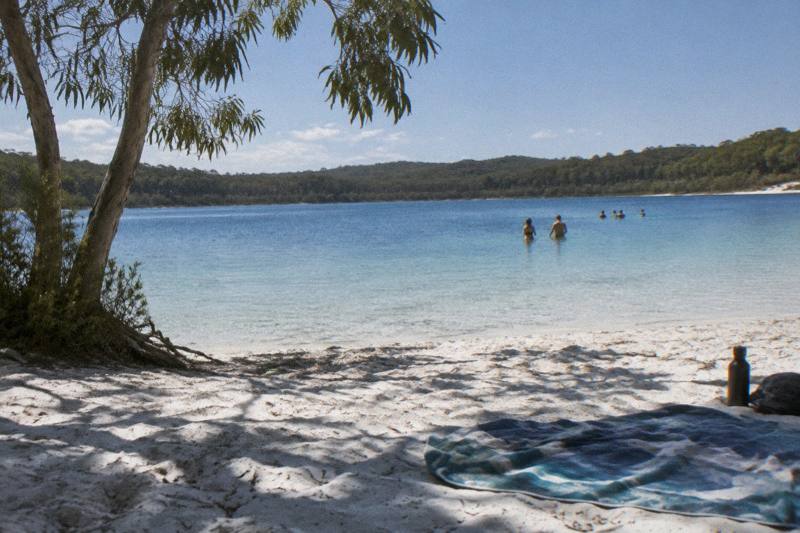
Why Is Lake McKenzie So Blue?
The science behind Lake McKenzie's blue water and white silica sand, plus the day tours that get you there without a 4WD.
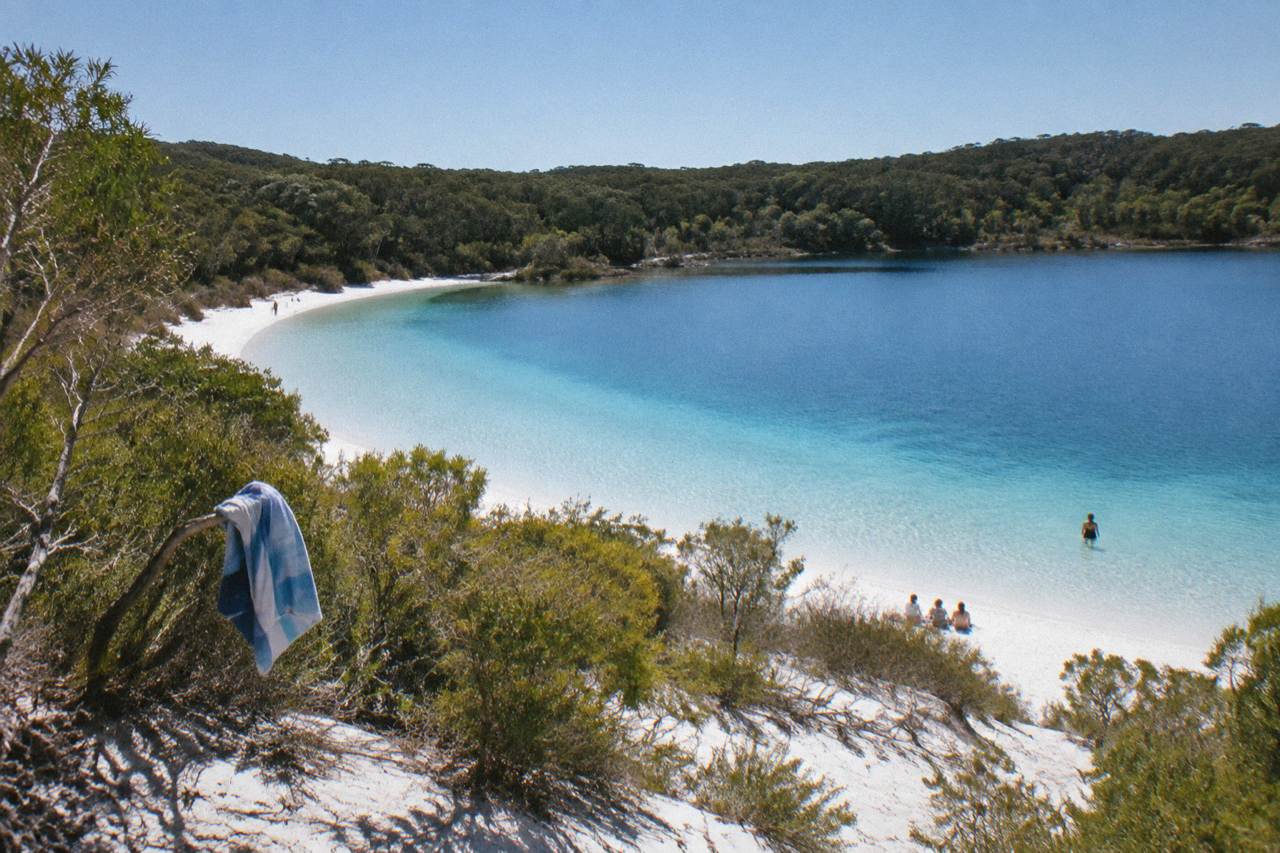
Lake McKenzie, known to the Butchulla as Boorangoora, is the image most people carry away from K'gari: a ring of sand so pale it looks like salt, and water that shifts from turquoise in the shallows to deep sapphire over the deeper basins. The colour is not a trick of the light or a filter. It is the visible result of what the lake is, a perched, rain-fed body of water sitting in a sand dune, filled with water so low in nutrients and dissolved matter that almost nothing absorbs the blue end of the spectrum before it bounces back to your eye.
That purity is also why the lake behaves differently from every other swimming spot on the world's largest sand island. The same qualities that make it blue make it fragile, which is why Queensland Parks asks visitors to bring nothing onto the shore but drinking water. The lake sits roughly in the middle of the island's southern half, and every 4WD day tour on the roster stops here, from the nine-hour coach day tour out of Hervey Bay to the small-group nature day tour running from Noosa and Rainbow Beach.
Why Is Lake McKenzie So Blue?
Lake McKenzie is blue because its water is extraordinarily pure. It is a perched dune lake, perched meaning it sits in a sand basin above the regional water table, sealed by a hard layer that rain cannot drain through. That rainwater picks up almost no minerals, sediment or organic tannins on its way in, so the water absorbs the warmer red wavelengths of light and scatters the blue, the same physics that makes deep ocean water look blue.
The "perched" part is the key. Most lakes on the mainland are windows into groundwater, or they are fed by creeks that run through soil and vegetation, collecting tannins and clays on the way. Lake McKenzie has neither inflow nor outflow in the ordinary sense. Rain falls onto the catchment of the dune, filters down through metres of white silica sand, and pools on top of a cemented organic layer that keeps it from soaking away. The sand itself acts as a giant filter, and the result is water of unusual clarity.
The depth does the rest. Over the pale sand in the shallows, the water reads turquoise or almost green, because the white bottom reflects all wavelengths back through a short column of water. Where the basin drops away, the light travels farther, the warm colours get absorbed on the trip, and what returns to the surface is that intense blue. The colour you see is depth plus purity plus a bright reflective floor, all three at once.
It is worth being precise about one thing: the blue is not caused by anything added to the water. There is no mineral spring, no glacial flour, no limestone brightener. It is the absence of things, tannins, nutrients, suspended sediment, that lets the water do what pure water does to light. A lake like this is rare anywhere in the world, and perched dune lakes of this quality are one of the reasons the island was inscribed on the UNESCO World Heritage List in 1992, alongside its status as the world's largest sand island at 123 km long.
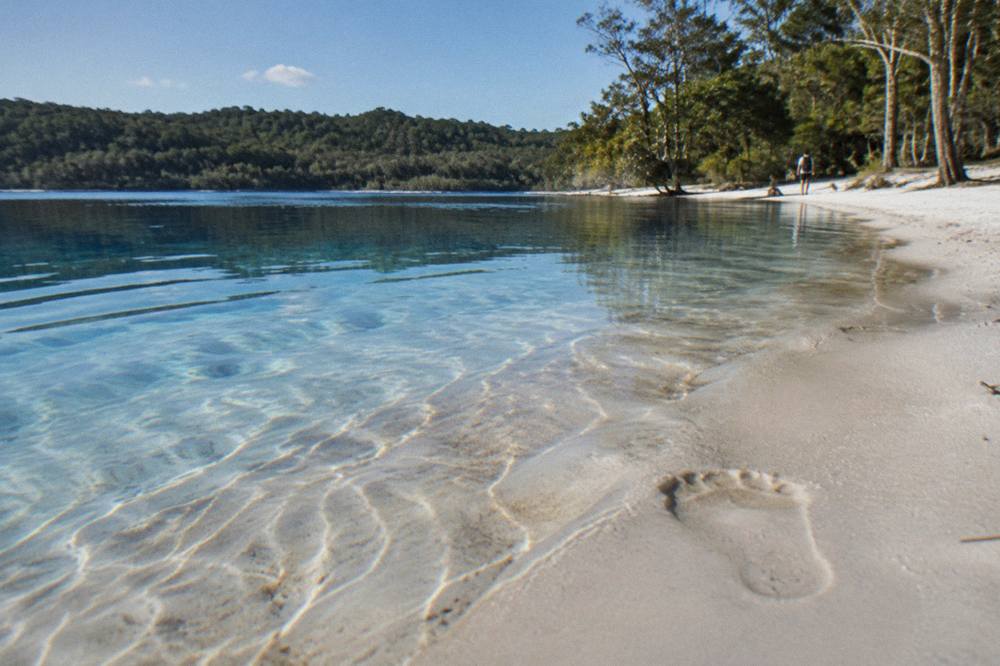
For most visitors the practical question is not the chemistry but the logistics, and that is where the tours come in. Lake McKenzie sits inland on sandy tracks that only high-clearance 4WDs should attempt, which is why the day tour is the standard way to see it. Three options cover the spread of styles and departure points.
What Is A Perched Lake, And Why Does K'gari Have So Many?
A perched lake is one that sits above the water table, held up by a hardened layer of sand and organic matter rather than dug into it. K'gari has around half of the world's perched dune lakes because it is built entirely of sand accumulated over hundreds of thousands of years, a dune mass big enough and old enough for rainwater to pool in the hollows of its high ridges instead of draining straight through to the sea.
Think of the island as a sponge made of sand, sitting above the regional water table. In most places, rain disappears into that sponge and moves slowly toward the ocean as groundwater. But in some of the high dune hollows, humus and sand have cemented into a floor that water cannot easily pass through, and the rain that lands inside that rim simply stays, evaporating and refilling in a slow cycle. Lake McKenzie is the most visited of these; others are scattered across the island's ridges, some barely more than clearings in the forest.
The island's age and size make this possible at a scale found nowhere else. Queensland Parks describes K'gari as the world's largest sand island, 123 km long and covering 166,038 ha, with dune systems that record hundreds of thousands of years of wind-built accumulation. Small perched basins can form on any big sand mass, but a sand island of this scale, with this many high dune ridges, produces them in numbers the mainland cannot match. That concentration of rare, acidic, nutrient-poor lake ecosystems is part of what the World Heritage listing recognises.
The chemistry of a perched lake explains the colour, but it also explains the biology. The water is acidic and extremely low in nutrients, so almost nothing grows in it: no algae to green the water, few aquatic plants, and a shoreline where even the vegetation stays low and sparse. It looks sterile because, by the standards of a normal lake, it is. The blue you photograph is the visible face of a whole ecosystem running on almost nothing, which is the single best argument for treating the shore gently.
Why Is The Sand So White, And Why Does It Squeak?
The sand around Lake McKenzie is nearly pure silica, washed clean of iron and other minerals over immense time by rain and wind. Silica grains are hard, rounded and glassy, so the beach reads white to the eye, and the smooth rounded grains rolling underfoot under pressure produce the faint squeak visitors notice on the dry sand above the waterline.
The whiteness and the squeak are the same story told twice. On a young beach, sand is a mix of everything: shell fragments, dark minerals, iron oxides, whatever the local geology supplies. On K'gari, the dune sand has been cycling through wind, water and time for so long that the softer and darker constituents have been broken down or leached away, leaving grains that are almost entirely quartz, and quartz that has been tumbled until each grain is smooth. White sand, round grains.
The squeaking is a mechanical effect, not a chemical one. Angular, mixed sand grinds; rounded, uniform, dry silica slides, and the friction between grains under a shoe or a bare foot releases a high, thin sound. It is the same phenomenon reported on famous white-silica beaches elsewhere in the world, and it needs dry sand: the saturated sand at the waterline goes quiet because water lubricates the contacts between grains.
The sand and the water explain each other. Because the catchment around the lake is pure silica, the water filtering through it arrives carrying almost nothing but the rain's own chemistry. A lake sitting in soil would run brown or green; a lake sitting in a bowl of clean glass effectively polishes itself with every refill. When you stand on the shore of Boorangoora, the white beach and the blue water are one system, and the colour of each depends on the other.
Can You Swim In Lake McKenzie?
Yes, and it is one of the very few places on K'gari where swimming is encouraged. The ocean beaches are unpatrolled and unsafe, so the freshwater lakes are the island's swim option, and Lake McKenzie is the most accessible of them. Queensland Parks asks visitors to take no food onto the lake shore except drinking water, because nutrients from food and sunscreen feed the very organisms whose absence makes the water blue.
That rule is not bureaucracy; it is the whole point. The lake's clarity depends on water too nutrient-poor to support algae and aquatic plants. Every crumb, every scrap of fruit and every smear of ordinary sunscreen washed off a hundred swimmers a day adds nutrients to a system that has almost none, and a lake this size has no outflow to flush them away. The white sand is equally sensitive: foot traffic and erosion at the access points are the pressures Queensland Parks manages most actively at the day-use area.
Practically, swimming here is easy and genuinely lovely. The sand shelves gently, the water is soft, and in the shallows it is warm enough for a long soak through the warmer months. There are no patrolled swimming areas anywhere on K'gari, so the lake is where the island's swimming happens, and the day tours time their stops to give guests a proper swim rather than a photo from the bank.
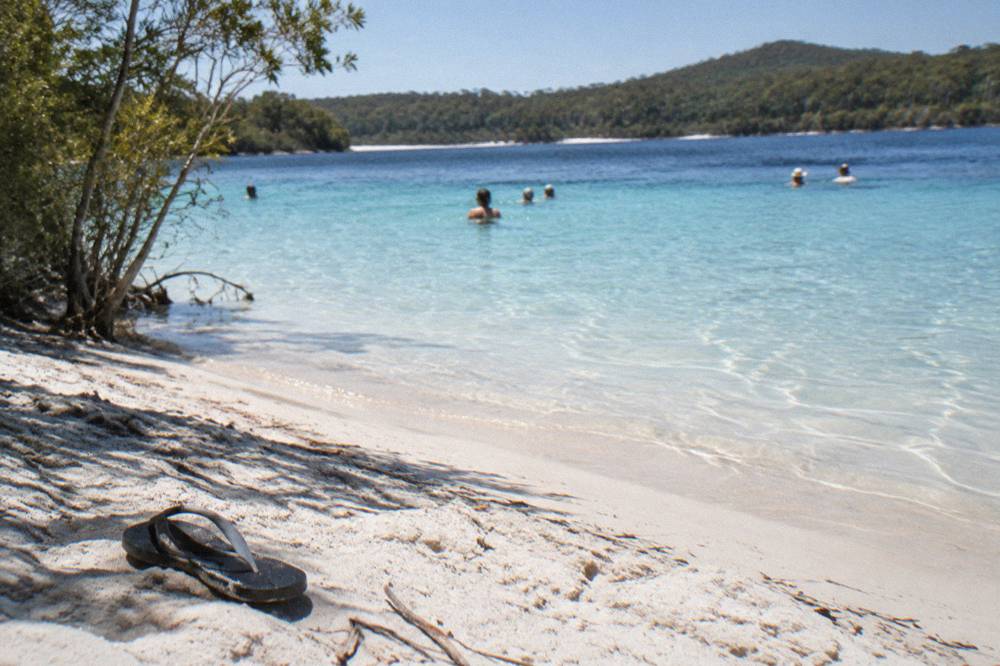
The tour listings make the swim stop easy to plan around. Every 4WD day tour includes Lake McKenzie, lunch and the national park fees in the ticket price, and all of them allow free cancellation, with the exact cutoff shown on each listing, which matters on an island where weather reshuffles itineraries. The table below shows how the main day options line up.
| Tour | Departure | From (per person) | Rating | Duration |
|---|---|---|---|---|
| Nature Day Tour (Noosa and Rainbow) | Noosa | A$275 | 4.9 from 67 reviews | 8 to 12 hours |
| All Inclusive Coach Day Tour | Hervey Bay | A$279 | 4.8 from 3,893 reviews | 9 hours |
| Small Group Full-Day Tour | Rainbow Beach | A$279 | 4.6 from 322 reviews | 10 hours |
| Small Group Day Tour | Noosa | A$299 | 4.7 from 639 reviews | 11 hours |
The small-group nature day tour is the one this site features for the lake specifically: it runs from both Noosa and Rainbow Beach, keeps the group in a minibus and 4WD combination, and a review of the small-group day tour from Noosa credits its guide with sharing "his knowledge around K'gari and all the hidden gems", including a Lake McKenzie stop. If you want the full picture of swimming on the island, the guide to swimming in Lake McKenzie covers the rules, the water and the season in detail.
How Do You Get To Lake McKenzie Without A 4WD?
You take a tour, or you drive yourself with a permit, a high-clearance 4WD and experience on sand. The lake is inland, reached by sandy tracks that Queensland Parks says are suitable only for high-clearance 4WDs, preferably with low range, so a standard hire car cannot reach it. Every guided day tour on the roster handles the driving, the vehicle access permit and the national park fees, which is why most visitors see the lake with an operator.
The self-drive route is real but demanding. A vehicle access permit is required for every vehicle driven on the island, costing $61.80 for a month or less and $311.00 for up to a year, and driving without one earns a $518 penalty notice. Beach driving is best at low tide or within two hours either side, tyre pressures need to come down for the sand, and the inland speed limit is 30 km/h. For a traveller whose whole goal is one swim in one blue lake, that is a lot of machinery and risk to carry for a single stop.
The tour route removes all of it. The operator holds the vehicle permit, the listing states national park fees are included, and the driver reads the tide and the track conditions for you. The all-inclusive coach day tour from Hervey Bay reaches the lake on a big 4WD coach with a bathroom on board, which suits families and anyone who would rather not bounce along in a small vehicle; it carries a 4.8 rating from 3,893 reviews, a review pool deep enough to mean something. A guest on that tour called it "a busy, but great day full of experiences and lots of knowledge from our guide Dean."
The small-group full-day tour from Rainbow Beach is the mid-size alternative, a ten-hour small-group 4WD day at the same from-price of A$279 per person, rated 4.6 from 322 reviews. Whether a coach or a small group suits you better is a real decision, and the comparison of day tours on the island lays out the trade-offs, while the guide to reaching Lake McKenzie without a 4WD covers the self-drive question in full.
When Is The Blue At Its Best?
Midday through early afternoon on a clear day shows the lake at its most intense, because high sun sends light straight down through the water column and maximises the blue scatter. Winter and spring bring the crisp, dry, clear-sky weather the region is known for, while summer adds heat, humidity and the chance of afternoon storms, so the colour is brightest in the cooler, clearer months.
The light matters more than people expect. Early morning and late afternoon sun strikes the water at a low angle, and much of what you see is surface reflection, sky and trees, rather than the water body itself. When the sun is high, light penetrates, the pale floor lights up, and the blue saturates. Cloud cover flattens the effect, because diffuse light gives the water less to scatter. None of this changes the lake itself, but it changes the photograph completely.
The regional climate sets the backdrop. Bureau of Meteorology long-term averages for Hervey Bay Airport put the mean maximum at 30.3 C in January against 21.8 C in July, with March the wettest month and September the driest. September and October therefore offer the best combination for a blue-lake day: mild temperatures, low rainfall and a high chance of the clear skies that make the colour pop. The trade-off is that everyone else has worked this out too, and the lake shore is busiest through the middle of the day in the school holidays.
Timing your arrival with a tour actually helps here. Tour itineraries are built around tides and track conditions rather than golden-hour photography, so a tour stop often lands in the middle of the day, which is exactly when the blue is strongest. If you are planning a wider trip, the guide to things to do on the island places the lake among the other freshwater sights, and the site's own Kgari Island Tours hub covers the full roster from day trips to multi-day tag-alongs.
Does The Lake Ever Look Different?
Yes. The blue depends on light, sky and water level, so the same lake can read steel-grey under cloud, milky turquoise after heavy rain stirs the shallows, and deep sapphire on a clear high-sun afternoon. The water level itself rises and falls with the seasons, since the lake is fed only by rain and loses water to evaporation, and drought years can visibly shrink the shoreline.
This is worth knowing before you go, because a small share of visitors arrive on the wrong afternoon and feel cheated. The lake has no inflow creek to stir it and no outflow to flush it, so its whole character rides on the weather of the previous few days. A storm the night before your visit can wash a thin film of organic matter off the catchment, and the shallows turn tea-tinted for a day before the sand filters it back out. The deep basins hold their blue through almost anything.
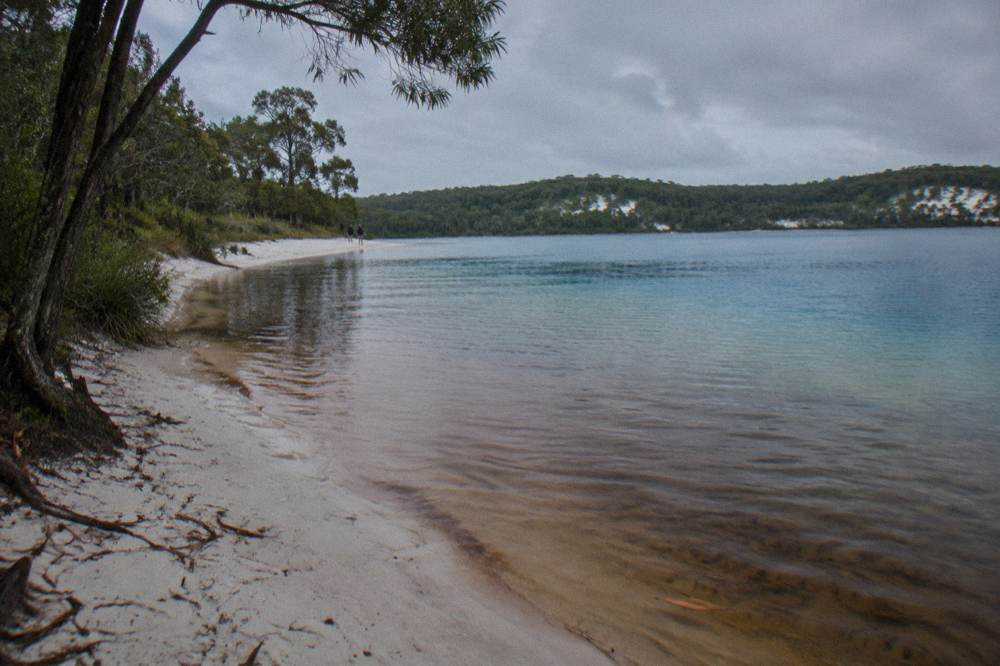
The contrast with the island's other lakes makes the point. Not every lake on K'gari is blue, because not every lake is perched. Some are "window" lakes, exposed dips in the water table, and some catchments carry tannins from vegetation, which stain the water the colour of weak tea, the same effect you see in dark coastal rivers. Lake Wabby, a greenish barrier lake tucked against a massive sandblow, and the tea-coloured lakes further north show the range. Only the perched, silica-bottomed lakes give you the white-sand-and-sapphire look, and Lake McKenzie is the most famous and easiest of them to reach.
| Lake type on K'gari | How it forms | Water colour | Swim appeal |
|---|---|---|---|
| Perched dune lake (Lake McKenzie) | Rain pools above the water table in a silica basin | Blue to turquoise over white sand | The island's classic swim |
| Window lake | A dip that exposes the water table directly | Varies with groundwater | Varies by lake |
| Tea-coloured lake | Catchment water stained by vegetation tannins | Brown like weak tea | Uninviting but natural |
If you want the blue specifically, plan around it rather than hoping. Check the Queensland Parks conditions report before travelling, since conditions and alerts on the island change, and pick a departure point that suits your route. The tours from Rainbow Beach and Hervey Bay both reach the lake in a day.
Why The Blue Lake Is Worth Planning Around
Yes, the Blue Lake is worth planning around. Lake McKenzie is one of the rarest lakes on earth, a perched dune lake of near-pure silica water, and it sits inland on tracks that require a proper 4WD, so the visitors who see it best are those who book a tour that handles the driving and time their stop for clear midday light. Every day tour on the roster reaches it, with lunch, permits and national park fees included.
It is not a stop you pass on the way to something better. It is the thing the whole southern half of the island is organised around, the swim every tour times its day around and the image that sells the island. The blue is genuinely rare geology doing something pure water does to light, on the world's largest sand island, inside a World Heritage Area listed in 1992 for exactly this kind of phenomenon.
The practical answer to seeing it well is simple: go with an operator who handles the sand driving, arrive in the middle of a clear day, bring nothing onto the shore but drinking water, and give it a real swim rather than ten minutes. The tours below are the three that fit that brief best, from the small-group nature day tour this article features to the big coach day tour and the Rainbow Beach small-group option.
Common Questions About Lake McKenzie
Why Is Lake McKenzie So Blue?
The water is a perched, rain-fed lake sitting in a basin of nearly pure silica sand above the water table. Because the water carries almost no tannins, sediment or nutrients, it absorbs the warm red wavelengths of light and scatters the blue back to your eye, deepest over the lake's deeper basins on a clear, high-sun day.
Can You Swim in Lake McKenzie?
Yes. The ocean beaches on K'gari are unpatrolled and unsafe to swim in, so the freshwater lakes are the island's swimming option, and Lake McKenzie is the most visited of them. Queensland Parks asks that no food be taken onto the lake shore except drinking water, to protect the nutrient-poor water that creates the colour.
Why Is the Sand at Lake McKenzie So White?
The sand is nearly pure silica, leached and tumbled clean over immense time, leaving hard, rounded, glassy grains that read white to the eye. The same smooth round grains that make the beach white also produce the squeak you hear walking on the dry sand above the waterline.
Do You Need a 4WD to Reach Lake McKenzie?
Yes if you are driving yourself. The lake is reached by inland sandy tracks that Queensland Parks says suit high-clearance 4WDs only, plus a vehicle access permit. Every guided day tour on the roster reaches the lake with the operator handling the driving, the permit and the national park fees.
When Is the Lake at Its Most Blue?
On a clear day around the middle of the day, when high sun sends light straight down through the water and the pale sand floor reflects it back. The region's driest, clearest months sit in winter and spring, with September the driest month on long-term averages, so the cooler season is the most reliable for the strong blue.
Is Lake McKenzie the Same as Boorangoora?
Yes. Boorangoora is the Butchulla name for the lake, and K'gari itself is the Butchulla name for the island, meaning paradise. The island's name change happened in stages, the national park section first, then the World Heritage Area, then the island, and Fraser Island remains the name most listings and searches still carry.