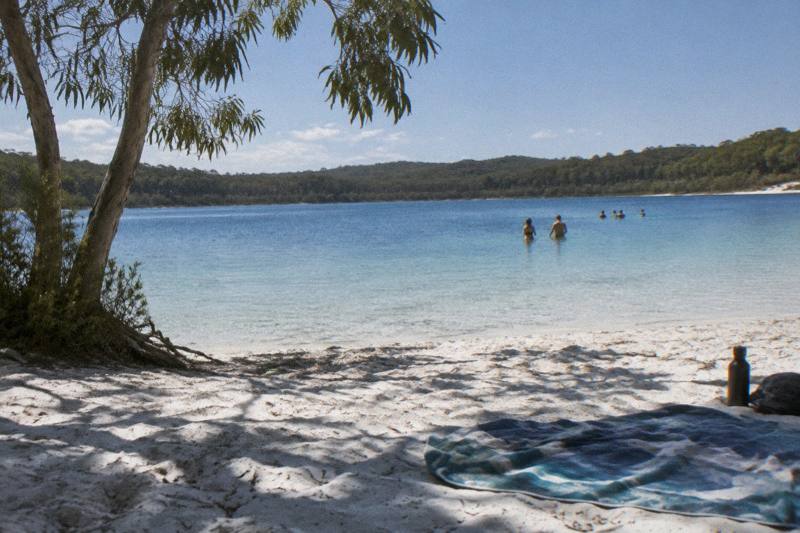
How Long Is K'gari Island?
K'gari (Fraser Island) stretches 123 km along the Queensland coast and covers 166,038 ha, making it the world's largest sand island. Here is what that length means for driving, tours and how many days you need.
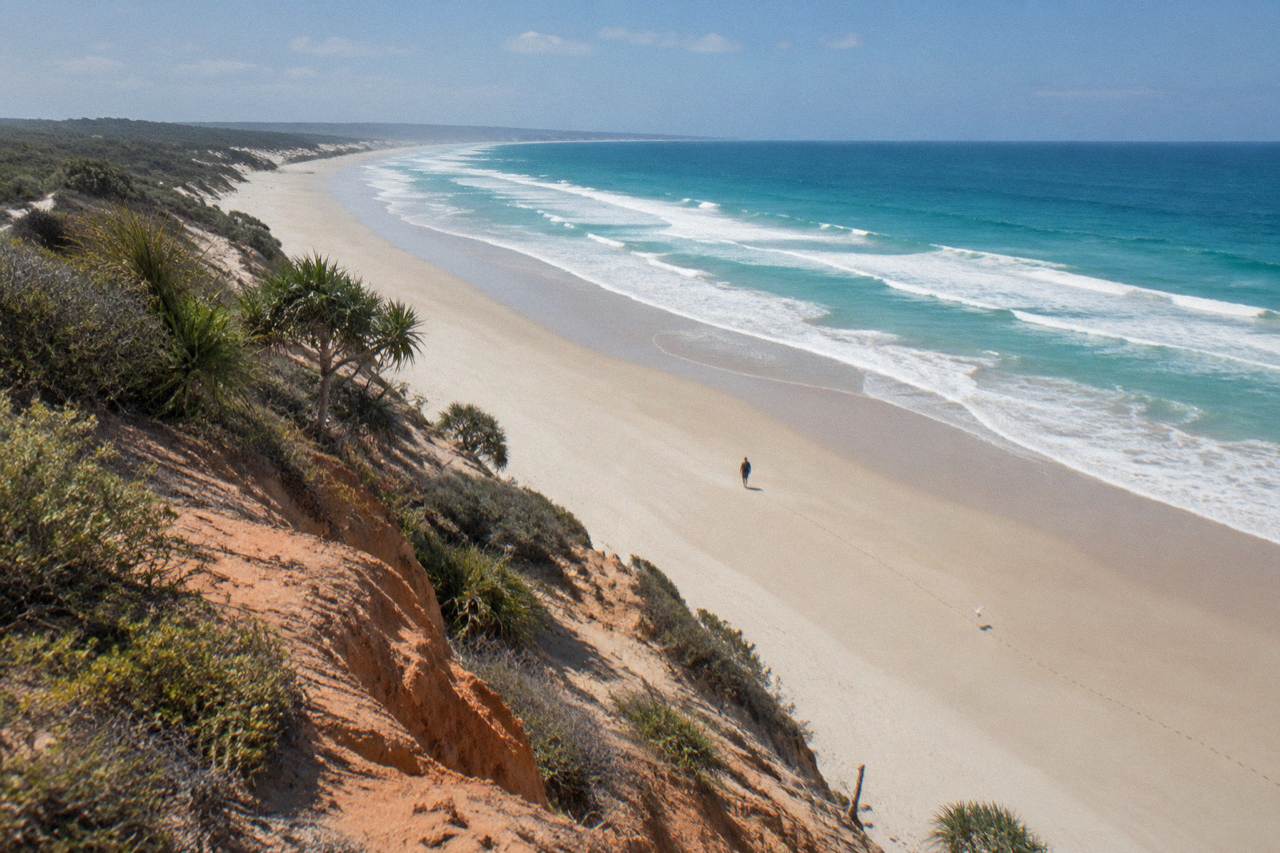
How Long Is K'gari Island?
K'gari is 123 km long, running roughly north to south along the Fraser Coast, and covers 166,038 ha, which makes it the largest sand island in the world. Queensland Parks lists those figures on the island's official page, and they are the numbers to plan around, because a 123 km island simply cannot be crossed casually in a day. Given that distance, plenty of visitors base themselves in Noosa, and our guide to day and overnight K'gari tours from Noosa weighs up which option suits your schedule.
That single figure, 123 km, does more to shape a K'gari trip than almost any other fact on this site. It is roughly the driving distance from Brisbane to the Sunshine Coast, except here the highway is soft sand, the speed limit on the eastern beach is 80 km/h and inland tracks drop to 30 km/h. Queensland Parks states the island covers 166,038 ha, and the UNESCO World Heritage property that protects it extends further still, to 181,851 ha once small adjacent islands are included. The World Heritage listing dates to 1992, recognised then, as now, for the world's largest sand island and more than 250 km of clear sandy beaches. You can read the official description at the Queensland Parks page for K'gari.
The name itself carries history in those kilometres. K'gari is the Butchulla name for the island, meaning paradise, and the Butchulla connection to the land spans more than 60,000 years according to Queensland Government statements. The renaming happened in stages: the national park section took the K'gari name first, then the World Heritage Area, then the island itself, with Fraser Island remaining the name most people search and most tour listings still carry. For the pronunciation and the full story, see the guide to the K'gari name and its pronunciation.
What does 123 km mean in practice for a visitor? It means the island has a northern end and a southern end that most tourists never see both of. It means the famous sights, Lake McKenzie, Central Station, the Maheno wreck, Eli Creek, the Champagne Pools, are strung out along that length with soft sand tracks between them, and a single day tour can only visit a slice. This is why the practical answer to "how long is K'gari" is never just a number: the honest follow-up question is how much of that length you can actually cover, and that depends on the tour you choose.
To put the island's size in perspective against places travellers already know, the table below compares K'gari's length with a few familiar reference points. The island's own figures come from Queensland Parks; the comparisons are rough, for scale only.
| Measurement | Figure | Source |
|---|---|---|
| K'gari length | 123 km | Queensland Parks |
| K'gari area | 166,038 ha | Queensland Parks |
| World Heritage property area | 181,851 ha | UNESCO listing |
| Sandy beaches (cited at listing) | Over 250 km | UNESCO criterion (vii) |
| World Heritage inscription | 1992 | UNESCO |
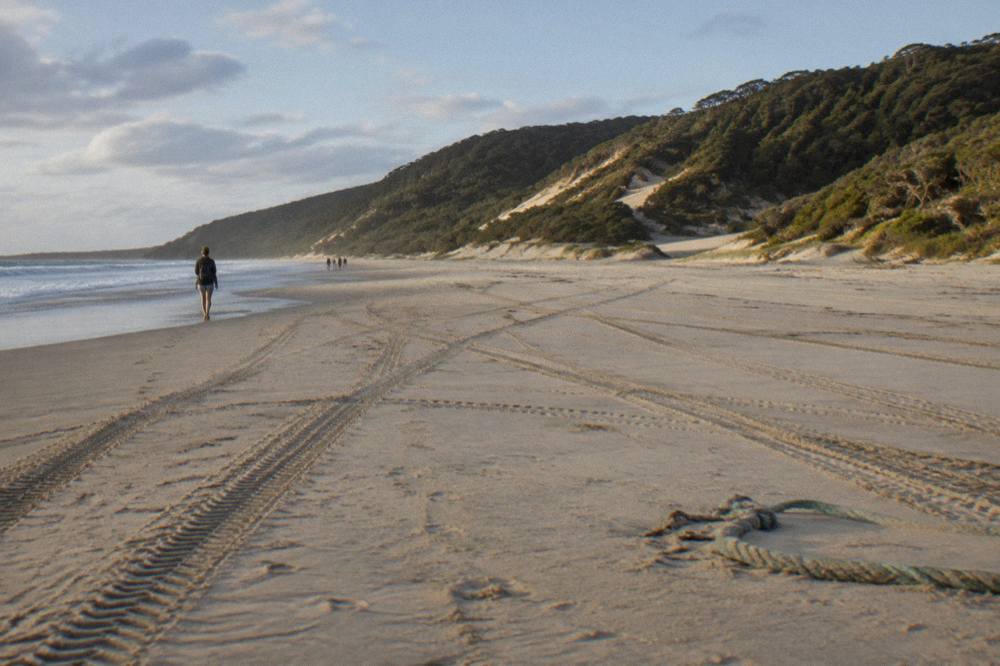
How Long Does It Take To Drive K'gari End To End?
Driving the full 123 km length of K'gari, from Hook Point in the south to the northern sights around Sandy Cape, takes most of a day in a high-clearance 4WD, and only at low tide. Beach driving is safest within two hours either side of low tide, inland tracks run at 30 km/h, and there is no way to hurry soft sand. No tour drives the island end to end in a single outing. That unhurried pace is part of the island's appeal, and if you want to understand why this World Heritage sand island with its rainforests, perched lakes and wild dingoes rewards slow travel, our guide to what makes K'gari so special is a good place to start.
The eastern beach doubles as the island's main highway, and Queensland Parks caps it at 80 km/h, with 40 km/h zones where people walk and 10 km/h in shared areas. On paper, 123 km at 80 km/h is under two hours. In reality the beach softens with the tide, creek crossings open and close, and the inland tracks that connect the western side run at 30 km/h through sandy, winding forest. Queensland Parks advises drivers to drop tyre pressures for the sand and re-inflate on hard surfaces, and the guidance on staying safe on K'gari is blunt about the causes of serious accidents: rollovers and unseatbelted passengers.
Every vehicle driven on the island also needs a vehicle access permit before arrival. The permit fees are set by Queensland Parks and change, so check the official permits page for current figures, though the published rates run to $61.80 for a month or less and $311.00 for up to a year. Tour guests skip this entirely: the operator holds the permit and the listings state that National Park fees are included. That is one of the quiet advantages of the guided 4WD tours over self-driving, alongside not having to read a tide chart before breakfast. The permit rules, the penalty for arriving without one and the booking process are covered in detail in the vehicle access permit guide.
Should you drive it yourself at all? That depends on your sand-driving experience, and it is a genuine decision with trade-offs on both sides. The comparison in 4WD hire versus a guided tour works through the costs and risks, and the tag-along format, where you drive your own vehicle behind a guide's convoy, splits the difference.
The speed limits themselves tell the story of the island's effective length. Here is how the official limits break down across the terrain.
| Zone | Speed Limit | Practical Effect |
|---|---|---|
| Eastern beach (open stretch) | 80 km/h max | The only place the island feels short |
| Beach pedestrian areas | 40 km/h | Slow zones near busy sights |
| Inland sandy tracks | 30 km/h | Most cross-island driving happens here |
| Hook Point inland road | 50 km/h | Southern access route |
| Shared-use areas | 10 km/h | Walkers and vehicles mixed |
How Long Is The Ferry Crossing To K'gari?
The Manta Ray barge from Inskip Point near Rainbow Beach to Hook Point takes about 10 minutes, while the SeaLink ferry from River Heads to Kingfisher Bay Resort takes about 45 minutes. The southern barge runs turn-up-and-go every day of the year, and the western ferry needs advance booking for vehicles. The crossing is short; the island it delivers you to is not.
Those two crossings frame the island's length from opposite ends. Arrive via the 10-minute Manta Ray barge and you land at Hook Point, at the island's southern tip, with the whole 123 km stretched out ahead of you. Arrive via SeaLink at Kingfisher Bay on the western side and you are mid-island, closer to Central Station and Lake McKenzie but still hours of sand driving from the northern end. Fares for both services are set by the operators and change, so check their pages rather than any secondhand figure.
The two gateways suit different travellers. The Rainbow Beach crossing is the choice of the tag-along convoys and the camping tours, because it puts a 4WD straight onto the southern beach. The Hervey Bay crossing suits the resort-stay tours and the boat itineraries, because it lands guests near the island's western accommodation and the calm waters between the island and the mainland. Neither gateway shortens the island; they just change which third of it you see first.
Most guided tour guests never think about either crossing, because the tours include it. The two-day K'gari Explorer tour crosses from Hervey Bay and stays overnight in a resort or lodge, which is the format that turns the island's length from an obstacle into an itinerary. One traveller review of the three-day tag-along version of that idea captures the appeal: "Weekend of a lifetime! We had a fantastic group of people which made the 3 day trip amazing, full of laughs and jokes."
There is also a way to appreciate the island's scale without driving a metre of it. A boat tour from Hervey Bay runs along the remote western beach, where there are no roads at all, and shows you kilometres of coastline that even most 4WD visitors never see. It runs about nine hours with lunch included, from A$269 per person, rated 4.9 from 1,321 reviews. From the water, the island reads as one long unbroken line of beach and coloured sand cliffs, and the perspective is something no bus window can give you.
How Much Of The Island Can You See In One Day?
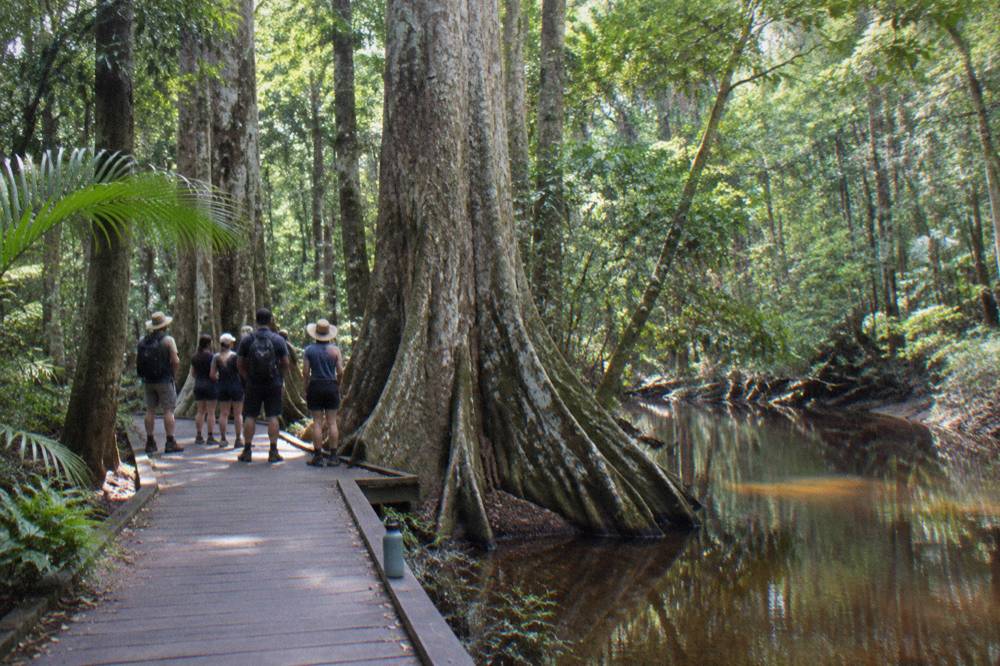
A one-day tour covers the central highlights, typically Lake McKenzie, a rainforest boardwalk and a stretch of the eastern beach, which is perhaps a third of the island's length. The northern end and the remote western coast stay out of reach. That is a fair trade for a single day, as long as you know it going in.
The arithmetic is unforgiving. A nine-hour day tour from Hervey Bay spends roughly three of those hours crossing to the island and back, leaving six hours of sightseeing on a 123 km island where the average moving speed on inland tracks is well under 40 km/h. Operators respond by concentrating on the centre: Lake McKenzie's white sand, the rainforest at Central Station, a beach stop or two. Guests on the all-inclusive coach day tour, from A$279 per person with lunch and rated 4.8 from 3,893 reviews, consistently report a full but rewarding day. One review sums it up: "It was a busy, but great day full of experiences and lots of knowledge from our guide Dean."
The same maths applies from every departure point, with small variations. The small-group day tour from Noosa runs about 11 hours because the drive north eats the morning; the Rainbow Beach coach version starts closer to the island and spends more of its day on the sand. Whichever you pick, the coverage map looks similar: the centre, and only the centre. Here is how the main day-tour formats compare on time and coverage.
| Day Tour Format | Departure | Duration | From Price | Coverage Of The 123 km |
|---|---|---|---|---|
| Coach day tour, lunch included | Hervey Bay | About 9 hours | A$279 | Central highlights |
| Coach day tour | Rainbow Beach | About 1 day | A$279 | Central highlights |
| Small group 4WD | Noosa | About 11 hours | A$299 | Central highlights, longer transit |
| Small group 4WD | Rainbow Beach | About 10 hours | A$279 | Central highlights |
| Boat tour, remote beach | Hervey Bay | About 9 hours | A$269 | Western coast, no driving |
If your available time is one day and no more, the question becomes which slice you want. The deeper comparison of formats, timings and departure points is in the day tours compared guide, and the honest answer to whether one day is enough at all is worked through in whether you can do K'gari in a day. The short version: you can do a memorable third of it, and never the whole thing.
How Many Days Should You Spend On K'gari?
Two days is the sweet spot for most visitors: enough to reach the central highlights without rushing and to see the island change character from afternoon to early morning. Three days suits travellers who want the northern end or a slower pace. One day works only as a sampler, and the island's 123 km length is the reason the overnight tours exist at all.
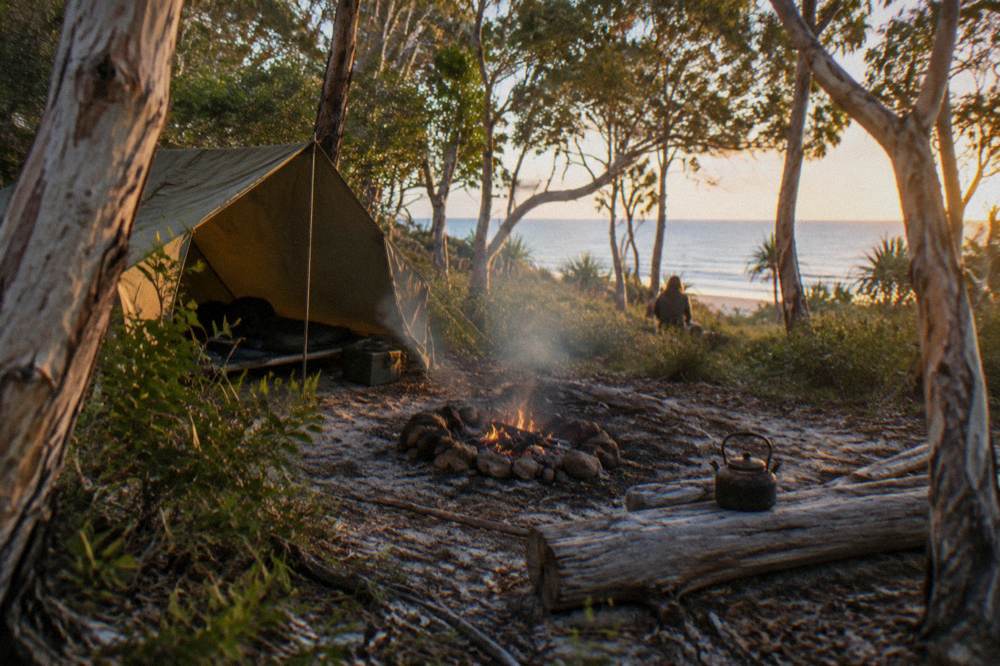
The overnight formats on this site's roster map neatly onto the island's geography. The two-day tours from Hervey Bay or Rainbow Beach, from A$549 per person, cross once and sleep on the island, buying you a sunrise on the eastern beach that no day tour can offer. Three-day options, including a small-group camping tour from A$795 and a glamping tour from A$659, push further north and swap resort comfort for campfires. The full reasoning, including season-by-season timing, is laid out in how many days you should spend on K'gari. And if your schedule only allows a quick visit, our guide to seeing Fraser Island in a day spells out exactly what a whirlwind trip can realistically cover.
Season matters as much as duration. Hervey Bay's mean maximum sits around 30.3 C in January and 21.8 C in July, March is the wettest month and September the driest, and marine stinger risk in the ocean is higher from November to May. None of that changes the island's length, but it changes how pleasant those long sand drives feel. The whale season, July to October with operator-published windows, is a separate draw entirely, and sightings are always wild, never promised.
There is a safety layer that scales with the island's size too. Dingoes are protected, and Queensland Parks states a maximum fine of $28,495 for disturbing or harming one, plus $6,908 for failing to store food securely. The rules are simple: stay at least four car lengths away, keep children within arm's reach, and walk in groups. On an island where you may drive for an hour without seeing another vehicle, the practical advice is to know the rules before you arrive, and the full rundown is in the dingo safety guide.
Why K'gari Feels Longer Than Its Kilometres
K'gari feels far longer than 123 km because its terrain multiplies distance: the same kilometre of soft inland track takes five times longer than the beach, tides close the highway twice a day, and the sights sit on both coasts of a genuinely wide island. Distance on K'gari is measured in hours, not kilometres, and every local operator plans around that.
Consider what a "quick" visit involves. From Hook Point at the southern tip, the drive north along Seventy Five Mile Beach to Eli Creek alone is a substantial chunk of the island's length, and the famous Lake McKenzie sits inland from the eastern beach, reached by slow sandy tracks. Add the tide, which Queensland Parks says makes beach driving best at low tide or within two hours either side, and a route that looks simple on a map becomes a morning's commitment in reality. This is why Kgari Island Tours exists as a site at all: the island's scale is the first planning problem every visitor hits.
The length also explains the island's ecology, which is a large part of its World Heritage citation. A 123 km sand island has room for rainforest growing out of sand, perched dune lakes, and over 250 km of beaches, and the UNESCO listing at the World Heritage Centre's K'gari page recognises exactly those ongoing geological processes. You cannot see that sweep from one bus window in one afternoon. You see it by staying, or by choosing a boat tour that shows you the roadless western shore the way the first visitors saw it.
The island's age deepens the effect. Sand has been accumulating here for hundreds of thousands of years, building dune systems that march inland and host rainforest that draws water from nothing but sand. A visitor standing at Lake McKenzie is looking at a perched lake, a body of rainwater sitting in a sand depression tens of metres above the water table, and that landscape exists at scale because the island itself is at scale. Small islands do not have room for this. K'gari's 123 km are not empty kilometres; nearly all of them carry something worth stopping for, which is precisely why the tours ration their stops so carefully.
So, how long is K'gari Island? Long enough that the answer to your real question, "can I see it all?", is no, not in a day, and long enough that the two-day tours earn their price. Pick the slice you want, or give the island the second night it keeps asking for.
Common Questions About K'gari Island
How Long Is K'gari Island?
K'gari is 123 km long and covers 166,038 ha, making it the largest sand island in the world. The UNESCO World Heritage property that includes it spans 181,851 ha once adjacent small islands are counted.
How Long Does It Take To Drive From One End To The Other?
Most of a day in a high-clearance 4WD, and only with the tide in your favour. The eastern beach is the main route at up to 80 km/h, but inland tracks run at 30 km/h and the best beach driving window is within two hours either side of low tide.
Can You See All Of K'gari In One Day?
No. A day tour covers the central highlights, roughly a third of the island's length, including Lake McKenzie and a rainforest stop. The northern end and the remote western coast need an overnight tour.
How Long Is The Ferry Or Barge Crossing?
The Manta Ray barge from Inskip Point to Hook Point takes about 10 minutes and runs turn-up-and-go daily. The SeaLink ferry from River Heads to Kingfisher Bay Resort takes about 45 minutes, and vehicle crossings need advance booking.
Why Is The Island Sometimes Called Fraser Island?
The name changed in stages: the national park section, then the World Heritage Area, then the island itself took the Butchulla name K'gari, which means paradise. Fraser Island remains the name most people search and most tour listings still carry.
How Many Days Do You Really Need?
Two days suits most visitors, enough for the central highlights plus a sunrise on the beach. Three days fits the northern end or a slower camping pace, and one day works only as a sampler of a 123 km island.