Fraser Island Camping: Permits, Fenced Camps And The Tour Alternative
Camping on K'gari is the cheapest way to sleep on the world's largest sand island, but it is also the most logistics-heavy: permits bought in advance, a high-clearance 4WD, dingo-proof food storage and tide-aware driving all come with the territory. Here is what the official rules actually require, and where a guided camping tour takes the load off.
Short answer
You need a camping permit bought before arrival and a vehicle access permit (A$61.80 for one month or less) for any 4WD driven on the island. Camping fees are set by Queensland Parks and must be checked on their pages. Families with children under 14 are strongly recommended to camp in dingo-deterrent fenced areas. Guided camping tours from A$659 to A$795 per person include the permits, gear and guide.
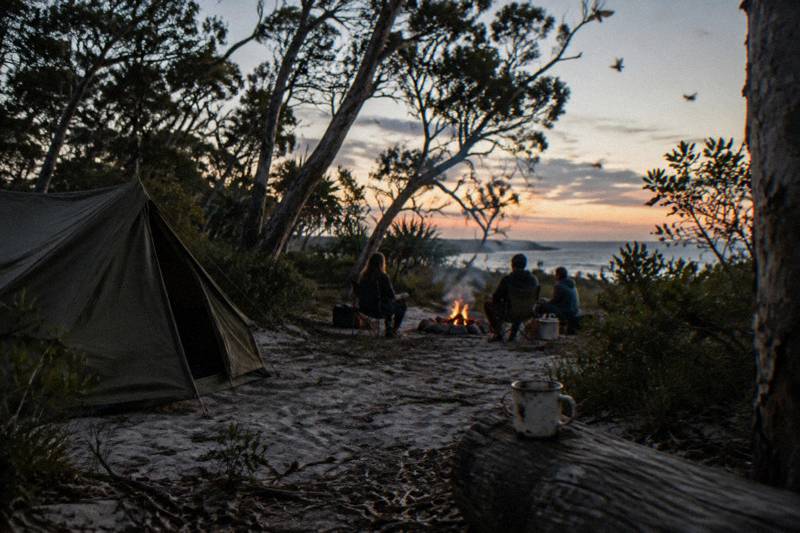
Camping is the original way to experience K'gari, and it is still the cheapest bed on the island once the vehicle is sorted. It is also the option with the most moving parts. A self-drive camping trip means buying permits before you arrive, choosing a campground with the right fences if you have children, storing food the way Queensland Parks requires, and timing your driving around the tide. Get those right and the island rewards you with freshwater lakes, open beaches and a night sky with almost no light pollution. Get them wrong and the trip becomes an expensive lesson.
This guide sets out what the official rules actually require, compares the honest costs of a self-drive trip against the guided camping tours on the roster, and finishes with the seasons. If you already know you want someone else to handle the permits and the driving, the two-day small-group camping tour covers the same ground with a guide who holds the paperwork. The full multi-day tours hub lists every overnight option, from camping to resort stays.
What Permits Do You Need To Camp On K'gari?
Two permits sit behind every self-drive camping trip: a camping permit for each person and a vehicle access permit for every vehicle driven on the island. Both must be bought before arrival, since rangers cannot sell them on the island and reception is unreliable. The vehicle access permit costs A$61.80 for one month or less, or A$311.00 for up to a year. Camping fees are set by Queensland Parks and change, so check their pages.
The camping permit rule is the one that catches people out. Queensland Parks states plainly that permits cannot be bought from rangers on the island, and reception is patchy at best, so the buy-before-you-arrive rule is not a formality. The same applies to the vehicle access permit, or VAP: it applies to every vehicle driven in the K'gari Recreation Area, and driving in without one earns a A$518 penalty infringement notice, with number plates recorded. The full permit detail, including the combined K'gari and Cooloola discount, is on the vehicle permit guide.
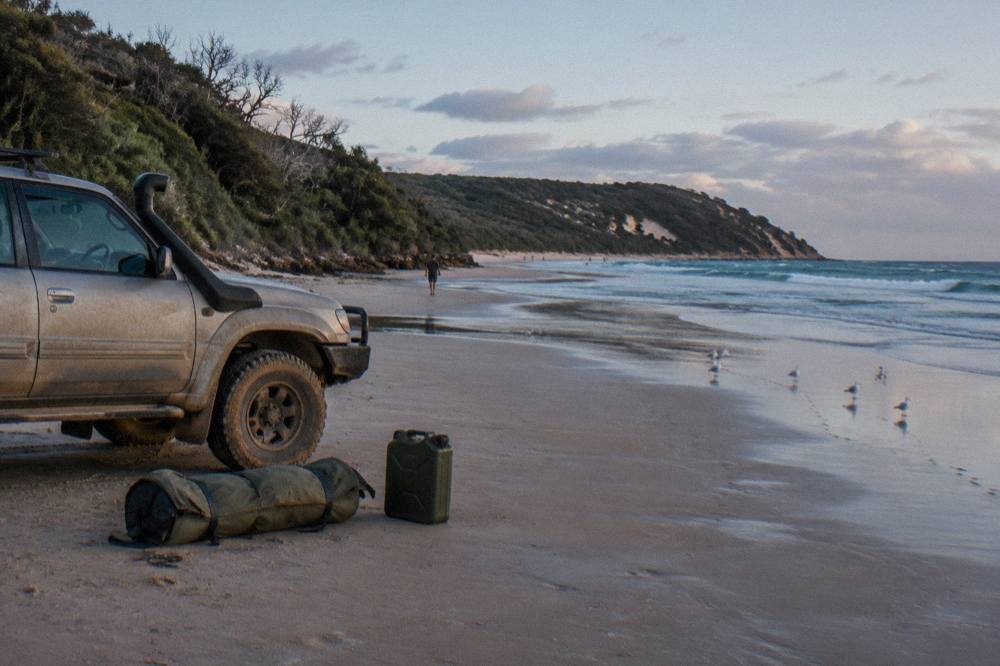
Vehicles must be registered, and unregistered recreational vehicles, quad bikes and ATVs are not permitted anywhere on the island. That rules out a chunk of the gear people assume they can bring. What you are left with is a road-registered, high-clearance 4WD, preferably with low range, because sandy tracks and beaches are the only roads there are.
Here is the permit picture in one view:
| Permit | Who needs it | Where to buy | Cost |
|---|---|---|---|
| Camping permit | Every person camping in a QPWS camping area | Queensland Parks online, before arrival | Set by Queensland Parks, check their camping page |
| Vehicle access permit (1 month or less) | Every vehicle driven on the island | Queensland Parks online, before arrival | A$61.80 |
| Vehicle access permit (up to 1 year) | Every vehicle driven on the island | Queensland Parks online, before arrival | A$311.00 |
| Combined K'gari and Cooloola VAP | Vehicles visiting both recreation areas | Queensland Parks online | 20% discount on the separate permits |
Tour guests skip all of this. The operator holds the vehicle access permit, and the tour listings state that National Park fees are included, so a passenger on a guided trip never buys a permit of their own. That single line is the quiet argument for the tour alternative, and it comes back later in this guide.
Where Can You Camp, And Which Campgrounds Are Dingo-Fenced?
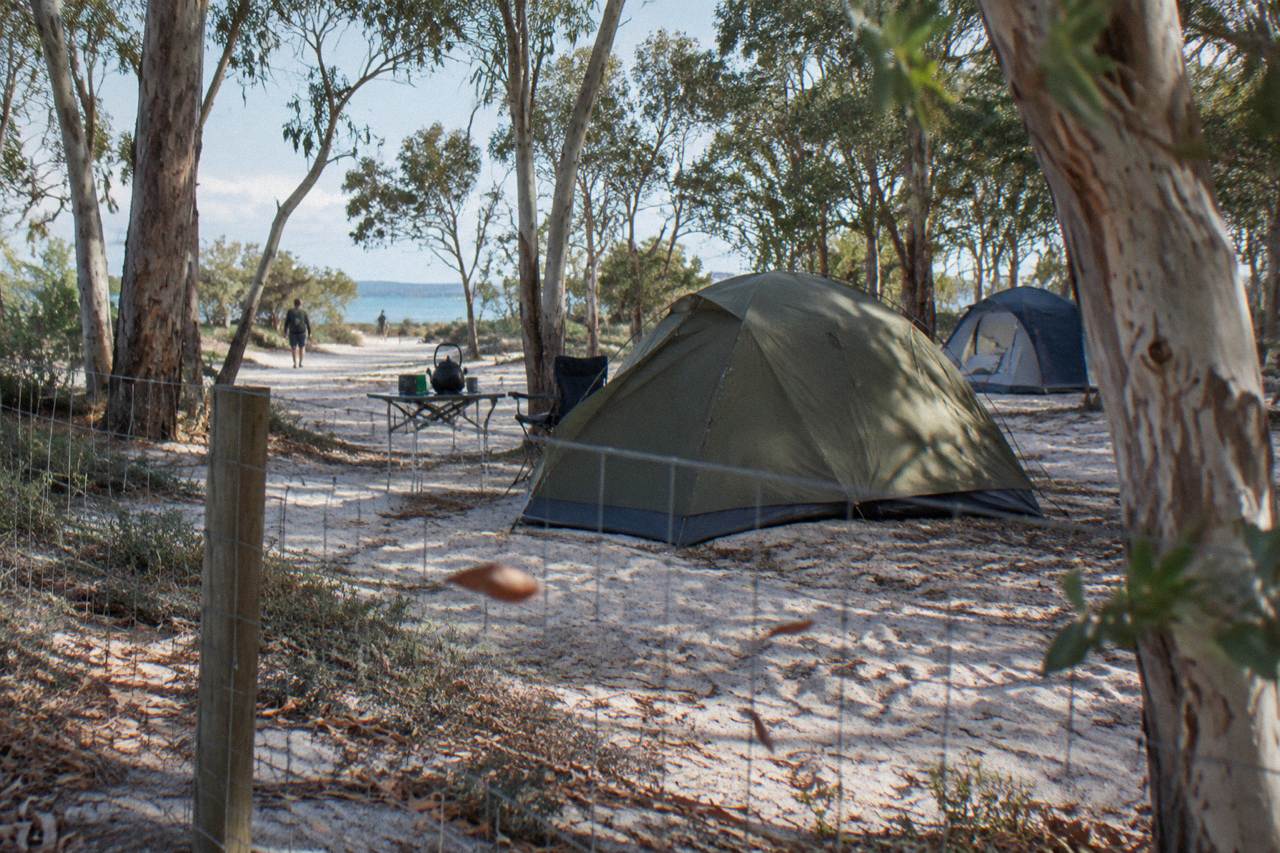
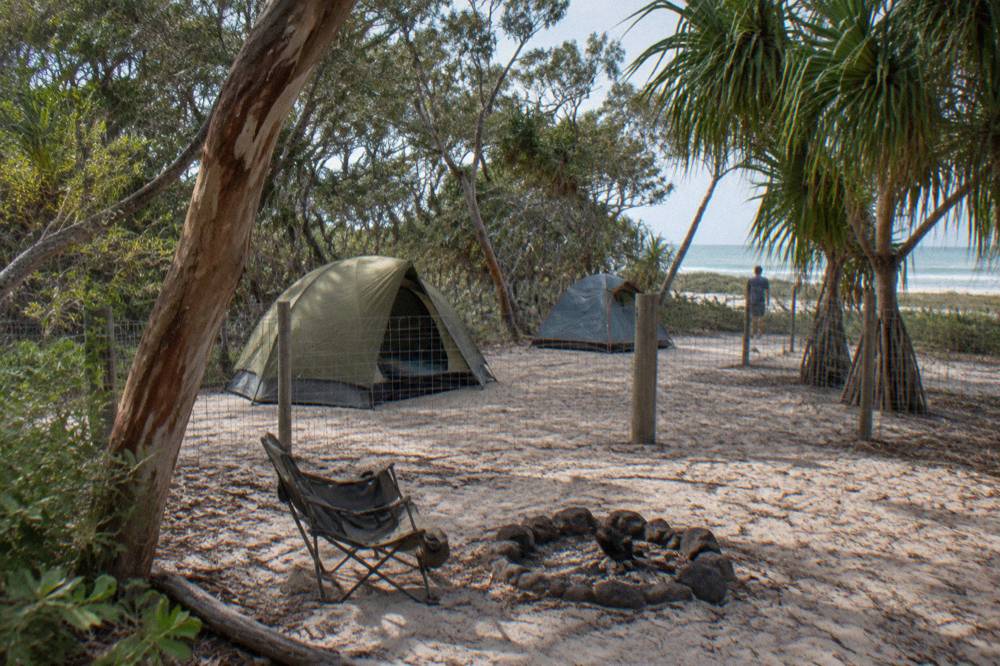
Camping on K'gari is split between QPWS camping areas and a handful of private campgrounds with more facilities. Queensland Parks strongly recommends that families with children under 14 camp in one of the dingo-deterrent fenced areas, which include Cornwells, Eli, One Tree and Wongai among others. Camp fires are only allowed in the QPWS fire rings at Dundubara and Waddy Point.
The fenced campgrounds are the headline decision for families. The fences are dingo-deterrent barriers, not cages, and Queensland Parks recommends them for any group with children under 14. They are not the only option, but a family booking an unfenced beach camp is taking on a supervision burden that the official guidance exists to reduce. The dingo rules themselves, including the fines for food left accessible, get a full section below.
Facilities vary widely. Some QPWS areas are little more than a cleared patch of sand with a toilet; others have showers, treated water in limited supply and ranger presence. Private campgrounds on the island add cabins, permanent tents and powered sites for travellers who want a halfway house between a tent and a resort. The island accommodation guide covers the roofed options in detail, including the resort and beach-house stays the tour listings use.
| Camp style | Where | Best for | Watch-outs |
|---|---|---|---|
| Fenced QPWS campground | Cornwells, Eli, One Tree, Wongai and others | Families with children under 14 | Book ahead in school holidays |
| Unfenced QPWS campground | Beaches and inland areas | Experienced adult groups | Strict food storage, group walking rules |
| Private campground | Eastern side of the island | Campers wanting showers and shade | Higher cost, check what is included |
| Camp fires | Dundubara and Waddy Point only | Cooking and evenings | Fuel stoves required everywhere else |
If reading that table already feels like work, the guided camping tours exist precisely for that reader. The three below cover the same island with the permits, gear and food handled by the operator.
How Much Does A Camping Trip Cost Compared With A Tour?
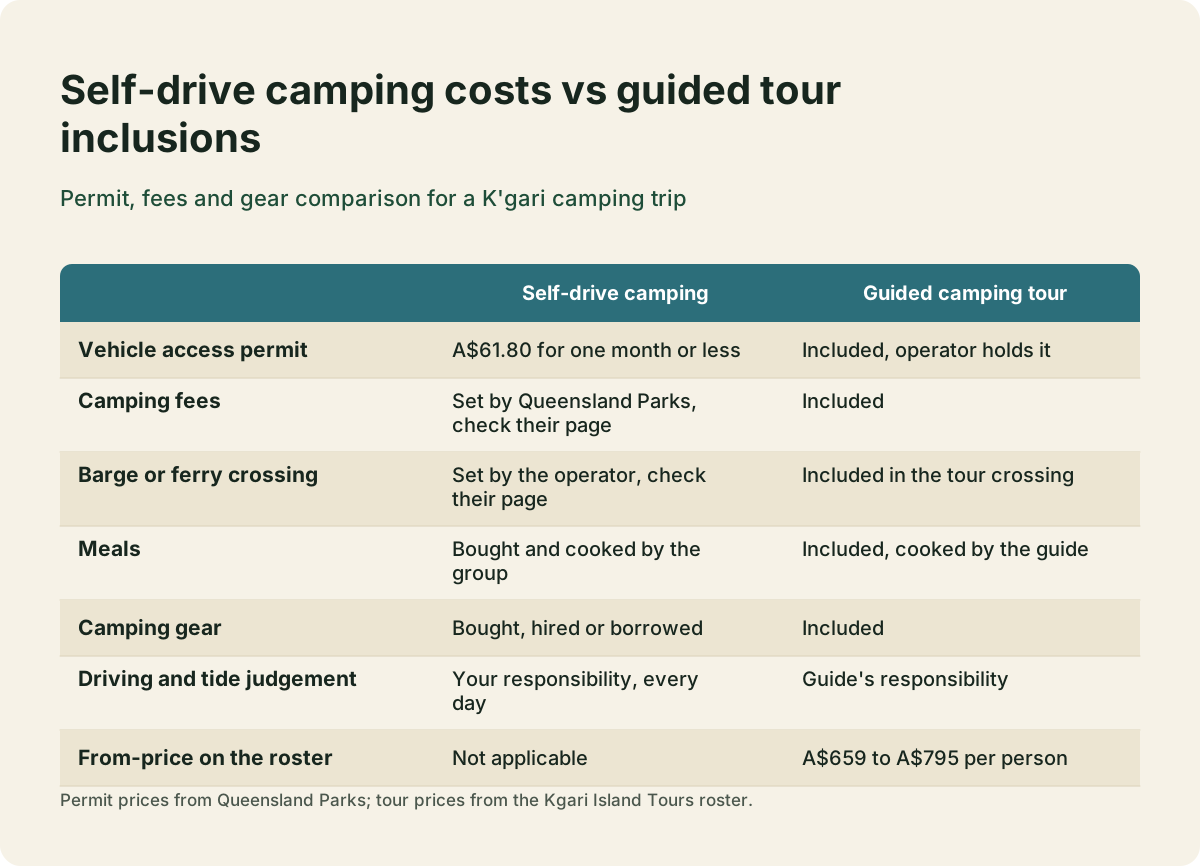
A camping trip costs less than a tour if you fill a 4WD, but more if you travel as a couple. The DIY route involves a vehicle access permit of A$61.80, Queensland Parks camping fees, barge fares, food, gear and a suitable 4WD, while guided camping tours run from A$659 per person for three days' glamping to A$795 for a two-day small-group camping tour, with permits, meals and gear included.
The honest comparison is per person, not per trip. A car carrying four adults spreads the VAP, the barge crossing and the food across four people, and the DIY route wins comfortably. A couple in one vehicle carries the same fixed costs across two people, and the gap to a guided tour narrows to the point where the guide, the gear and the cooked meals start to look like a fair trade. Barge and ferry fares are set by the operators and change, so treat any figure you last saw as indicative and check the operator's page before budgeting.
What the tour price buys is not just convenience. The two-day small-group camping tour from Rainbow Beach runs to a maximum of 13 guests with a 5.0 rating from 32 reviews, from A$795 per person, with meals and the permit included. The Pippies three-day adventure is the glamping version, from A$659 per person with a 4.8 rating from 364 reviews, and it is the one to pick if the idea of sleeping under canvas is appealing but the idea of carrying and pitching your own tent is not. Both listings include free cancellation, with the exact cutoff shown on each listing.
| Cost item | Self-drive camping | Guided camping tour |
|---|---|---|
| Vehicle access permit | A$61.80 for one month or less | Included, operator holds it |
| Camping fees | Set by Queensland Parks, check their page | Included |
| Barge or ferry crossing | Set by the operator, check their page | Included in the tour crossing |
| Meals | Bought and cooked by the group | Included, cooked by the guide |
| Camping gear | Bought, hired or borrowed | Included |
| Driving and tide judgement | Your responsibility, every day | Guide's responsibility |
| From-price on the roster | Not applicable | A$659 to A$795 per person |
The third option in that trio is the two-day 4WD beach house adventure from Hervey Bay, from A$659 per person with a 4.8 rating from 245 reviews. It is the choice for campers who like the small-group, guided structure but would rather sleep in a bed than a tent, and it makes the point that the tour roster covers every rung between hard camping and resort comfort.
What Are The Dingo Rules At Camp?
Dingoes are a protected species and the rules are enforced with real fines: up to A$28,495 for disturbing or harming a dingo, and up to A$6,908 for failing to store food securely, with an on-the-spot minimum of A$518. Queensland Parks requires campers to stay at least 20 metres from dingoes, keep children within arm's reach, walk in groups, and never run. Food, rubbish and fish scraps must be secured at all times.
The food storage rule is the one that most directly changes how a campsite runs. Every scrap of food, every rubbish bag and every fish scrap has to be locked away, not just out of sight, and the fine for getting it wrong is larger than most people's entire trip budget. In practice that means a lockbox or a vehicle as your pantry, not a cooler on a table with a weight on the lid. The full rule set, including the fenced campground guidance, is on the dingo safety guide.
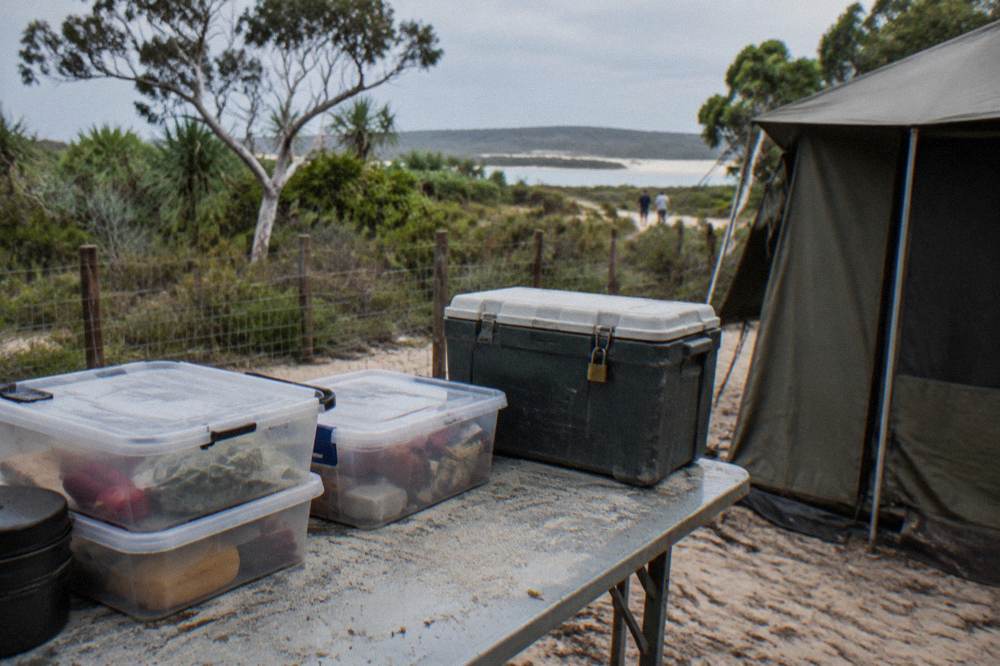
Queensland Parks also runs a spring dingo breeding-season alert each year, when young dingoes are emerging and learning to hunt, and interactions peak. The advice is to read the Queensland Parks alerts page before you travel rather than rely on a fixed calendar. Children are the core concern: never leave them unattended in tents, at beaches, at lakes or on tracks, and keep even small teenagers within arm's reach.
| Rule | What Queensland Parks requires | Penalty for getting it wrong |
|---|---|---|
| Distance | Stay at least four car lengths (20 m) from dingoes | Up to A$28,495 for disturbing or harming a dingo |
| Food storage | Secure all food, rubbish and fish scraps | Up to A$6,908, on-the-spot A$518 |
| Children | Within arm's reach at all times, never unattended | Enforcement action and camp eviction |
| Movement | Walk in groups, never run or jog | Enforcement action |
| Fenced camping | Strongly recommended for families with children under 14 | Not a fine, an official recommendation |
Guided tours absorb this too. A guide who camps on the island every week runs the food storage and the camp layout as routine, and the small-group camping tours keep group sizes at 13 or fewer, which makes the walk-in-groups rule easy to follow.
What Is Driving To A Campsite On K'gari Like?
Only high-clearance 4WDs, preferably with low range, can drive on the island, and the beach is a public road with speed limits: 80 km/h on the eastern beach, 30 km/h on inland roads, 40 km/h in pedestrian areas and 10 km/h in shared-use areas. Beach driving is best at low tide or within two hours either side, with tyre pressures reduced for the sand. Queensland road rules and seatbelt laws apply in full.
The eastern beach doubles as the island's main highway, which is why the tide matters so much to a camping trip. Arrive at the wrong tide and the soft sand above the high-tide mark can bog a vehicle that would cruise the harder sand an hour earlier. The tide times guide explains how to plan a crossing and a first day's drive around the tide chart, and it is worth reading before you book a barge slot.
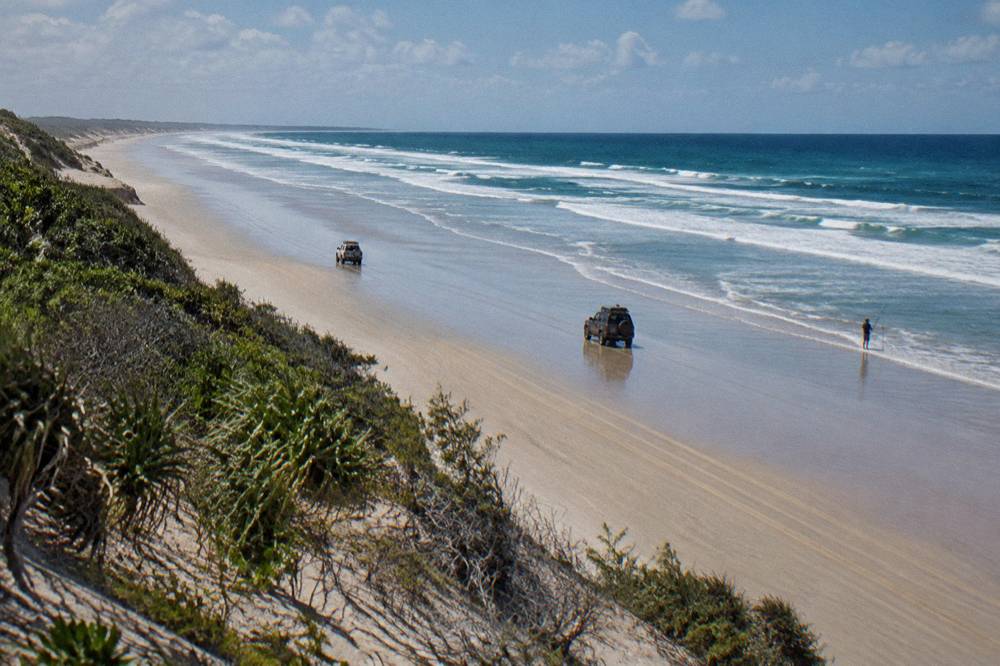
Tyre pressure is the other skill. Queensland Parks advises reducing pressures within the manufacturer's specifications for sand, then re-inflating on hard surfaces, and the common causes of serious accidents on the island are rollovers and unrestrained passengers. The practical version: deflate before the soft stuff, wear the seatbelt, slow down near people, and do not treat the beach as a rally stage.
For travellers who read that paragraph as a reason not to drive at all, the tag-along format splits the difference: you drive your own hired 4WD behind a guide who makes every tide and turn decision for the convoy. The tag-along tours guide covers that format, and the two-day and three-day tag-along listings from Rainbow Beach are the roster's purest version of it.
When Is The Best Season To Camp On K'gari?
Spring and autumn are the comfortable camping seasons: Hervey Bay's long-term averages show a mean maximum of 30.3 C in January falling to 21.8 C in July, with March the wettest month and September the driest. Marine stinger risk is higher from November to May, and summer school holidays are the busiest period on the beaches, lakes and campsites. Winter is cool at night but dry and quiet.
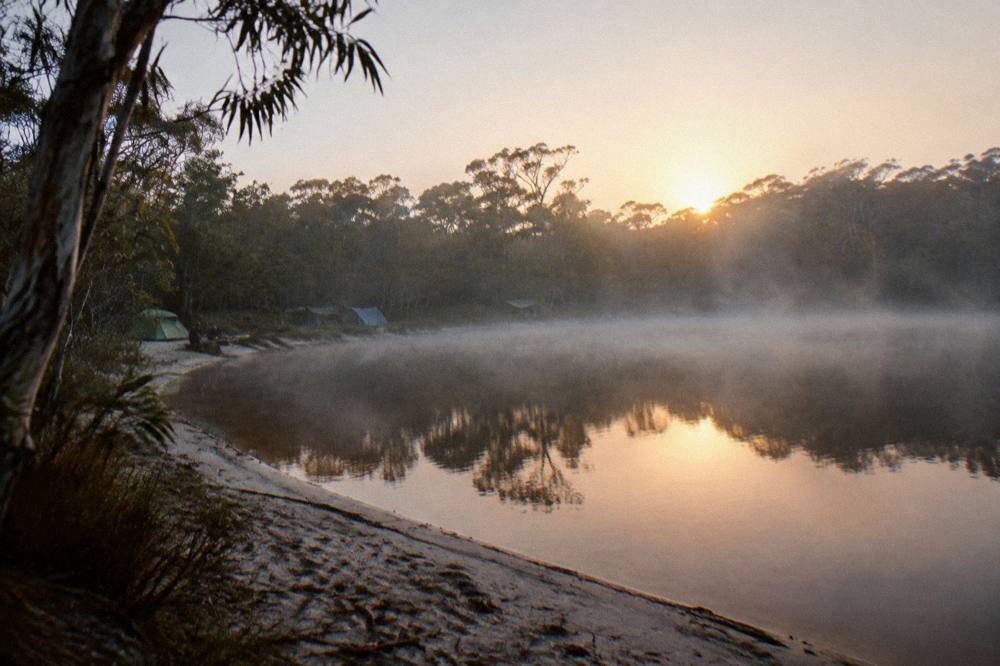
The climate numbers come from the Bureau of Meteorology's long-term averages for Hervey Bay Airport, and they translate simply: summer camping is hot, humid and crowded, with a mean minimum of 22.0 C in January that barely cools a tent. Winter nights drop to a mean minimum of 10.0 C in July, cold enough for a proper sleeping bag but dry, and the island is at its least busy outside the school-holiday blocks. September, the driest month, is close to the sweet spot.
| Season | Conditions | Camping verdict |
|---|---|---|
| Summer (Dec to Feb) | Mean max 30.3 C in January, wet storms, peak crowds | Hard work, book fenced camps far ahead |
| Autumn (Mar to May) | March wettest at 147.9 mm, easing through May | Good after March, stinger risk until May |
| Winter (Jun to Aug) | Mean max 21.8 C in July, dry, cold nights | Comfortable days, pack warm bedding |
| Spring (Sep to Nov) | September driest at 33.5 mm, mild, dingo breeding season alert | Excellent, read the parks alerts page |
Swimming is a season question too. The ocean is not patrolled and swimming in it is not recommended; the freshwater lakes are the swim option, and no food except drinking water is allowed on lake shores. Whale season in Hervey Bay runs inside July to October with operator-published windows, so a spring camping trip pairs neatly with a whale cruise before or after the barge crossing.
Is A Guided Camping Tour Worth It Instead?
For a self-sufficient group of four with a 4WD, the DIY route is cheaper and manageable; for couples, families without a suitable vehicle, or anyone uneasy about tides and dingoes, guided tours are worth it, with two-day camping at A$795 per person and three-day glamping at A$659 including permits, meals, gear, and a guide with free cancellation, cutoffs vary by listing.
The two-day small-group camping tour from Rainbow Beach is the closest thing on the roster to a classic camping trip with the friction removed: maximum 13 guests, tents and meals handled, and a 5.0 rating from 32 reviews, a small pool but a perfect one. The review count is printed here because a rating means nothing without it.
The Pippies three-day adventure is the better fit for travellers who want more island for less nightly effort: glamping beds, three days of driving and swimming stops, from A$659 per person with a 4.8 rating from 364 reviews. It starts from Rainbow Beach with no hotel pickup, so you make your own way to the meeting point.
And the two-day 4WD beach house adventure from Hervey Bay, from A$659 per person with a 4.8 rating from 245 reviews, is the option that answers the question most campers eventually ask: what if I want the small-group trip but not the tent? A beach house bed, the same guided driving, and the same permits and meals included.
The honest summary from Kgari Island Tours: camping on K'gari is a genuinely great trip for people who own or can hire the right vehicle and enjoy the logistics. For everyone else, the guided camping tours deliver the same nights on the island, the same lakes and the same beach drives, with the paperwork, the food and the tide decisions carried by someone who does them every week.
If you are still weighing the formats, the 4WD hire versus tour comparison runs the numbers on renting a vehicle against booking a seat, and the day tours compared guide is the reference if you decide one long day is enough island.
Common Questions About Fraser Island Camping
Do you need a permit to camp on Fraser Island?
Yes, two in practice. Every person camping in a Queensland Parks camping area needs a camping permit bought before arrival, and every vehicle driven on the island needs a vehicle access permit, A$61.80 for one month or less. Neither can be bought from rangers on the island, and mobile reception is unreliable.
How much does it cost to camp on Fraser Island?
Camping fees are set by Queensland Parks and change, so check their camping page for the current per-person rate. The fixed vehicle costs are the vehicle access permit at A$61.80 for a month or less, plus barge or ferry fares set by the operators. Guided camping tours on the roster run from A$659 to A$795 per person with permits, meals and gear included.
Which campgrounds on K'gari are dingo-fenced?
Queensland Parks lists fenced, dingo-deterrent camping areas including Cornwells, Eli, One Tree and Wongai among others, and strongly recommends them for families with children under 14. A map of the fenced areas is available on the Queensland Parks website.
Can you have a camp fire on Fraser Island?
Only in the Queensland Parks fire rings at Dundubara and Waddy Point. Everywhere else on the island, campers must use fuel stoves for cooking.
Is it safe to camp on Fraser Island with kids?
Yes, with the official precautions. Queensland Parks recommends fenced campgrounds for families with children under 14, requires children to be within arm's reach at all times, and fines failing to store food securely at up to A$6,908. Read the parks alerts page before travelling, as dingo activity is seasonal.
Do you need a 4WD to camp on K'gari?
Yes, if you are driving yourself. The island's beaches and sandy inland tracks are only suitable for registered, high-clearance 4WDs, preferably with low range. Guided camping tours remove that requirement entirely, since the operator drives and holds the vehicle access permit.