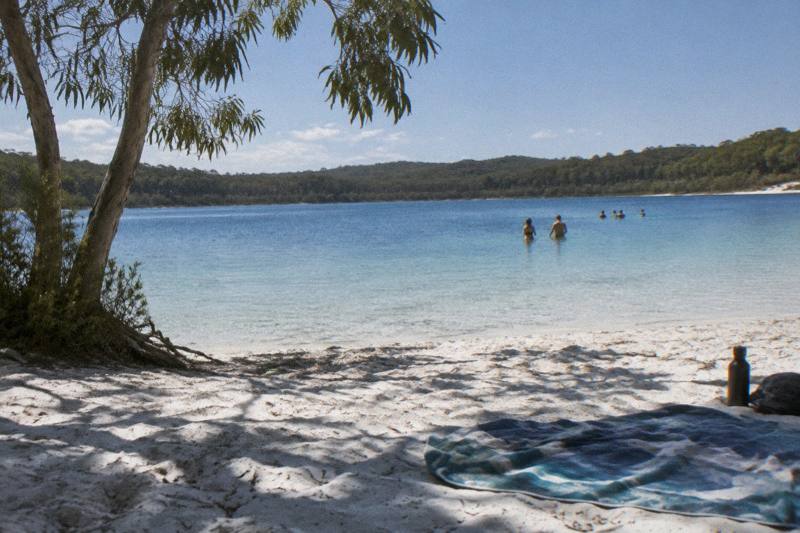
Fraser Island Dingo Safety: Rules, Fines And What To Do
K'gari's dingoes are protected, wild and strictly managed, and the rules around them carry real fines. Here is what Queensland Parks actually requires, and how guided tours fold most of it into the ticket.
Short answer
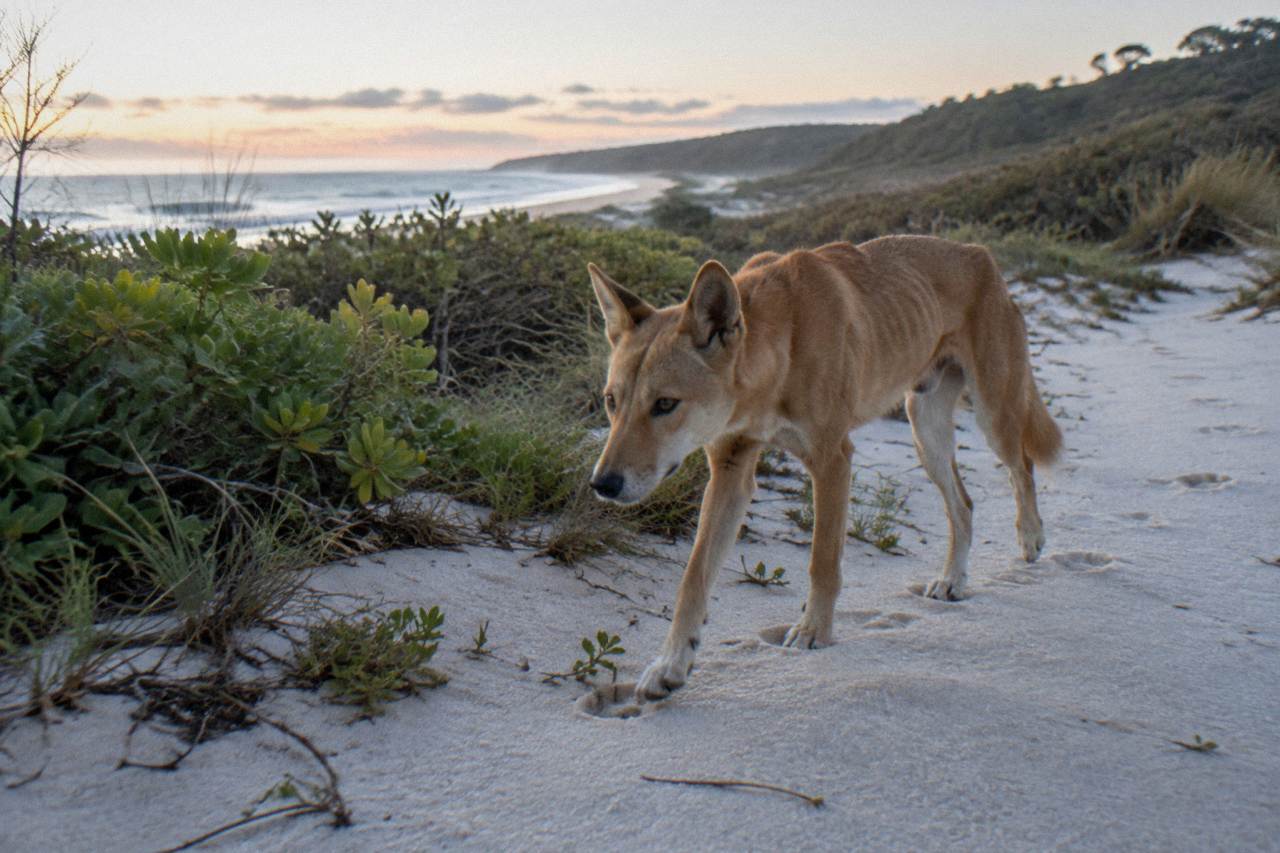
Stay at least 20 m from dingoes, never feed them or leave food out, keep children within arm's reach, and camp in a fenced area with kids under 14. Fines reach $28,495 for disturbing a dingo and $6,908 for failing to store food. Guided tours handle the distance and food rules for you.
K'gari, the island most searches still call Fraser Island, is home to the wongari, the dingo population that Queensland Parks manages as a protected native species. The rules that govern interactions with them are unusually specific and unusually expensive to break: the maximum fine for disturbing or harming a dingo is $28,495, and the penalty infringement notice for driving onto the island without a vehicle access permit is $518. This guide sets out what Queensland Parks actually publishes, in plain terms, and explains how a guided tour quietly absorbs most of the compliance work.
The island is 123 km long, the world's largest sand island, and its dingoes are wild animals, not park attractions. An encounter is possible on any beach, at any lake and at any campground, which is why the rules exist and why they apply on public and private land alike. If you are planning a trip with Kgari Island Tours, the tours listed there all include the crossing and the park fees, and most include a guide whose job includes reading dingo behaviour.
How Dangerous Are Dingoes On K'gari Really?
Dingoes on K'gari are wild predators and are treated as a genuine safety issue by Queensland Parks, but the risk is managed with rules rather than avoidance. The published guidance is about behaviour: keep distance, store food, supervise children and never run. Encounters are common enough that the island runs a dedicated dingo-safety program, and most incidents trace back to food or habituation.
The honest framing is this: the wongari are not pets, not dogs in the domestic sense, and not habituated by design. Queensland Parks actively works to prevent them from associating people with food, because a fed dingo becomes a bold dingo, and a bold dingo is the one that gets close enough for an incident. The offence of feeding a dingo or leaving food accessible applies anywhere on the island, on public and private land.
That is why the rules are written the way they are. They are not bureaucratic caution, they are the mechanism that keeps a wild predator population and several hundred thousand annual visitors in the same landscape. The dingo-safety page from Queensland Parks is the primary source for everything in this guide, and it is worth reading in full before any independent trip.
For most visitors the practical takeaway is smaller than the headline fines suggest: do not carry food in view, do not leave anything scented in a tent, keep small children physically close, and give any dingo you see the space it wants. A guided day or multi-day tour handles the food discipline for you, since meals are served and packed away by the operator, and the guide positions the group when wildlife appears. The nine-hour coach day tour with lunch included is the most common way first-time visitors do this.
The Official Rules: Distance, Food And Children
The four core rules are: stay at least four car lengths, about 20 m, from any dingo; keep children within arm's reach at all times; never feed a dingo or leave food, scraps or bait accessible; and do not run or jog in dingo areas. Walking in groups is advised, and families with children under 14 are strongly recommended to camp in fenced campgrounds.
Each rule answers a specific failure mode. The 20 m distance exists because dingoes assess threat at close range, and a person who closes that gap changes the animal's calculation. The arm's-reach rule for children exists because dingoes read small humans differently from adults, and Queensland Parks extends it even to small teenagers. The food rule is the one with its own fine tier, because food is the single biggest driver of habituation.
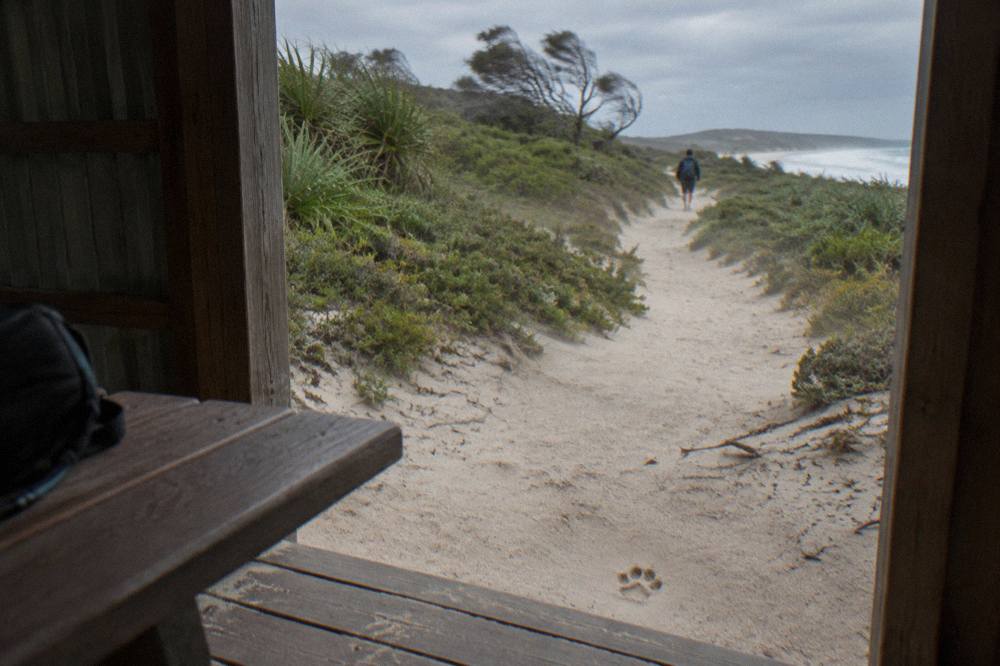
The running ban is less obvious and worth understanding. A moving human triggers chase behaviour in a predator, and several documented incidents involve people jogging on the eastern beach. Queensland Parks also advises carrying a dingo safety stick, a plain wooden stake, when walking outside fenced areas, and walking in groups rather than alone. None of this is alarmism; it is the same logic as snake etiquette on mainland trails, written for an animal with more curiosity.
| Rule | What Queensland Parks states | Who it applies to |
|---|---|---|
| Distance | Stay at least four car lengths, 20 m, from dingoes | Everyone, everywhere on the island |
| Children | Keep within arm's reach, never leave unattended | All adults with children |
| Food | Never feed, never leave food, scraps or bait accessible | Everyone, public and private land |
| Movement | Do not run or jog; walk in groups | Everyone outside fenced areas |
| Camping | Families with children 14 and under should camp in fenced areas | Family campers |
For travellers who would rather not carry that mental checklist all day, the guided formats are the practical alternative. The coach day tour from Hervey Bay, the small-group day tours, and the multi-day camping trips all put a trained guide between the group and any wildlife decision, and the listings state that National Park fees are included, so the permit side is covered too. If you are weighing the options, the day tours compared guide breaks down every format on this site side by side.
The Fines: What A Dingo Offence Actually Costs
The maximum fine for disturbing or harming a dingo is $28,495, with an on-the-spot penalty of $2,763. Failing to store food securely carries a maximum fine of $6,908, with an on-the-spot penalty of $518. These are published figures from Queensland Parks, and they sit on top of ordinary penalties like the $518 infringement for driving without a vehicle access permit.
The fine structure tells you where the risk really lies. The food-storage offence has its own tier because it is the most common and the most consequential: a dingo that learns to raid campsites and bins becomes a management problem, and managed animals do not fare well. Queensland Parks treats a careless picnic as a genuine harm to the animal, and prices it accordingly.
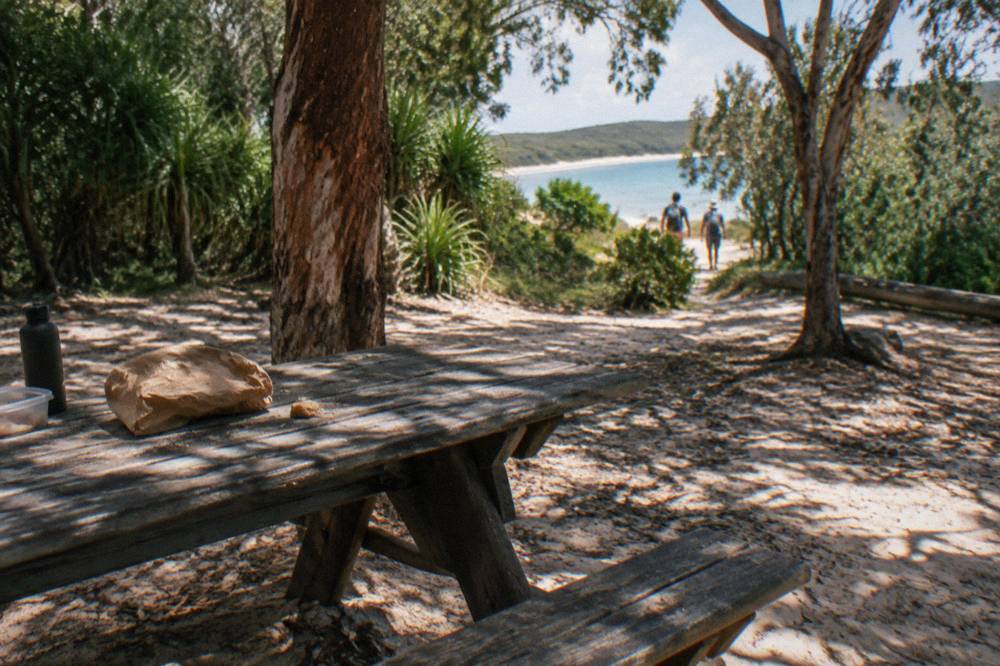
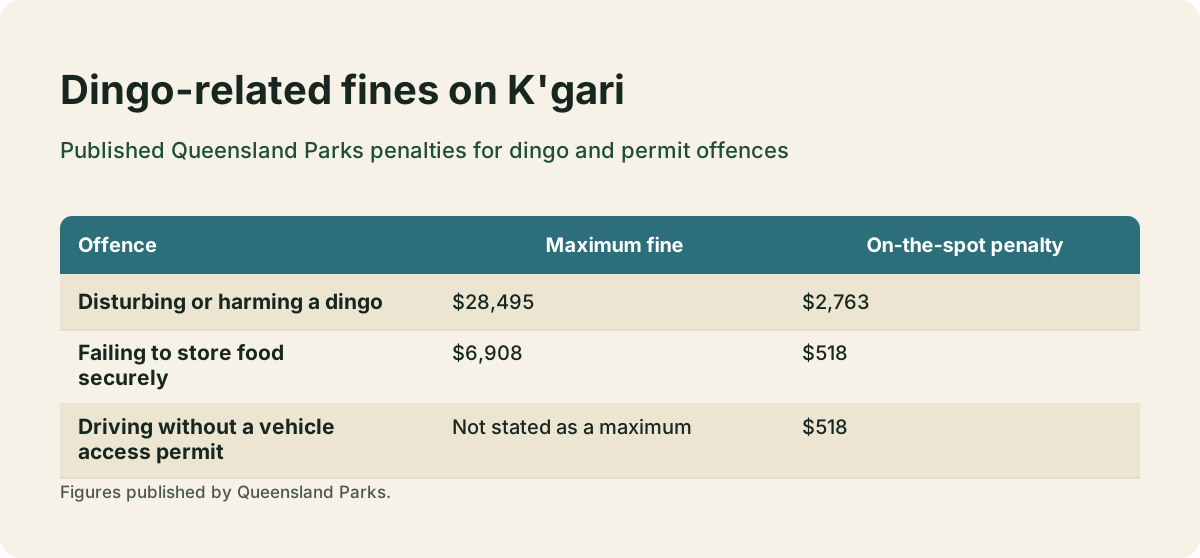
It is worth being precise about what the fines apply to. They cover deliberate feeding, leaving food or fish scraps accessible, and disturbing or harming an animal. They do not penalise an encounter that happens despite compliance. A visitor who follows the distance, food and children rules has done what the law asks; the penalties target behaviour that endangers the dingo or other people.
| Offence | Maximum fine | On-the-spot fine or penalty notice |
|---|---|---|
| Disturbing or harming a dingo | $28,495 | $2,763 |
| Failing to store food securely | $6,908 | $518 |
| Driving without a vehicle access permit | Not stated as a maximum | $518 |
The vehicle access permit is a separate compliance item that trips up self-drive visitors. A permit is required for every vehicle driven on the island, at $61.80 for one month or less and $311.00 for longer stays, and tour guests do not buy one at all because the operator holds it and the listings state park fees are included. The vehicle permit guide covers that process in full.
Dingo Breeding Season And When Encounters Are Most Likely
Spring is dingo breeding and emergence season on K'gari, and Queensland Parks runs a standing alert for it each year without publishing fixed dates in advance. During this window young dingoes are learning to hunt and adults are more territorial, so encounters near campsites and beaches become more likely. Visitors should read the park alerts page before travelling, since conditions and alerts change.
The seasonal pattern matters for trip planning. The alert exists because juvenile dingoes disperse in spring and show more interest in people and camps, and because adults with pups behave more defensively. It is not a reason to avoid the island, but it is a reason to be stricter about the food rules and to prefer fenced camping if you are travelling with children.
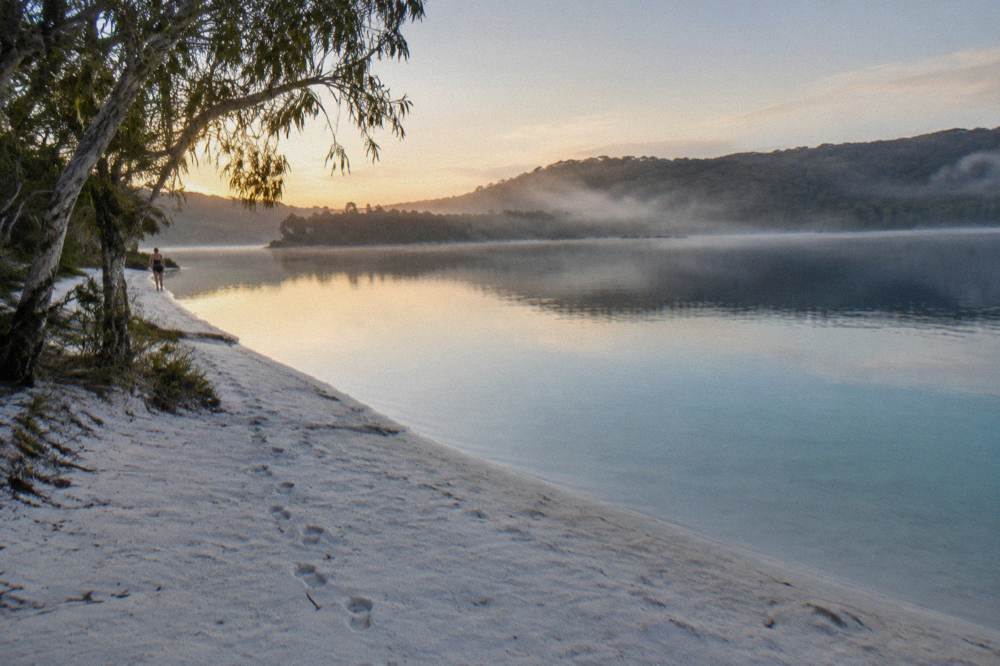
Queensland Parks maintains an alerts page that lists current notices for the island, and reading it before departure is the single most useful habit for any independent traveller. Conditions on the island change with weather and tides as well as with wildlife, and the staying safe page consolidates the standing guidance that applies year round.
Guided tours do not remove the season, but they do remove the guesswork. A guide who works the island weekly knows the current behaviour patterns, and the multi-day formats in particular, like the two-day small-group camping tour with a maximum of 13 guests, keep meals and food storage under the operator's control at all times.
Camping Safely: Fenced Areas And Food Storage
Camping on K'gari requires a permit bought before arrival, campfires are only allowed in the QPWS fire rings at Dundubara and Waddy Point, and families with children under 14 are strongly recommended to camp in a dingo-deterrent fenced campground. Food must never be left in tents or open camps, and permits cannot be bought from rangers on the island because mobile reception is unreliable.
The fenced campgrounds exist specifically because of the dingo program. Queensland Parks publishes a list of camping areas with dingo-deterrent fences, and camping inside one is the single most effective structural protection for families. The fences are not walls in the urban sense, they are deterrent barriers, but they change the risk profile enough that the parks service recommends them explicitly for younger children.
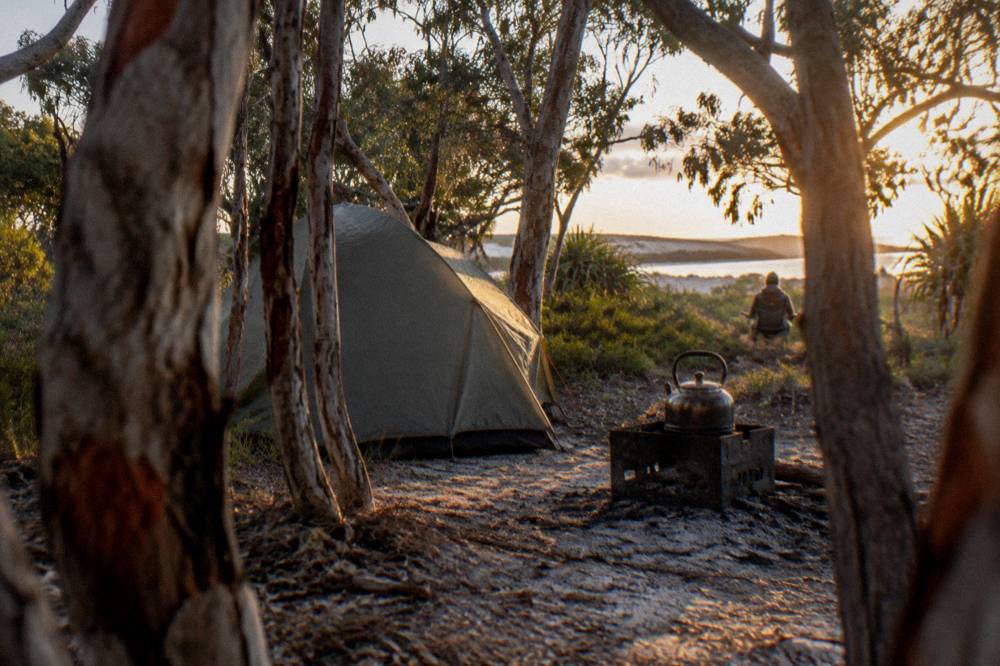
Food storage is where campers most often go wrong. Fish scraps, cooking waste and even scented packaging attract dingoes from a long way off, and the $6,908 maximum exists because a single careless camp can habituate an animal. The practical routine is simple: food goes in locked containers, in a vehicle where possible, never in a tent, and waste leaves the campsite with you.
| Camping item | The rule | Why it matters for dingoes |
|---|---|---|
| Permit | Buy before arrival | No reception on island to buy one |
| Campfires | Fire rings at Dundubara and Waddy Point only | Food smells and scraps concentrate at fires |
| Food | Locked storage, never in tents | Accessible food is a fineable offence |
| Children under 14 | Camp in a fenced area | Standing recommendation from Queensland Parks |
The alternative to managing all of this yourself is a camping tour. The two-day small-group camping tour from Rainbow Beach, rated 5.0 from 32 reviews and from A$795 per person, runs to a maximum of 13 guests with all meals listed as included, which puts the entire food chain under the operator's management. The full camping picture, including the permitted areas and the booking process, is in the Fraser Island camping guide.
Do You Need To Worry On A Guided Tour?
On a guided tour, the dingo rules are largely the operator's problem rather than yours. The guide manages food service and storage, holds the vehicle access permit, positions the group at wildlife sightings and carries the local knowledge that the rules assume. You still keep children close and never feed anything, but the compliance load drops sharply compared with self-driving or independent camping.
This is the quiet argument for guided travel on K'gari, and it deserves to be stated plainly. Every rule in this guide is easier to follow when someone whose job it is handles the food, the permits and the group's position. The listings on this site all state that National Park fees are included, and every tour format from the large coach groups to the small 4WD groups includes a guide.
The small-group formats trade group size for flexibility. The Fraser Experience small-group full-day guided tour from Hervey Bay, rated 4.8 from 102 reviews and from A$330 per person, caps numbers at 17 guests, which makes the guide's job of keeping everyone oriented much simpler. One guest review on the all-inclusive coach day tour captures the tone these guides aim for: "Butch was great!"
The tag-along format sits in between: you drive your own 4WD, but a lead vehicle and guide set the route and the pace. The three-day tag-along tour from Rainbow Beach, rated 5.0 from 1128 reviews and from A$659 per person, is the flagship of that style, and one review describes the dynamic well: "Weekend of a lifetime! We had a fantastic group of people which made the 3 day trip amazing, full of laughs and jokes."
What To Do If A Dingo Approaches You
If a dingo approaches, stand still, face the animal, keep children behind you, and back away slowly without turning your back. Do not run, do not crouch or lie down, and do not offer food to move it along. If you are carrying a dingo safety stick, hold it in front of you. Report any close encounter or aggressive behaviour to a ranger or campground host.
The instinct to run is the dangerous one, and every official source works hard to pre-empt it. Running triggers chase behaviour. Standing tall, facing the animal and moving backwards calmly is counter-intuitive but it works, because it communicates neither prey nor threat. Crouching or lying down is specifically called out as a mistake, since it puts a person at dingo height.
Group behaviour matters as much as individual behaviour. Dingoes rarely approach a standing group of adults, which is why walking in groups is standing advice and why guided tours, which are groups by definition, have a structural advantage. If an encounter happens on a tour, the guide will direct the response, and the correct guest behaviour is simply to follow it.
Reporting is the final piece. Close encounters teach managers where habituation is starting, and early reports prevent the escalation that ends badly for the animal. The dingo interactions page from Queensland Parks explains what to report and why the offence rules extend across all land on the island.
Packing And Planning For A Dingo-Aware Trip
Pack food in sealed, lockable containers, bring a rubbish bag you can close and carry out, keep a torch for evening movement around camp, and if you are walking independently outside fenced areas, carry a dingo safety stick. On any guided tour, the packing list shrinks to clothing, water and a camera, because the operator handles food, permits and group management.
The packing logic follows directly from the rules. Sealed containers and carried-out rubbish are the food rule made physical. A torch is about the arm's-reach rule for children after dark. The stick is a Queensland Parks recommendation for walkers, and it costs nothing to cut one before leaving camp for a beach walk.
| Trip style | Dingo-related items to pack | What the operator covers |
|---|---|---|
| Independent camping | Lockable food boxes, rubbish bags, torch, safety stick | Nothing |
| Self-drive day trip | Sealed food bags, rubbish bag | Permit is yours to buy |
| Guided day tour | Water, camera | Food, permit, guide, group safety |
| Guided camping tour | Sleeping gear per listing | Meals, storage, permits, guide |
Season shapes the rest of the plan. Hervey Bay Airport's long-term averages put the mean maximum at 30.3 C in January and 21.8 C in July, with March the wettest month and September the driest, and spring trips land in the dingo alert window, so the best time to visit guide is worth a read alongside this one. Whatever the month, check the Queensland Parks alerts page close to departure, because conditions and notices change.
The through-line of all of it is simple: K'gari's dingoes are safest for everyone, including themselves, when visitors are boring. No food, no approach, no running, no unsupervised children. A guided tour makes being boring easy, which is why the format suits safety-anxious travellers so well. The three tours below cover the range from a single coached day to a small-group camping trip, all with park fees included and free cancellation, with the exact cutoff shown on each listing.
Common Questions About Dingo Safety On Fraser Island
Are dingoes on Fraser Island dangerous?
They are wild predators and are managed as a genuine safety issue, but the risk is controlled by following the published rules: 20 m distance, no food, children within arm's reach, no running. Most incidents trace back to food or habituation, which is exactly what the rules prevent.
How close can you get to a dingo on K'gari?
Stay at least four car lengths, about 20 m, away from any dingo. If one approaches you, stand still, face it and back away slowly rather than closing the gap or running.
What is the fine for feeding a dingo on Fraser Island?
Disturbing or harming a dingo carries a maximum fine of $28,495. Failing to store food securely, which includes feeding and leaving scraps, carries a maximum of $6,908 with an on-the-spot penalty of $518.
Do I need to worry about dingoes on a guided tour?
Much less. The guide manages food service and storage, holds the vehicle access permit, and positions the group at any wildlife sighting. You still keep children close and never feed anything, but the operator carries the compliance load.
When is dingo breeding season on K'gari?
Spring. Queensland Parks runs a standing rearing and emergence season alert each year and publishes current notices on its alerts page, which should be read before travelling since conditions and alerts change.
Where should families with children camp on Fraser Island?
Queensland Parks strongly recommends that families with children 14 and under camp in a dingo-deterrent fenced campground, of which several are listed on the parks website. Camping permits must be bought before arrival.