Are There Crocs On Fraser Island?
Are there crocs on Fraser Island? The honest answer from official park safety pages, the wildlife that actually matters on K'gari, and the tours that handle the logistics for you.
Crocodile questions come up constantly in K'gari trip planning, and the short answer is reassuring: the official Queensland Parks safety material for the island does not list crocodiles among its hazards. The safety pages name rips, sharks and marine stingers as the reasons the ocean is off-limits for swimming, and they name dingoes, sand driving and dune activity as the risks that actually need managing. This article walks through what the official sources say, what wildlife you are genuinely likely to meet, and why the practical safety conversation on K'gari is about water choices and wongari, not crocodilians. Once the safety picture is clear, the next planning question is what the trip will set you back, and our breakdown of what a K'gari holiday really costs covers permits, ferries and tour prices in plain terms.
Are There Crocs On Fraser Island?
No crocodile population is documented on K'gari in the official park material, and Queensland Parks does not include crocodiles in its safety advice for the island. The hazards the safety pages actually name are unpatrolled ocean water with rips and sharks, marine stingers in the warmer months, and the island's protected dingo population. Estuarine crocodiles are a tropical northern species, and K'gari sits well south of the crocodile country that makes the news. If you're curious about the name K'gari itself, this guide to the K'gari name change and how to say it explains where the island's name came from.
The question is fair, though. Australia has both crocodile species, the larger estuarine crocodile and the smaller freshwater crocodile, and the saltwater animal in particular is a genuine, well-managed danger across the tropical north of the country. Visitors from overseas, and plenty from southern Australia, reasonably wonder whether a big sand island with creeks, lakes and 123 km of coastline falls inside that range. The honest answer is that the island's own safety documentation treats it as outside crocodile country. Queensland Parks publishes detailed safety guidance for K'gari covering driving, swimming, dingoes, stingers, dunes and campfires, and crocodiles do not appear in it. Once crocodiles are off your list of worries, the bigger question becomes how much time the island actually deserves, and our breakdown of whether a day trip to Fraser Island is worth it helps you decide.
That is a statement about what the official record says, and it is the right standard to plan on. It is not a promise that a lone wandering animal has never been sighted anywhere along the Fraser Coast, because individual crocodiles occasionally turn up well outside their core range and wildlife agencies track those movements. What matters for a visitor is different: there is no established crocodile presence on the island, no crocodile management program here, and no crocodile-related safety rule in the park's own material. The animals that shape the rules are the wongari, the dingoes, and the water itself.
So the practical takeaway is simple. You do not need crocodile-specific precautions on K'gari, and nobody on the island, from rangers to tour operators, runs their safety briefings around them. You do need to take the ocean seriously, take the stinger season seriously, and take the dingo rules seriously, because those are the three things the official pages spend their words on. The rest of this article covers each of them, plus what a guided tour changes about the picture.
What Wildlife Actually Lives On K'gari?
K'gari's headline wildlife is its protected dingo population, the wongari, which is the animal every safety rule on the island is built around. Beyond them the island carries brushtail possums, gliders, echidnas, flying foxes, goannas, snakes, and a long bird list, plus humpback whales passing the Fraser Coast between roughly June and November each year. None of the island's land animals is a crocodilian.
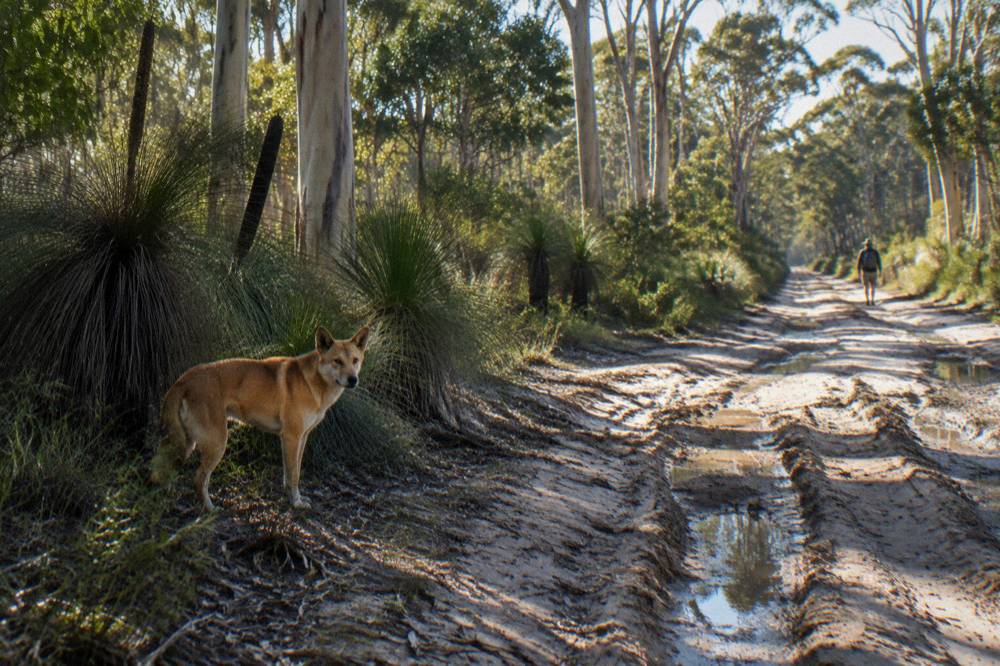
The wongari deserve their reputation as the island's signature animal. They are a protected species, genetically distinct, and the subject of a dedicated Queensland Parks management program. They look leaner and more athletic than the domestic dogs visitors are used to, and they are fully wild: the rules forbid feeding them, attracting them or leaving food where they can reach it. A dingo encounter on a beach is one of the most memorable parts of a K'gari trip for many visitors, and it is memorable in a good way precisely because the rules keep the animals wary of people. Feeding them, even accidentally through poor food storage, is what erodes that wariness and creates problems for both sides.
The rest of the land roster is classic Australian coastal bush. Goannas patrol campground edges looking for scraps, which is one more reason food storage matters. Carpet pythons and a few elapid snake species live on the island, as they do across mainland Queensland, and the standard advice applies everywhere: give snakes distance, never try to handle one, and let them move off. Echidnas and possums are common around the campgrounds at night. Birdlife is a genuine draw in its own right, from sea eagles over the eastern beach to the migratory shorebirds that use the sand flats.
The water side is where K'gari gets special. The island sits on the whale migration route, and Hervey Bay is one of the most famous whale watching destinations in the country, with humpbacks resting in the sheltered bay through the middle of the season. The whale season windows published by Hervey Bay operators all sit inside the July to October stretch, and the whales are wild animals, so sightings are never promised, only very likely in peak months. Turtles, dolphins and rays also use the island's waters. None of this marine life requires the kind of defensive planning a crocodile region would.
For visitors who want the wildlife without the logistics of driving themselves, the guided options cover the ground efficiently. The nine-hour coach day tour with lunch included runs the island's greatest hits with a driver-guide who knows where the animals tend to be, and the boat tours out of Hervey Bay approach the island from the water side, which is where the whales, turtles and dolphins live. Both formats hand the safety briefings to people who give them every day.
Is It Safe To Swim On Fraser Island?
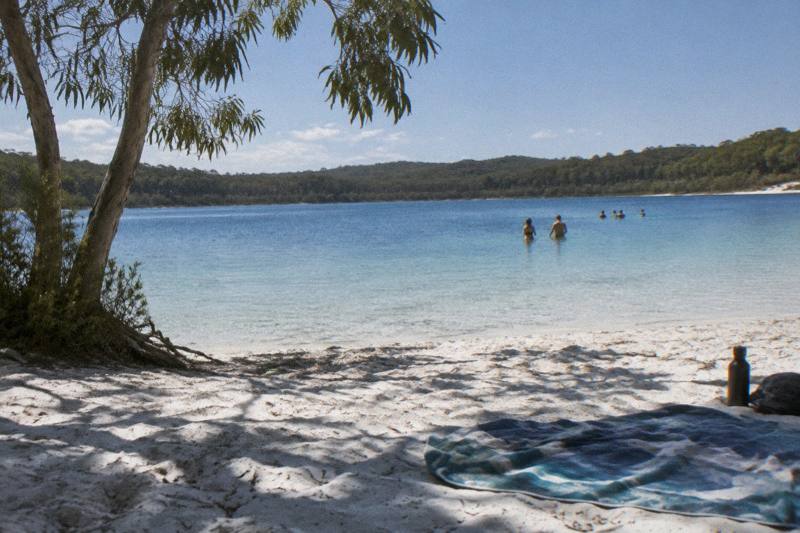
Not in the ocean, and yes in the freshwater lakes, with conditions. Queensland Parks states plainly that there are no patrolled swimming areas on K'gari and that ocean swimming is unsafe because of rips and sharks, and marine stingers add a seasonal risk from November to May. The perched freshwater lakes, Lake McKenzie above all, are the island's swimming option, and the lake rules are simple: bring only drinking water to the shore, never the dune slide at Lake Wabby.
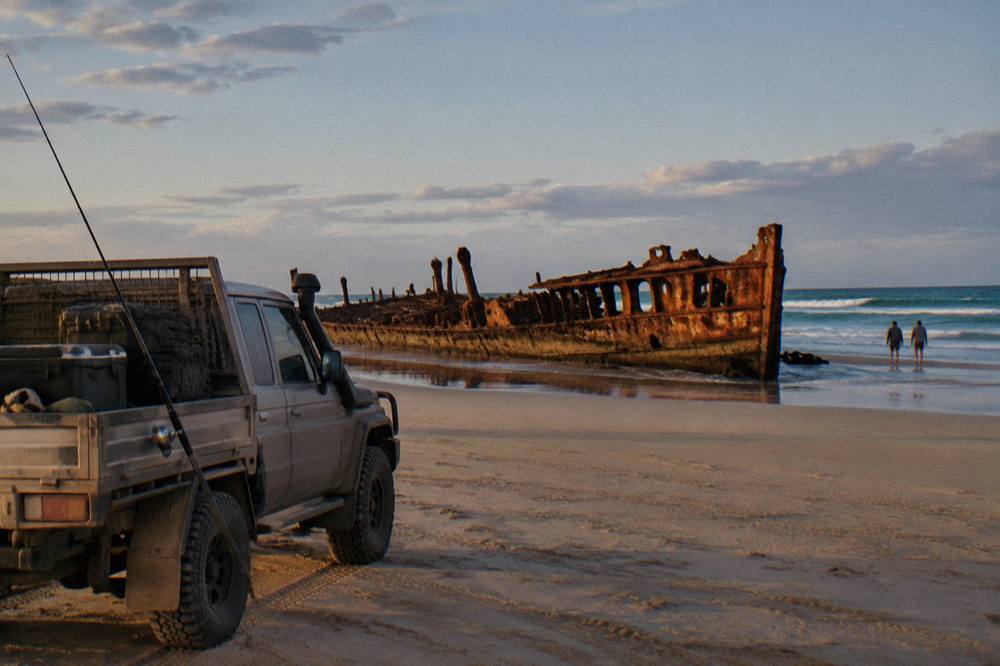
The ocean ban surprises people who look at 75 Mile Beach and see a postcard. The beach is magnificent, and it is a road, a fishing spot and a flight strip, but it is not a swimming beach. There are no lifeguards, no flags and no patrol. The water moves with serious rips along the eastern coast, sharks are a resident hazard, and the island's medical support is limited, which is exactly why the park's own safety page puts it in such direct terms. This is also the honest answer to the crocodile question in disguise: the official advice about K'gari's saltwater is about rips, sharks and stingers, full stop.
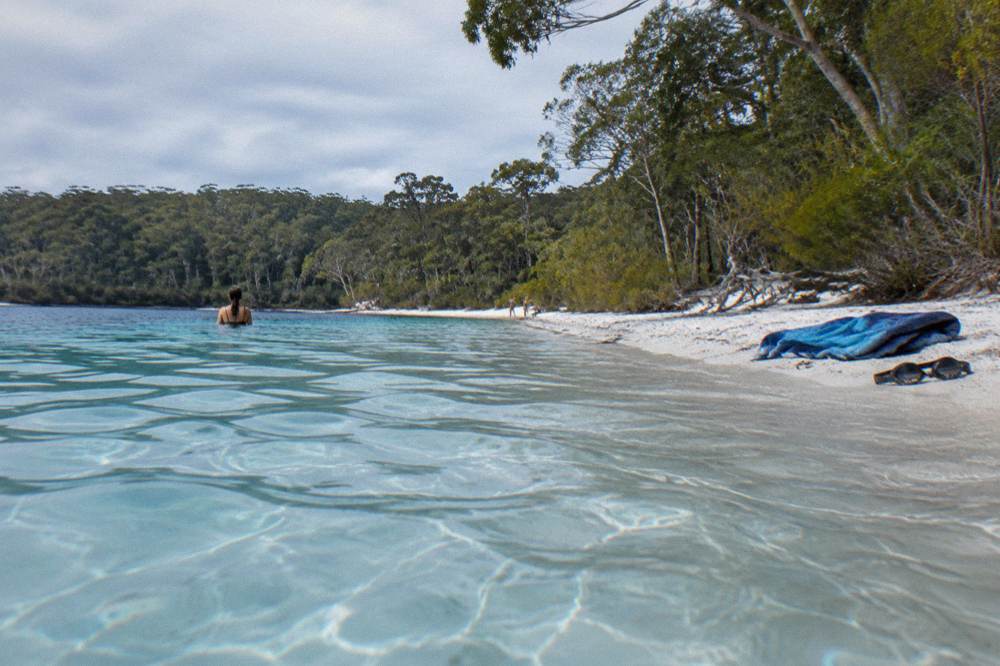
The stinger season is the one water hazard with a calendar. Marine stingers, including the tiny Irukandji, carry higher risk across Queensland waters from November to May, and Surf Life Saving Australia advises swimming at patrolled beaches and considering stinger suits in that window. K'gari has no patrolled beaches, which removes the usual mitigation entirely, so the ocean stays off the list year round and the lakes carry the swimming load. The lakes are rainwater-fed and perched above the water table, which is why Lake McKenzie's water is so clear and why swimming there is such a signature experience.
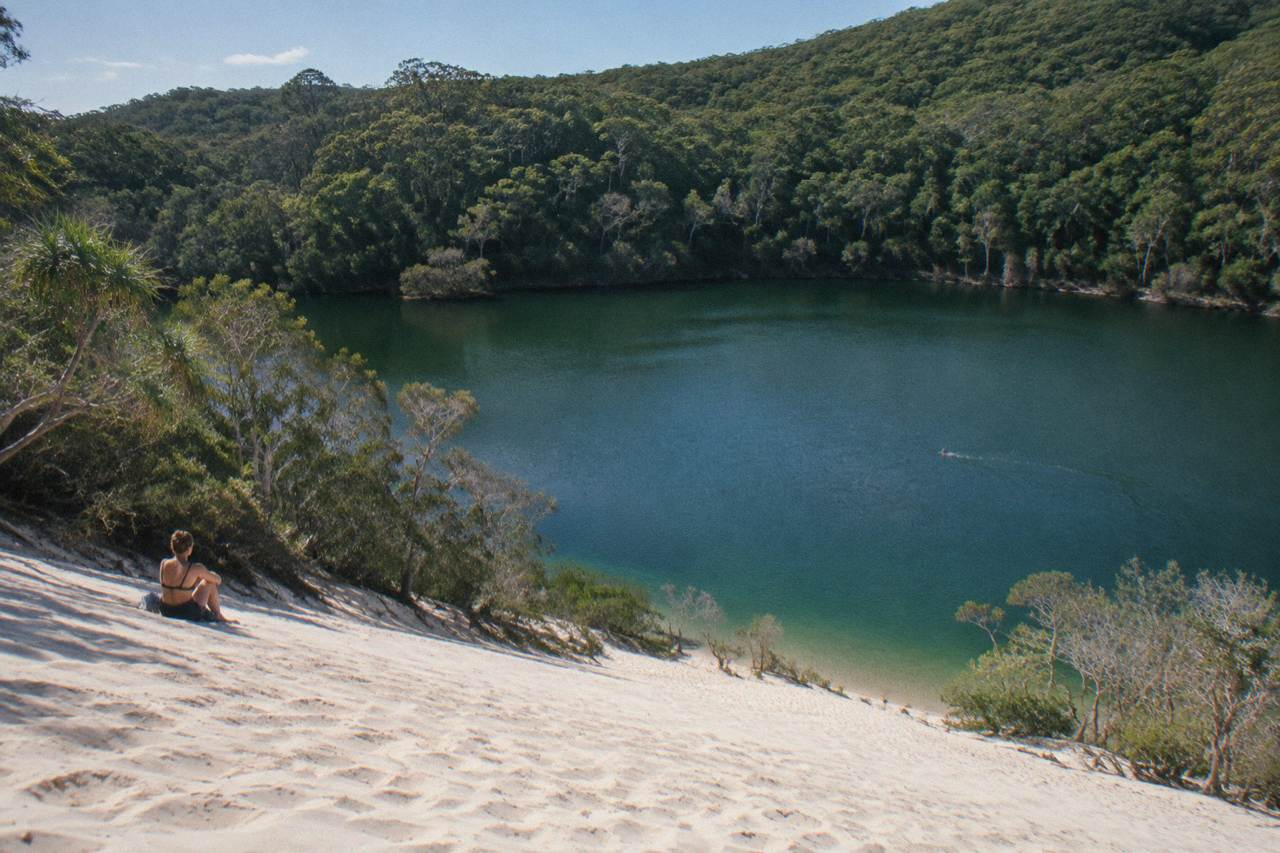
Two lake rules matter. First, no food except drinking water on lake shores, which protects the dingo wariness discussed above as much as it protects the lakes' fragile edges. Second, the dune at Lake Wabby is strictly off-limits for running, rolling or sliding: Queensland Parks records serious, permanent spinal injuries from exactly that activity, and the warning is one of the bluntest on any park page. Follow those two and a swim at Lake McKenzie is one of the safest and best water experiences in the country.
One water-based way to see the island sidesteps all of this. The remote K'gari boat tour with lunch from Hervey Bay spends its day on the vessel and on a remote beach stretch, with the crew managing the landing, so the swimming and access decisions are made by people who make them daily. Guests on the listing rate it 4.9 from 1321 reviews, and the format suits anyone who would rather not think about tides, sand driving or which water is safe, because the boat goes where the boat goes and the crew says when to get off.
How Do You Stay Safe Around Dingoes On K'gari?
Keep at least four car lengths, about 20 metres, between you and any dingo, keep children within arm's reach at all times, never run or jog in dingo country, and store every scrap of food securely. The fines are real: up to $28,495 for disturbing or harming a dingo and up to $6,908 for failing to store food securely, and Queensland Parks recommends families with children 14 and under camp in dingo-deterrent fenced campgrounds.
The dingo rules are the closest thing K'gari has to crocodile-country rules, in the sense that they are specific, enforced and genuinely worth knowing before you arrive. The logic behind them is consistent: a dingo that learns people mean food becomes a bold dingo, and a bold dingo eventually becomes a dead dingo, because rangers have to manage escalating behaviour. Every rule on the Queensland Parks dingo safety page exists to keep that wariness intact in both directions.
| Rule | What Queensland Parks says |
|---|---|
| Distance | Stay at least four car lengths, about 20 m, from any wongari |
| Children | Keep them within arm's reach, including small teenagers, and never leave them unattended |
| Movement | Walk in groups, do not run or jog, carry a dingo safety stick outside fenced areas |
| Food | Store it securely, leave no scraps, never feed a dingo: fines up to $6,908 for food failures |
| Offences | Disturbing or harming a dingo carries a maximum fine of $28,495 |
| Camping | Families with children 14 and under should use dingo-deterrent fenced campgrounds |
Spring is the season to be most careful, because it is dingo breeding and rearing season and Queensland Parks runs an annual alert for it. The alerts page is updated with current guidance, and reading it before a trip is a habit worth building, the same way you would check conditions before any remote park visit. Conditions and alerts on the island change, and the park's staying safe page is the authoritative summary of everything in this section.
For day visitors on a tour, most of this is handled by structure. Groups move together, guides carry the food, lunch is a seated group affair, and the guide sets the tone for any encounter. That is not a reason to switch off, the 20 metre rule and the arm's-reach rule apply to everyone, but it does mean the judgement calls are shared with someone who has made them hundreds of times. Families with small children often pick a guided day tour for exactly this reason, and the full-day small group options from Rainbow Beach and Noosa keep the group sizes low enough that the guide can actually watch everyone.
Do Guided Tours Change The Safety Picture?
Yes, in three concrete ways: the operator holds the vehicle access permit and the National Park fees, the guide does the sand driving and reads the tide, and the group structure matches the dingo safety advice about walking together. Every tour on the roster carries free cancellation, with the exact cutoff shown on each listing; most also include the island crossing and lunch, so the logistics that trip up independent travellers are already paid for and planned.
The vehicle access permit is a good example of what a tour quietly absorbs. Every vehicle driven on the island needs one, bought before arrival, and driving without it earns a $518 penalty notice. A standard K'gari permit runs $61.80 for a month or less, or $311.00 for up to a year, and there is no one-day option. Tour guests never buy one, because the operator holds it and the listings state National Park fees are included in the price. Multiply that by the barge crossing, the tide planning, the tyre pressures and the 80 km/h beach speed limit, and the appeal of a coach or small group day tour is not laziness, it is risk transfer.
The tide is the other hidden piece. Beach driving on K'gari is best at low tide or within two hours either side, and the inland tracks are slow, sandy and high-clearance only. A guided tour builds the whole day around that arithmetic, which is why the day tours run the routes they run in the order they run them. Independent travellers who get the tide wrong on the eastern beach do not just lose time, they can lose the vehicle, and that is a genuinely expensive lesson on an island with no recovery service on every corner.
The tag-along format splits the difference for people who want their own hands on the wheel. In a tag-along you drive your own hired 4WD in a convoy behind a lead guide, so you get the sand driving experience with a professional making the route, tide and pace decisions ahead of you. The two-day tag-along where you drive is the classic version, from A$589 per person with camping and meals listed, and guests rate it 4.8 from 106 reviews. It is the closest thing to self-drive freedom with a safety net still attached.
For the wildlife-curious traveller, a guide also changes what you actually see and understand. A guide who works the island daily knows which dunes the goannas favour, where the dingo tracks cross the beach, and how to read the bird activity over the water. The all-inclusive coach day tour from Hervey Bay is the format most first-time visitors choose, from A$279 per person with lunch and pickup, rated 4.8 from 3893 reviews, and its reviews keep landing on the same point. One guest wrote: "Butch was great!" That is the wildlife experience done safely, at the right distance, with someone who can explain what everyone is looking at.
What About Crocodiles Elsewhere In Queensland?
Crocodile country in Queensland is the tropical north, roughly from around Rockhampton and Gladstone northward through Cairns and the Cape, where estuarine crocodiles are abundant, managed and genuinely dangerous. The Fraser Coast sits well outside that core range, and the standard visitor advice for K'gari, from the park's own pages to every tour operator's briefing, simply does not treat crocodiles as part of the island's risk profile.
The distinction matters because Queensland is a big state and "Australia has crocodiles" is true in a way that misleads. The estuarine crocodile's core range covers the river systems, estuaries and coastlines of the tropical north, where Queensland Parks and Wildlife runs crocodile management zones, sighting hotlines and removal programs. Townsville, Cairns, Cooktown and the Gulf country are the places where crocodile-wise behaviour, no swimming in unknown water, no fishing near the same spot daily, keeping dogs and children well back, is part of everyday life. That is not the Fraser Coast.
Individual animals do occasionally travel south of the core range, and wildlife authorities monitor and publicly report those movements when they happen, so the precise honest phrasing is about established populations and official risk documentation rather than absolute impossibility. What a K'gari visitor can rely on is this: the island has no crocodile management activity, no crocodile warning signage program, and no crocodile guidance in its safety material, and the hazards that do fill that material, rips, sharks, stingers and dingoes, are the ones worth your planning attention. If a wildlife agency ever reported a wandering crocodile on the Fraser Coast, it would be a news event precisely because it is so far outside the norm. With the crocodile question put to rest, your next practical decision is where to spend the night, and this comparison of the best places to stay on Fraser Island weighs up resorts, lodges, beach houses, glamping and multi-day tours honestly.
That framing also answers the follow-up questions people ask. Fishing from the beach on K'gari is a normal, popular activity managed around sharks and wave conditions, not crocodiles. Creek mouths and estuaries on the mainland side of the Great Sandy Strait are managed the same way, as fish habitat rather than croc habitat. And the swim-with-whales experiences that run out of Hervey Bay in season operate in open bay water with a strict regulatory framework, vessel approach limits of 100 metres, a 30 metre swimmer limit and a minimum age of 13, none of which would exist in a form people could book if the water carried crocodilian risk.
The Practical Answer For Your Trip
Plan for dingoes, water choices and sand, and leave the crocodile worry behind. The visitor who reads the Queensland Parks safety pages before arriving, swims in the lakes rather than the ocean, keeps food zipped away and children close, and either joins a guided tour or takes the driving seriously has done everything the island asks. K'gari's risks are well documented, well signposted and well guided, which is more than can be said for most wild coastlines.
The tour roster on Kgari Island Tours reflects that practicality. Every listing includes the crossing, lunch where stated, and free cancellation, with the exact cutoff shown on each live booking page, and every departure is from Hervey Bay, Rainbow Beach or Noosa, so the drive-or-be-driven decision is the real decision. Travellers comparing the options in detail can start with the side by side comparison of K'gari day tours, which breaks the roster down by format, price and departure point, or read the full guide to dingo safety on the island if the wongari rules are the part that matters most for a family trip.
Common Questions About Crocodiles On Fraser Island
Are There Crocs On Fraser Island?
No crocodile population is documented on K'gari, and Queensland Parks does not list crocodiles among the island's hazards. The official safety material names rips, sharks, marine stingers and dingoes as the risks to manage. Crocodile country in Queensland is the tropical north, well outside the Fraser Coast.
Is It Safe To Swim In The Ocean On K'gari?
No. Queensland Parks states there are no patrolled swimming areas on the island and that ocean swimming is unsafe due to rips and sharks, with marine stingers adding risk from November to May. The freshwater lakes, especially Lake McKenzie, are the swimming option.
What Is The Most Dangerous Animal On Fraser Island?
The animal the rules are built around is the wongari, the island's protected dingo population. Fines reach $28,495 for disturbing or harming one and $6,908 for failing to store food securely. The safe distance is four car lengths, about 20 metres, and children should stay within arm's reach at all times.
Do I Need To Worry About Crocodiles When Fishing On The Beach?
No crocodile-related fishing guidance exists for K'gari because the island is not managed as crocodile habitat. Beach fishing is a normal activity, managed around sharks, wave conditions and vehicle traffic on the sand. Standard caution around any wild coast applies.
Are The Freshwater Lakes On K'gari Safe To Swim In?
Yes, the perched freshwater lakes are the island's designated swimming option, and Lake McKenzie is the most famous. Bring only drinking water to lake shores, and never run, roll or slide down the sand dune at Lake Wabby, which Queensland Parks links to serious spinal injuries.
Do Guided Tours Handle The Safety Rules For You?
Partly. Tours absorb the vehicle access permit, the National Park fees, the tide planning and the sand driving, and the group structure matches the dingo advice about walking together. The personal rules still apply to every guest: 20 metres from dingoes, children within arm's reach, food stored securely.