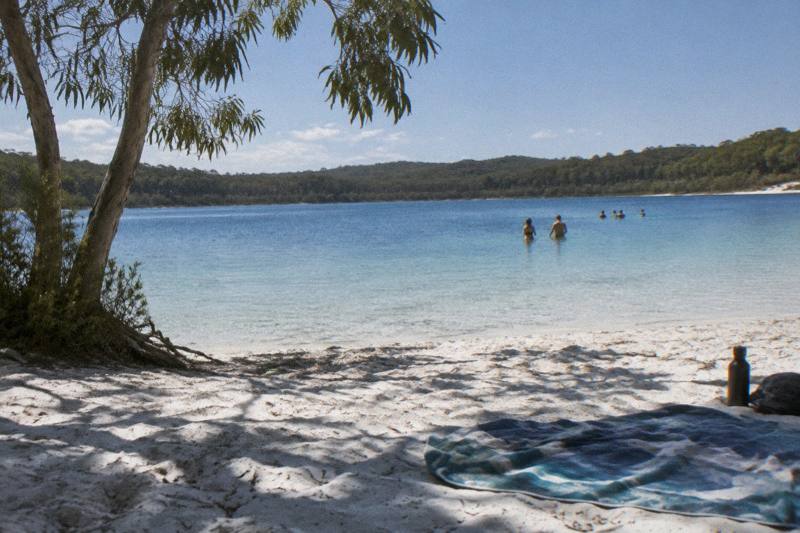
What Are The Must-Haves For A Trip To Fraser Island?
The practical packing list for a K'gari (Fraser Island) tour: what to bring for sand, sun, dingoes and a 4WD day, what the tours already include, and what changes for overnight trips.
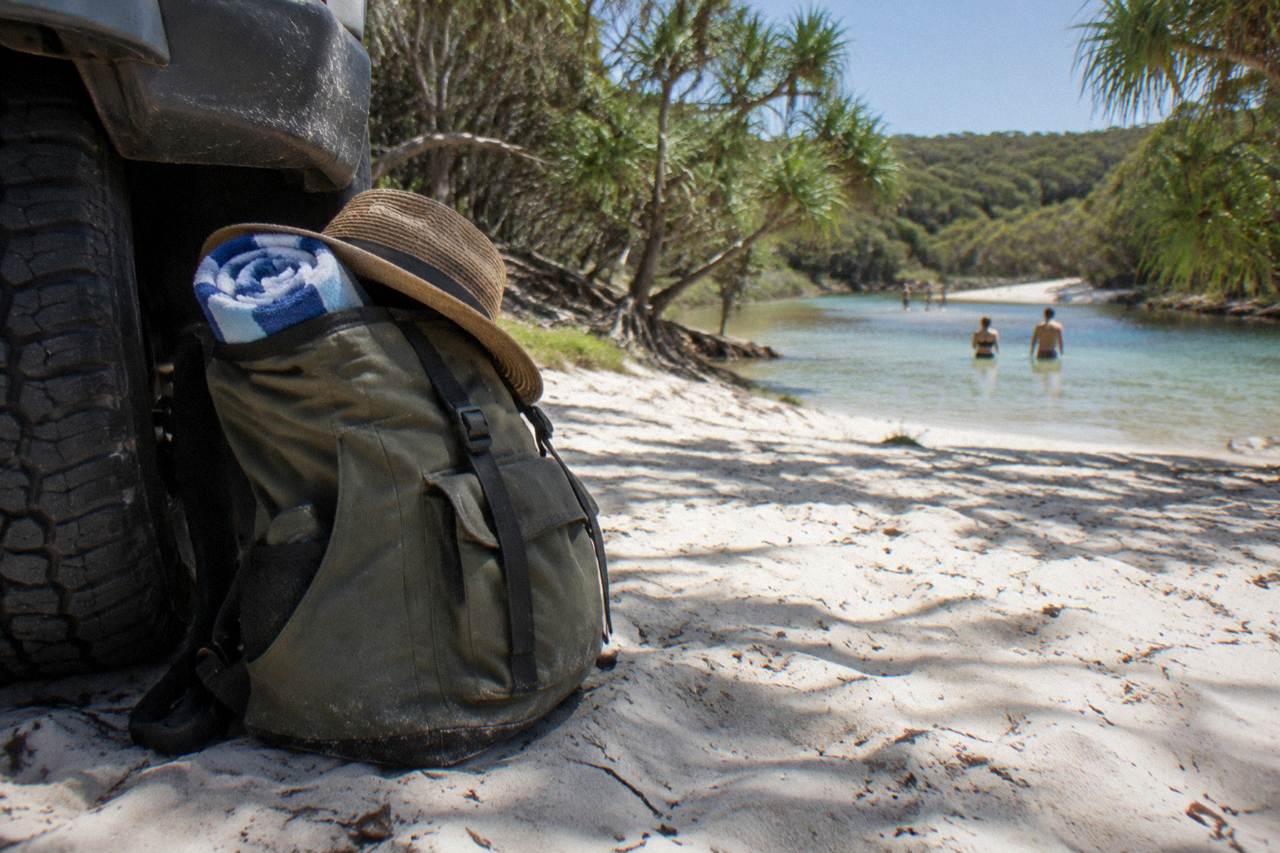
A packing list for K'gari is really a list about sand, sun and a long day in a 4WD. The island is the world's largest sand island, 123 km long, and every tour on the roster reaches its sights by four wheel drive along beaches and sandy inland tracks. Most of what you need fits in one soft day bag: enclosed shoes you do not mind filling with sand, a refillable water bottle, sun protection, swimwear, a towel and a light layer for the wind. What you leave behind matters almost as much, because the all-inclusive tours already carry the permits, the lunch and the driving risk that make independent trips complicated. With your day bag sorted, you might start wondering what all the fuss is about, and our guide to what makes K'gari so special digs into the rainforest growing straight out of sand and the freshwater lakes perched high above the sea.
What Are The Must-Haves For A Trip To Fraser Island?
The genuine must-haves are enclosed walking shoes, a refillable water bottle, high-SPF sunscreen, a hat, sunglasses, swimwear and a towel, a small dry bag for phones and keys, any personal medication, and a light warm layer for the beach wind. Cash or a card for optional extras helps too. Everything else is comfort, not necessity, and the tour already covers the big items: transport, permits and lunch.
That list is short for a reason. When the operator holds the vehicle access permit, states that National Park fees are included and serves lunch on board, the three heaviest packing problems of an independent K'gari trip disappear. The nine-hour coach day tour from Hervey Bay, for example, includes lunch and snacks and picks you up, so your bag only has to carry you comfortably through a full day of sand, freshwater lakes and beach driving.
Sand is the one constant. It gets into shoes, bags, camera lenses and car seats, so choose a bag that closes. A soft duffel or daypack beats a hard suitcase on every roster tour, and on the small-group 4WD days the bag often rides in the back of the vehicle with the eskies and the recovery gear, so anything you want during the day, water, sunscreen, a jumper, should be within reach rather than buried.
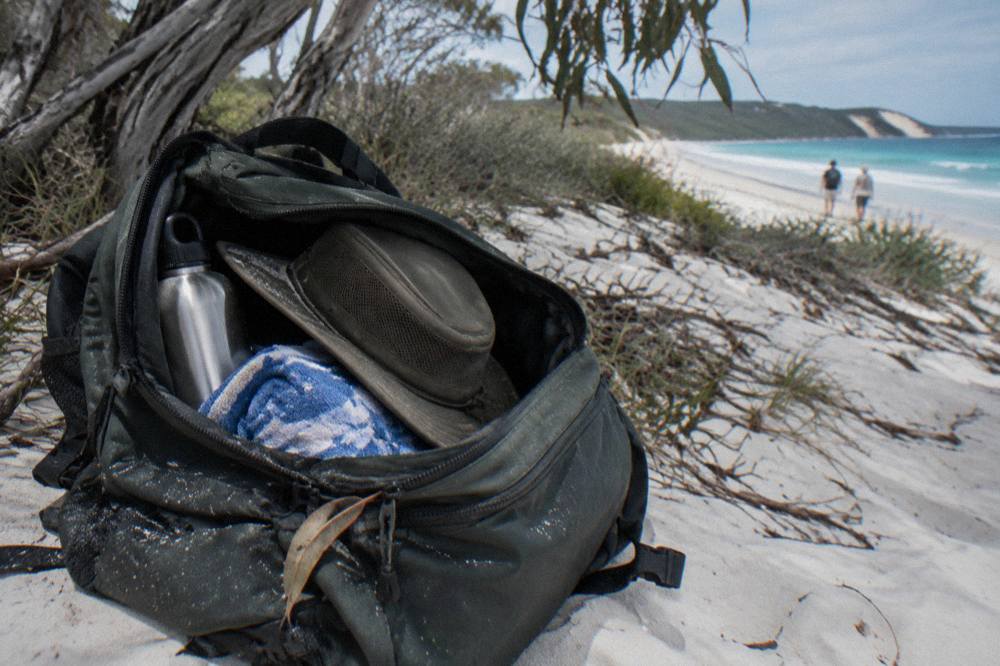
The question is also a pre-booking question in disguise. What you pack depends on which trip you booked: the day tours need one bag and no more, while the two-day tours with a resort or lodge stay and the small-group camping tours need a change of clothes, a warmer layer and a head torch. We compared the listings across the roster, and the packing difference between formats is bigger than the packing difference between seasons.
If you are still choosing rather than packing, the day tours compared guide breaks down every departure city option, and the Hervey Bay tours guide covers the largest group of listings on the roster, including the boat tours and the whale cruises that need a slightly different bag again.
What Should You Pack For A Day Tour?
Pack for a roughly nine to eleven hour day: one soft bag per person, enclosed shoes, swimwear under quick-drying clothes, a towel, a refillable bottle, sunscreen, a hat, sunglasses, a light rain jacket, personal medication and a dry bag or zip lock for your phone and keys. Leave the suitcase, the drone and the stiff shoes behind. The coach and small-group day tours all include lunch, so you are not packing a meal.
The day tours on this roster run long by design. The all-inclusive coach day tour from Hervey Bay is about nine hours, the Rainbow Beach small-group full-day tour about ten, and the Noosa small-group departure about eleven. That is a lot of sun hours, and the two things guests most often regret not packing are a proper long-sleeve layer for the beach wind and a second water bottle. If a full day in the sun sounds like more than you bargained for, our breakdown of Noosa day tours versus overnight Fraser Island stays helps you weigh which pace suits you.
Footwear deserves a real decision. Thongs fail on sand tracks, on hot boardwalks and on the short walks to Lake McKenzie and Eli Creek. Enclosed shoes you can walk thirty minutes in, with socks you do not mind sandy, are the working answer. A pair of thongs for the lake still earns their space, because the white silica sand around Lake McKenzie can be hot enough underfoot in the middle of the day to make the walk from the vehicle uncomfortable in bare feet. If you're wondering why that same white sand makes the water glow such a pure blue, the science behind Lake McKenzie's colour explains it, along with the day tours that reach the lake without your own four-wheel drive.
| Item | Why It Earns Its Space | Notes For The Day Tours |
|---|---|---|
| Enclosed walking shoes | Sand tracks, boardwalks, short walks | Old runners are fine, they will fill with sand |
| Refillable water bottle | Nine to eleven hour days, limited shops | Operators carry water but your own bottle is faster |
| High-SPF sunscreen | Queensland sun reflects off sand and water | Reef-safe if you plan to swim in the lakes |
| Hat and sunglasses | No shade on the beach sections | A strap helps on the open 4WD runs |
| Swimwear and towel | Lake stops are the swimming option | Wear swimwear under clothes to save time |
| Light rain jacket | Sea breeze and sudden showers | Doubles as the wind layer on the beach |
| Dry bag or zip lock | Sand, spray and boat transfers | Phone, keys, wallet and medication |
| Personal medication | Long day, unreliable mobile reception | Carry it on you, not in the hold bag |
One thing you do not need to pack is a meal. Every day tour on the roster lists lunch, and guest reviews back it up: one traveller on the Rainbow Beach coach day tour called it "a great day with great service, an excellent driver with knowledge, and sensational lunch and snacks". Snacks for the drive home are still worth a pocket of space, especially with children.
What Should You Leave Behind Because The Tour Already Includes It?
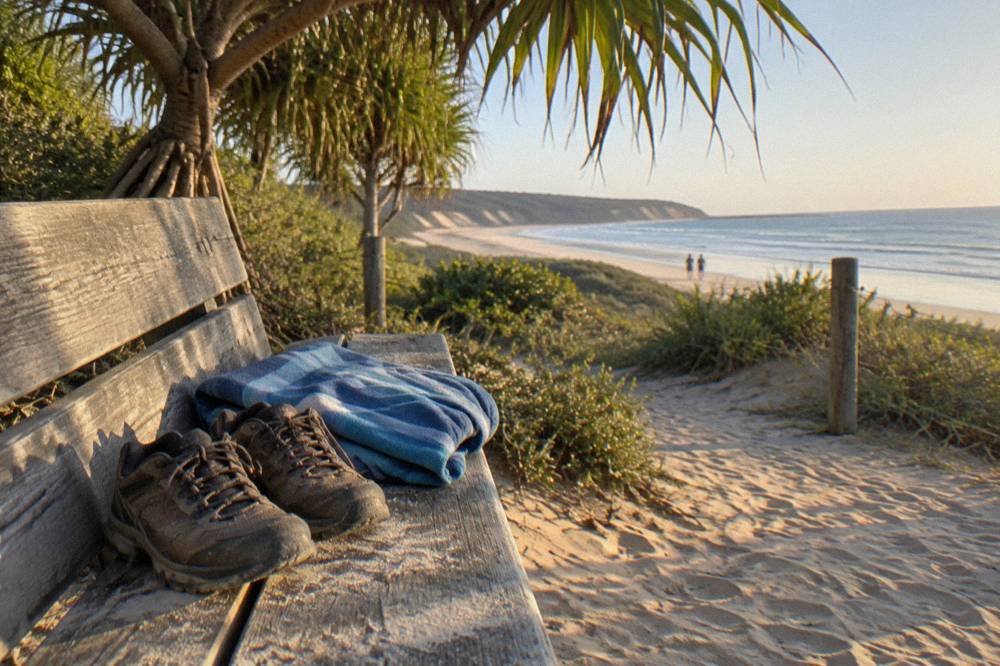
Leave behind the vehicle access permit, the National Park fees, the barge or ferry booking, the recovery gear and the food, because the listings state all of these are included on the guided tours. The operator holds the permit for the vehicle, not you, and the crossing to the island is part of the tour route. You are packing for a passenger day, not a driver's day.
This is where a booked traveller's list parts ways with the internet's generic K'gari packing lists. Those lists assume you are driving yourself, which means a vehicle access permit bought before arrival, tyre-pressure gauges, recovery boards and a barge fare. Queensland Parks requires a vehicle access permit for every vehicle driven in the K'gari Recreation Area, with fees of $61.80 for one month or less and $311.00 for up to a year, and entering without one draws a $518 penalty notice. Tour guests skip all of it: the operator holds the permit and the listings state National Park fees are included.
The same logic covers the crossing. Most guests never touch a barge booking, because every roster tour includes the island crossing in the itinerary. If you ever do drive yourself, SeaLink runs vehicle and passenger ferries from River Heads to Kingfisher Bay Resort in about 45 minutes and vehicle ferries need advance booking, while the Manta Ray barge from Inskip Point to Hook Point is a roughly ten minute, turn-up-and-go crossing every day of the year. Fares are set by the operators and change, so check their pages; on a guided tour the whole question is simply not yours to solve.
Money deserves a small note. The island has very limited shops and card facilities can be patchy, so a little cash and a card for optional extras, drinks at a resort stop or a souvenir, is sensible. Do not plan on buying forgotten essentials on the island; the departure towns of Hervey Bay, Rainbow Beach and Noosa are where the chemists and the supermarkets are.
What Should You Pack For Swimming And Sun Protection?
Pack swimwear, a towel and reef-safe sunscreen, and plan your swims around the freshwater lakes, not the ocean. There are no patrolled swimming areas on K'gari and Queensland Parks advises against ocean swimming because of rips, sharks and marine stingers, so the lakes are the swimming option and the lakes have their own food rule: nothing but drinking water on the shore.
The swimming rule is the single most important safety fact that shapes the packing list. The ocean beaches are beautiful and completely unpatrolled, and the marine stinger risk runs higher from November to May, so the roster tours build their swim stops around the perched freshwater lakes instead. That means swimwear and a towel are must-haves, but so is sunscreen you can reapply after a lake swim, because the UV reflects hard off both water and white sand.
Queensland Parks is explicit about food at the lakes: take no food except drinking water to lake shores. That is a dingo-management rule as much as a litter rule, and it belongs on the packing list in a practical form. Eat lunch on the boat, at the tour's lunch stop or in the vehicle, and carry only a sealed water bottle when you walk down to the water. Wipes or a small rubbish bag for your own wrapper, carried out with you, keeps the rule easy to follow.
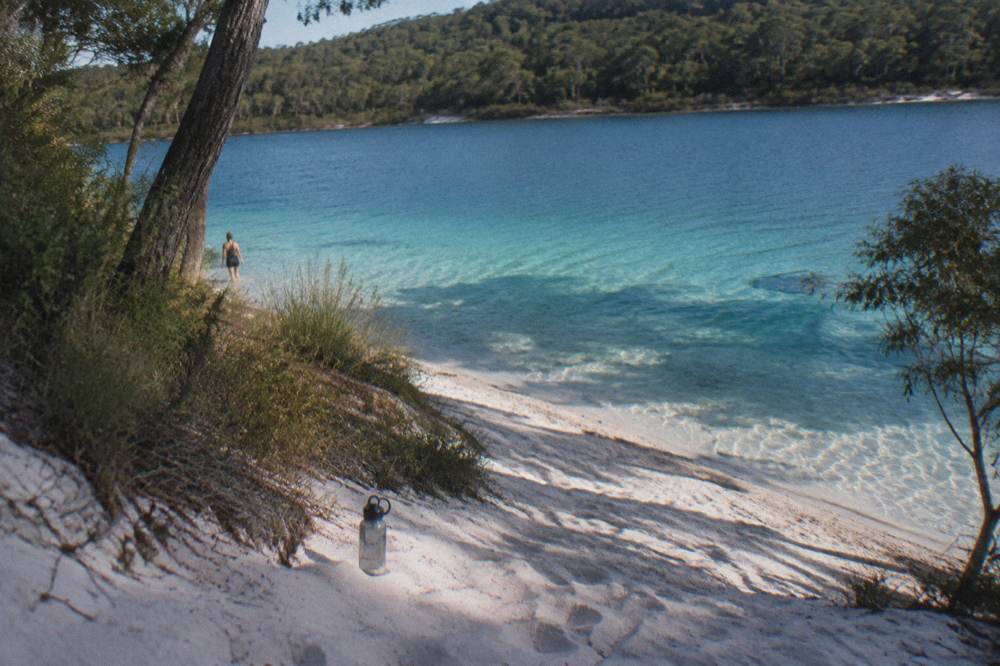
Sun protection is not a summer-only item on K'gari. Hervey Bay's long-term averages put the mean maximum at 30.3 C in January but still 21.8 C in July, and the winter days on the beach are bright enough to burn anyone who treats a jumper day as a no-sunscreen day. A rash shirt earns its space for lake swimming, and lip balm with SPF is the small item people forget.
What Should You Pack Differently For Two And Three Day Tours?
Pack the same day-tour core plus a change of clothes per day, a warmer sleeping layer, a head torch, a small power bank and toiletries in a soft duffel rather than a daypack. The two-day tours with a resort or lodge stay and the small-group camping tours all include meals and the permit, so the extra packing is about nights and comfort, not logistics.
The overnight formats change the bag, not the philosophy. The two-day K'gari Explorer tour, rated 4.9 from 1,120 reviews and from A$549 per person, pairs guided 4WD days with a resort or lodge stay, so you are packing for a bed and a shower at the end of it. The small-group camping tour run by Discovery K'gari Adventures, rated 5.0 from 32 reviews and from A$795 per person, caps the group at 13 and swaps the resort for a tent, so the warm layer and the head torch move from optional to essential. If you're still deciding whether an overnight stay is necessary at all, the guide to seeing Fraser Island in a day lays out what a short visit realistically covers and when staying longer makes more sense.
| Format | Bag | Add To The Day-Tour Core | Leave Behind |
|---|---|---|---|
| Coach or small-group day tour | One soft daypack | Nothing, the core list is complete | Spare clothes, sleeping gear, food |
| Two-day resort or lodge tour | One soft duffel | A change of clothes, toiletries, a warm evening layer | Camping mat, sleeping bag, cooking gear |
| Two-day small-group camping tour | One soft duffel | Sleeping layers, head torch, toiletries, power bank | Hard suitcase, pillow from home, cooking gear |
Nights on the island are the reason for the warm layer. Even in the warmer months the beach camps and the resort decks catch the sea breeze, and mobile reception is unreliable across the island, which is either the point of the trip or a problem, depending on your packing. One guest on the three-day tag-along tour put it in a review: "I really enjoyed being disconnected from the world for a few days because theres no wifi on the island." A downloaded playlist and an offline map of the island are the modern must-haves here, not a data plan.
Power is the quiet overnight question. A small power bank keeps a phone alive for photos across two or three days of thin reception, and a head torch beats a phone torch for camp, because it leaves both hands free and does not drain the battery you are conserving. Neither item is glamorous, and both are the things overnight guests ask each other for on day two.
The longer formats also reward packing light rather than packing for every scenario. Storage on a 4WD is shared space, and the three-day tours with a beach house stay or the glamping-style trips all run on the same principle: one bag per person, soft-sided, with the day's essentials near the top. The two-day tour guide and the three-day tour guide go deeper on what each format adds to the itinerary.
What Dingo And Safety Rules Change What You Carry?
Carry no loose food in your bag or your tent, keep children within arm's reach and never feed or approach a wongari, the island's dingo population. Queensland Parks sets a maximum fine of $28,495 for disturbing or harming a dingo and $6,908 for failing to store food securely, and the practical packing version is simple: food sealed, rubbish carried out, nothing edible left in an open bag or an unattended tent.
The dingo rules are not a scare story, they are the island's most enforced set of regulations, and they translate directly into packing habits. On a day tour the rule is easy: eat at the lunch stop, keep snacks sealed inside the vehicle and carry your rubbish out. On the camping tours it is stricter, because food left accessible in a tent or around a camp is the classic trigger for a dingo encounter, and the fenced campgrounds exist precisely for this reason. Families with children under 14 are strongly recommended to camp in the dingo-deterrent fenced areas.
The distance rule also shapes the day bag. Queensland Parks asks visitors to stay at least four car lengths, about 20 m, from any dingo, to keep children within arm's reach, to walk in groups and not to run or jog. A camera with a zoom lens, or a phone plus the good sense not to walk toward a wild animal for a closer shot, is the packing answer.
Spring brings an annual dingo rearing and emergence season alert, and conditions and park alerts change year round, so the working habit is to read the Queensland Parks dingo safety page and the alerts before you travel. The staying safe page carries the same rules for swimming, driving and sand dunes, including the life-saving prohibition on running or sliding down the dune at Lake Wabby.
What Changes With The Season You Travel In?
Pack for the season you booked, not a generic island list: summer means stinger awareness, a rash shirt and more water, winter means a genuine warm layer for beach wind and early starts, and the shoulder months mean the most versatile bag of all. Whale season, inside the July to October window the operators publish, adds a windproof jacket if your trip pairs a whale cruise with an island day.
The climate numbers make the case. Hervey Bay's long-term averages run from a mean maximum of 30.3 C in January down to 21.8 C in July, with mean minimums of 22.0 C and 10.0 C in the same months, so a July 6 am pickup is a genuinely cold standing-around experience in shorts. March is the wettest month on the averages and September the driest, which is why a light rain jacket is a year-round item rather than a summer one.
| Season | Hervey Bay Averages | Packing Emphasis |
|---|---|---|
| Summer, December to February | Warmest days, warmest nights | Stinger awareness, rash shirt, extra water, shade hat |
| Autumn, March to May | Wettest month early, cooling nights | Rain jacket for March, warm layer for May evenings |
| Winter, June to August | Mean max 21.8 C, mean min 10.0 C in July | Warm jumper and windproof layer for early starts and beach wind |
| Spring, September to November | Driest month early, mild days | Layers, dingo-season awareness, whale season jacket |
The whale season deserves its own line in the bag if your dates line up. Hervey Bay's operators publish season windows inside July to October, and several roster cruises, including the Tasman Venture whale cruise rated 4.9 from 590 reviews and the Spirit of Hervey Bay catamaran rated 4.8 from 526, run roughly four hour trips where the wind on the outer deck is the main comfort problem. A windproof jacket, a beanie and dry binoculars or a camera beat anything else you could add. Sightings are wild, of course, and no operator or writer can promise them, but the packing for a cold, windy deck is the same either way.
Common Questions About What To Bring On A Fraser Island Tour
What Are The Must-Haves For A Trip To Fraser Island?
Enclosed walking shoes, a refillable water bottle, high-SPF sunscreen, a hat, sunglasses, swimwear and a towel, a light rain and wind layer, personal medication and a dry bag for your phone and keys. If you are on a guided tour, the operator holds the vehicle permit, the National Park fees and the lunch, so the must-haves are personal comfort items only.
Do I Need To Bring Food On A K'gari Day Tour?
No. Every day tour on the roster lists lunch, and most include snacks as well. Bring only water and perhaps a sealed snack for the drive home, and remember the Queensland Parks rule at the lakes: no food except drinking water on the lake shores.
Can I Swim In The Ocean On Fraser Island?
Queensland Parks advises against it. There are no patrolled swimming areas on K'gari, and the ocean carries rips, sharks and a marine stinger risk that runs higher from November to May. The freshwater lakes are the swimming option the tours use, so pack swimwear and a towel for those stops.
Do Tour Guests Need A Vehicle Access Permit?
No. The vehicle access permit is tied to the vehicle, and the operator holds it. The listings also state that National Park fees are included, so guests do not buy a permit of their own for a guided tour.
What Should I Pack For An Overnight K'gari Tour?
The day-tour core plus a change of clothes per day, toiletries, a warm sleeping layer, a head torch and a small power bank, all in one soft duffel. The two-day resort and lodge tours and the small-group camping tours all include meals, so you are packing for nights and comfort rather than logistics.
Are Thongs Enough For A Fraser Island Tour?
Not as your only shoes. Sand tracks, hot boardwalks and short walks to the lakes all suit enclosed shoes, and thongs are best kept as a lake-side backup. Old runners that can fill with sand are the practical choice on every tour format.
The full packing picture for K'gari, then, is a short list done well. The Kgari Island Tours roster exists to strip the logistics out of the day, and the bag only has to carry the personal layer: shoes that handle sand, sun protection that survives a lake swim, a warm layer for the wind, and nothing loose that a wongari could reach. Pack that, and the island does the rest.