Why Can't You Swim In The Ocean At Fraser Island?
The ocean around Fraser Island (K'gari) is not patrolled and carries rips, sharks and marine stingers, so the lakes are the swimming option. Here is what that means for your tour.
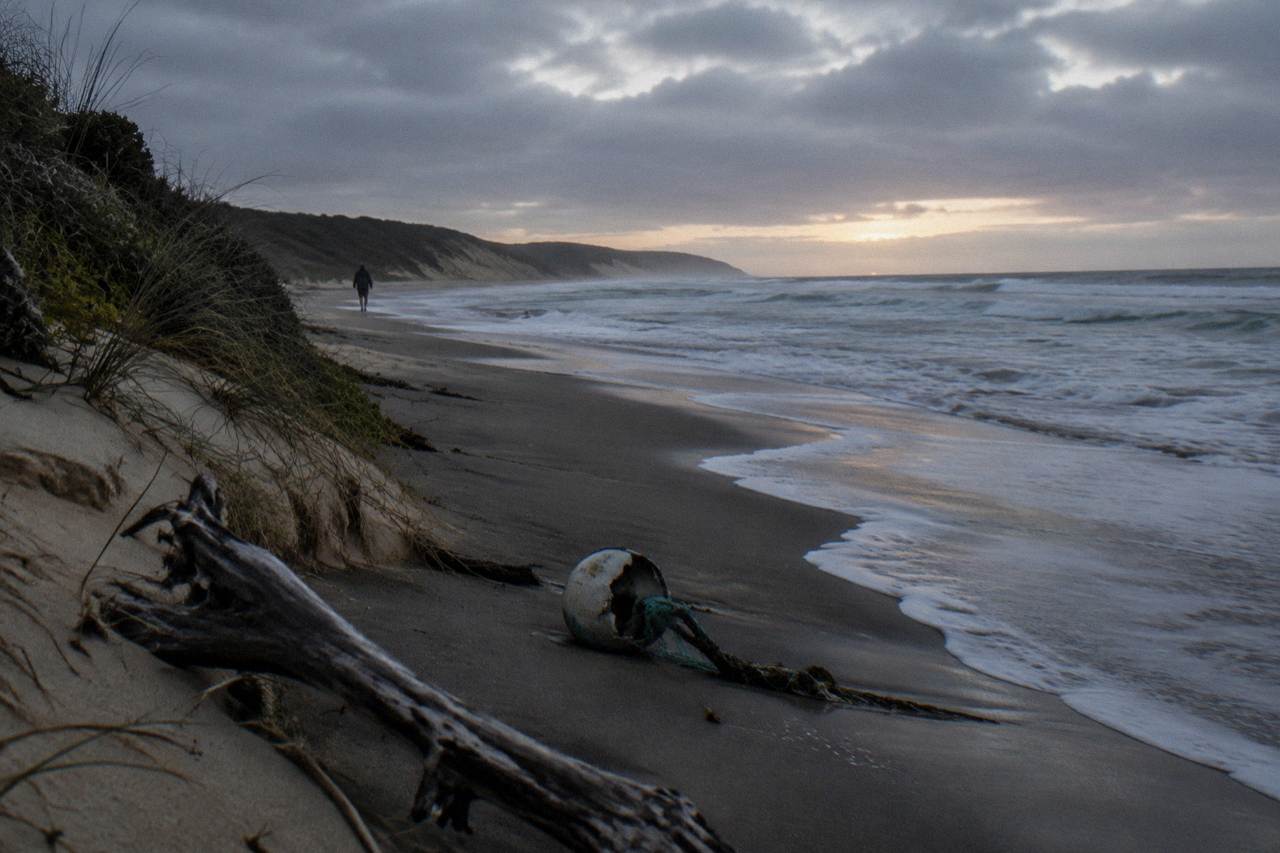
K'gari, the island most listings still call Fraser Island, is ringed by more than 250 km of clear sandy beach, and not one metre of it is patrolled for swimming. Queensland Parks states it plainly: there are no patrolled swimming areas on the island, and the ocean is not a place to swim. That surprises visitors who see the water from the beach at Eurong or the Maheno wreck and read it as an invitation. It is not an overcautious warning. It is a summary of three separate hazards, rips and currents, sharks, and marine stingers, stacked on top of the fact that help is a long way away when something goes wrong.
The practical answer for travellers is already built into the tours. Every 4WD day tour on this roster stops at Lake McKenzie or another freshwater lake, the boat tours show you the coastline from the water rather than in it, and the guides repeat the no-ocean-swimming rule at every beach stop. This article walks through each hazard, explains why the lakes are different, and shows how the tours handle a beach day on an island where the beach itself is off-limits for swimming.
Why Can't You Swim In The Ocean At Fraser Island?
You cannot swim in the ocean at Fraser Island because Queensland Parks states there are no patrolled swimming areas on K'gari, and the service warns of rips, sharks and marine stingers in the water. The island's freshwater lakes are the designated swimming option, and the tours on this roster structure their itineraries around them.
The core of the answer is on the official Queensland Parks staying safe page for the island: no patrolled swimming areas exist, and the ocean is not recommended for swimming. That single sentence carries a lot of weight. On the Gold Coast or Sunshine Coast beaches, surf lifesavers set flags, patrol the water and pull swimmers out when a rip takes them. Nothing comparable operates anywhere on K'gari. The island is 123 km long with a small resident population and medical assistance is limited, so a swimmer caught in a rip may wait a long time for help that, on a patrolled beach, would arrive in minutes.
The hazards are not theoretical. The eastern beach faces open Pacific swell, and the same energy that shapes the dunes and the surf moves sandbars and channels around week to week, which is exactly the condition that produces rips. Sharks are present along the whole coast; it is their water, and the island's clean beaches are part of a productive marine environment. Marine stingers add a seasonal layer on top: Surf Life Saving Australia lists November to May as the higher-risk window for box jellyfish and Irukandji in these waters, and notes stingers may be present year-round. None of these hazards is rare enough to gamble on, and they compound: a stinger sting far from medical help is a far worse situation than the same sting on a patrolled beach.
What trips many visitors up is that the water looks safe. The beaches are genuinely beautiful, the shallows are often clear, and on a hot January day, when the mean maximum temperature at Hervey Bay Airport sits around 30.3 C, the sea looks like the obvious place to cool off. The rule does not bend for appearances. The tours that visit the beach sights, the nine-hour coach day tour with lunch, the small-group 4WD day tours from Noosa and Rainbow Beach, all include beach stops where you walk the sand, photograph the wreck and the coloured sands, and swim nowhere but the lakes.
That is the honest framing: the ocean is for looking at, and the tours are built around that fact.
Where Can You Swim Safely On K'gari?
The safe swimming option on K'gari is the freshwater lakes, above all Lake McKenzie (Boorangoora), plus creeks and lakes the tours visit such as Lake Wabby and Eli Creek. Queensland Parks directs visitors to the lakes for swimming and asks that no food except drinking water be taken to lake shores. The ocean stays off the list entirely.
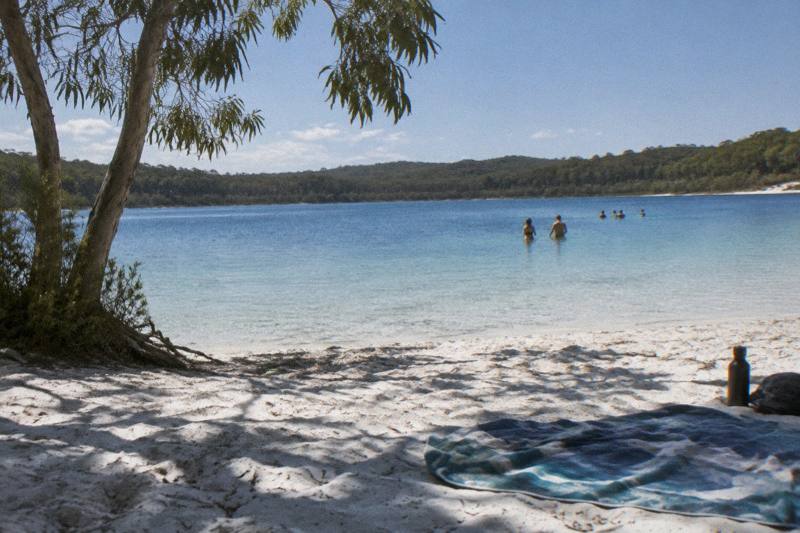
Lake McKenzie is the island's swimming headline, and it earns it. The water is rainwater sitting in a sand-bottomed perched lake, filtered to a startling blue, and it carries none of the ocean's hazards: no rips, no sharks, no stingers. The perched dune lakes are one of the reasons the island was World Heritage listed in 1992, and swimming in one is the experience most day tours are organised around. The coach day tour from Hervey Bay with lunch, from A$279 per person and rated 4.8 from 3,893 reviews, makes Lake McKenzie its centrepiece stop, along with the rainforest at Central Station and the beach sights.
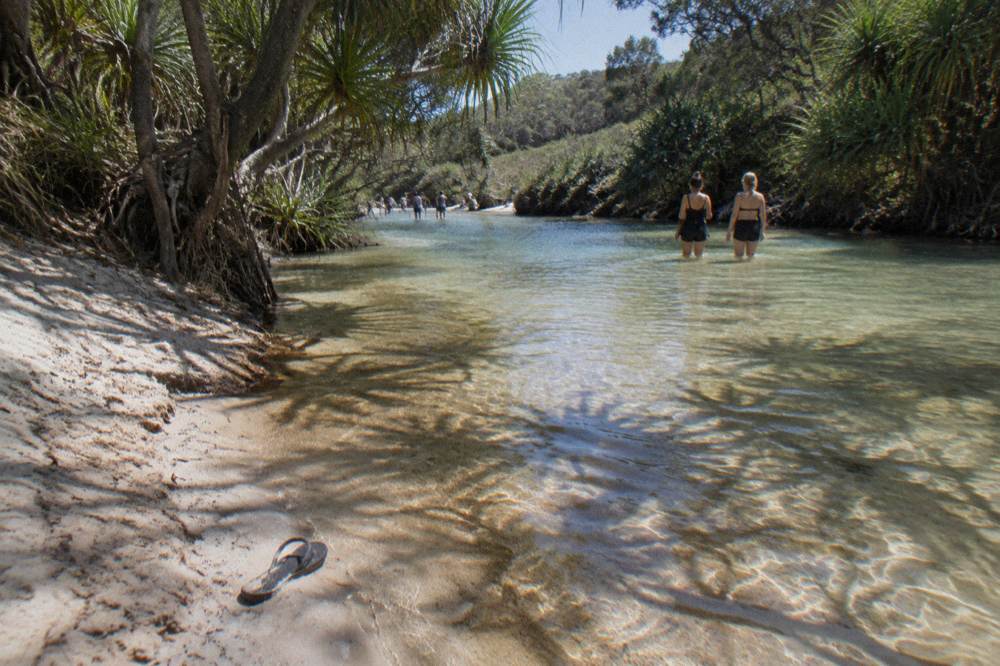
The small-group options do the same thing in a smaller vehicle. The Noosa small-group day tour, from A$299 per person and rated 4.7 from 639 reviews, includes Lake McKenzie and a float down Eli Creek, which is the other classic freshwater experience on the eastern side. A review from that tour mentions the guide sharing "his knowledge around K'gari and all the hidden gems" and wanting more time in Eli Creek. The creek is waist-deep, cool and gentle, and it is the closest thing the island has to a lazy river. The Rainbow Beach small-group full-day tour, from A$279 per person and rated 4.6 from 322 reviews, runs the same lake-and-creek logic from the southern departure point.
One rule matters at every lake: Queensland Parks asks visitors to take no food except drinking water to lake shores. That is partly about keeping the water clean and partly about the island's dingoes, which are quick to associate people with food. The dingo safety rules, covered in detail on our Fraser Island dingo safety guide, apply at the lakes just as they do at the camps and the beaches: stay at least four car lengths, or 20 m, from any dingo, keep children within arm's reach, and never feed or disturb them. Fines for disturbing a dingo run up to $28,495, and failing to store food securely can cost up to $6,908.
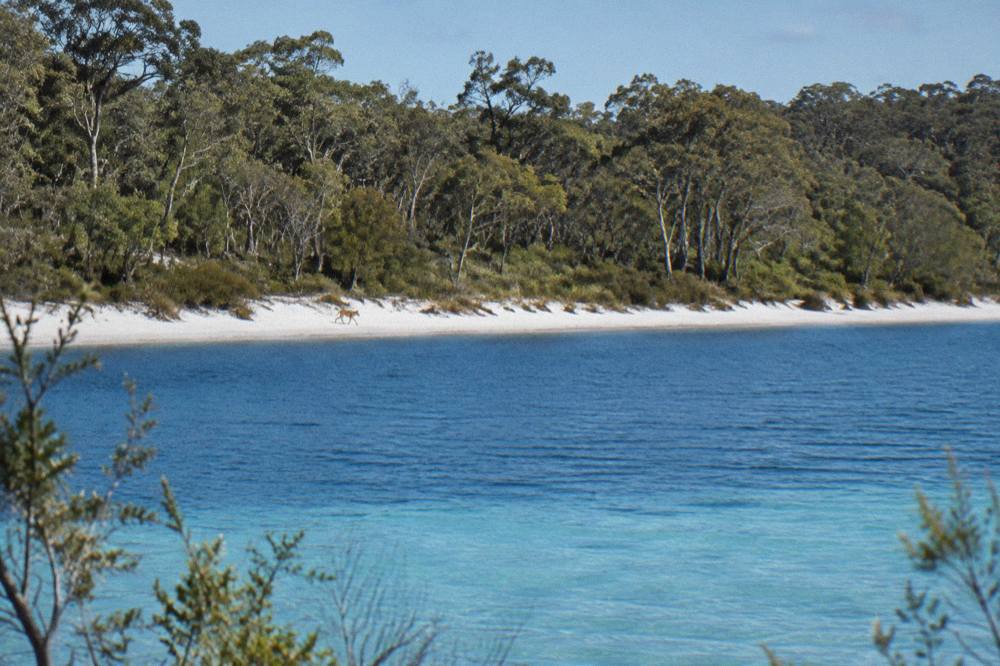
The table below sums up the two water worlds on the island, and why the tours treat them so differently.
| Water type | Examples on K'gari | Swimming status | Why |
|---|---|---|---|
| Ocean beaches | Eastern beach, Seventy Five Mile Beach | Not recommended | No patrols, rips, sharks, stingers |
| Perched lakes | Lake McKenzie (Boorangoora) | The swimming option | Freshwater, no rips or stingers |
| Creeks | Eli Creek | Safe, shallow | Gentle current, freshwater |
| Other lakes | Lake Wabby | Swim with care | Steep dune, no running or sliding |
For visitors who want the ocean experience without the ocean risk, the boat tours are the honest middle path. The Tasman Venture remote K'gari tour by boat with lunch, from A$269 per person and rated 4.9 from 1,321 reviews, crosses to a remote beach on the island's western side, where the water is calmer and the tour controls where and when guests go ashore. You can read more about it on the boat cruises and flights hub.
What Makes The Lakes Different From The Ocean?
The lakes are different because they are perched freshwater bodies sitting above the water table in sand basins, with no connection to the sea, so they have no rips, no sharks and no marine stingers. Queensland Parks names the lakes as the island's swimming option. Their water is rain-derived and filtered through sand, which is also why it is so clear.
A perched dune lake is a hydrological oddity, and K'gari has half the world's known ones. Rainwater falls on the dunes, organic matter in the sand forms a hard pan, and the water sits above it in a basin, held metres above the regional water table. Nothing flows in from the ocean and nothing drains out to it. That isolation is what makes the lake safe in ways the beach never can be: a swimmer in Lake McKenzie is in rainwater over white sand, not in a current moving parallel to a beach waiting to drag them seaward.
The clarity is a function of the same system. The sand grains are almost pure silica, the water is too nutrient-poor to support much algae, and the lake is continually filtered through its basin. That is why Lake McKenzie reads as blue and white from the air and why swimmers describe it as unlike any other swimming spot in Australia. Our piece on why Lake McKenzie is so blue goes into the science in more depth.
The lakes come with their own small set of rules. No food except drinking water at the shore, no soap or sunscreen washed off in the water, and at Lake Wabby an absolute ban on running, rolling or sliding down the dune: Queensland Parks warns of serious and life-long spinal injury or death, because the dune face is steep and the sand at its base is hard. The tours that visit the lakes brief guests on these rules, and the guide's presence is part of what a self-drive trip gives up. On the coach day tour with lunch included, the guide sets the swim window and the meeting point, keeps the group together and keeps the food rules enforced.
The practical difference, in one line: the ocean punishes mistakes, and the lakes mostly just ask for respect.
Is The Marine Stinger Risk Seasonal?
Yes. Surf Life Saving Australia lists November to May as the higher-risk season for box jellyfish and Irukandji in these waters, including the Fraser Coast, and notes stingers may be present year-round. Queensland Parks carries a stinger warning for the island. The risk is one more layer on top of rips and sharks, not a substitute for them.
The stinger season overlaps awkwardly with the island's summer. January and February are the warm months, with mean maximums of 30.3 C and 30.2 C at Hervey Bay Airport, exactly when a swim looks most tempting, and exactly when the stinger risk peaks. The Surf Life Saving marine stingers page recommends swimming at patrolled beaches between the flags, obeying warning signs and considering a stinger suit in season. On K'gari, the first of those three is impossible, because there are no flags anywhere on the island. That is the structural reason the no-swimming rule holds year-round rather than being switched on and off with the seasons.
Irukandji deserve a specific word because they invert most people's mental picture of a dangerous jellyfish. They are small, transparent and not easily seen, and their stings can cause severe delayed pain and a spike in blood pressure. The distribution includes tropical waters reaching south of the Fraser Coast, which is why the warning extends to this stretch. The dingo-safe and staying-safe pages all point the same direction: on this island, the water you swim in is freshwater. The rest of the planning pages sit on Kgari Island Tours.
The seasonality matters for tour planning more than for swimming decisions. The whale season runs inside July to October, when the stinger risk is at its lowest, so a spring trip that pairs a whale cruise with a day tour on the island gets the calmest water conditions of the year. A summer trip gets the warmest lake swimming and the biggest crowds. Neither season changes the ocean rule.
Do Tours Still Give You Beach Time?
Yes, and plenty of it. Every 4WD day tour on the roster drives the beach itself, stops at coastal sights like the Maheno wreck and the coloured sands, and includes lake or creek swimming in the same day. The boat tours put you on the water and land you on a remote beach. The rule is swim in the lakes, enjoy the beach with your feet, not your strokes.
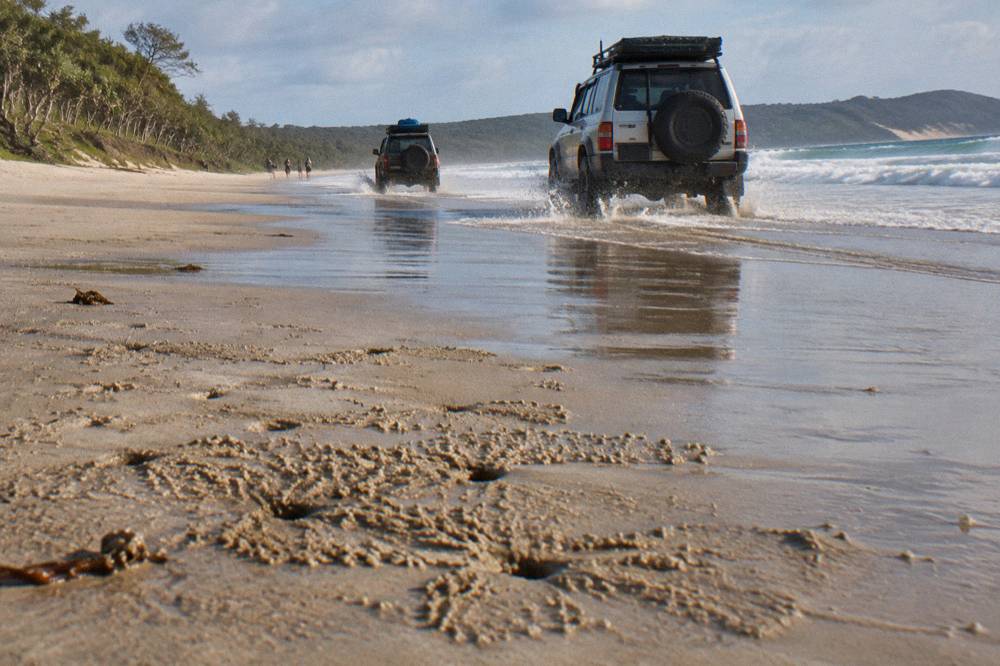
The beach on K'gari is not a consolation prize. It is the highway, the runway and the viewpoint all at once, and the tours use it constantly. The coach day tour from Hervey Bay spends real hours on Seventy Five Mile Beach, stops at the Maheno shipwreck and the Pinnacles coloured sands, and walks the boardwalk at Central Station between beach legs. One review of that tour calls it "a busy, but great day full of experiences and lots of knowledge from our guide Dean." The beach experience is walking, photographing and learning, and it is genuinely good at that.
The small-group tours compress the same structure. The premium nature day tour from Noosa and Rainbow Beach, from A$275 per person and rated 4.9 from 67 reviews, runs 8 to 12 hours in a minibus and 4WD combination. The Fraser Experience small-group day tour from Hervey Bay, from A$330 per person and rated 4.8 from 102 reviews with a maximum of 17 guests, does the lake, the rainforest and the beach in about 10 hours. Each of them pairs the coastal stops with the freshwater swim, so nobody leaves the island feeling short-changed on water.
The boat tours handle the beach differently, and in some ways they answer the original question most directly. The half-day beach cruise from Hervey Bay, from A$160 per person and rated 4.7 from 323 reviews, spends about five hours on the water with lunch included, showing guests the shoreline, the skerry of small islands off the western coast and the marine life from the deck. The full-day remote K'gari boat tour crosses to a beach most road-based tours never reach. You experience the coast the way the people who named it paradise must have seen it: from the water, at a distance the ocean itself enforces.
For visitors weighing a longer stay, the two-day and three-day tours repeat the pattern with more lake time. The K'gari Explorer 2-Day Tour, from A$549 per person and rated 4.9 from 1,120 reviews, includes a resort or lodge stay and returns to the lakes with a slower rhythm. The 3-day 4WD beach house tour from Hervey Bay, from A$795 per person and rated 4.8 from 95 reviews, spreads the beaches and lakes across three days. The tag-along tours, where you drive your own 4WD behind a guide, add the driving experience on top; the 3-day tag-along from Rainbow Beach is rated 5.0 from 1,128 reviews, from A$659 per person.
What Should You Know Before Swimming In The Lakes?
Bring a towel, swimwear and drinking water, plan your swim around the tour's lake stop rather than the beach, and follow the food rule: nothing but drinking water goes to the lake shore. Check the Queensland Parks alerts page before travelling, because conditions on the island change, and never swim alone or outside the areas your guide designates.
The packing list for a K'gari swim is short but specific. Swimwear and a towel, obviously, but also a rash shirt if you burn easily, because the Queensland sun is fierce and the lake water is clear enough that UV passes through it. Drinking water, since the food rule means you cannot picnic at the shore. Dry shoes for the boardwalks and the sand, which gets hot enough in summer to burn bare feet. Our what to bring on a Fraser Island tour checklist covers the rest of the day.
Timing matters more than most visitors expect. The lake stop on a day tour is a fixed window, usually 45 minutes to an hour, and the guide will say when the bus leaves. The coach tours move larger groups, so the window is firmer; the small-group tours, like the Rainbow Beach full-day tour with its 10-hour running time, can flex a little if the group is quick elsewhere. Swim in the window, and treat the beach stops as walking stops.
Two safety notes that apply everywhere on the island. First, conditions and park alerts change: Queensland Parks maintains an alerts page for K'gari, and reading it before you travel is the official advice for every visitor, independent or on a tour. Second, the dingo rules follow you to the lakes. Dingoes are protected, they are quick to investigate food and they are most active in spring, their breeding season. Keep children within arm's reach, walk in groups, do not run or jog near them, and store food securely. Families with children under 14 are strongly recommended to camp in fenced areas on overnight tours.
The last thing worth knowing is that the lake swim is not a lesser substitute for the ocean. It is the thing people remember. The reviews on the day tours, across operators and departure points, name Lake McKenzie again and again as the highlight of the day, not the beach they could not swim at. The ocean gives the island its shape and its drama; the lakes give it its swim.
Common Questions About Swimming At Fraser Island
Why Can't You Swim In The Ocean At Fraser Island?
Because there are no patrolled swimming areas on the island, and the water carries rips, sharks and marine stingers. Queensland Parks states the ocean is not recommended for swimming anywhere on K'gari, and the freshwater lakes are the designated swimming option.
Can You Swim Anywhere On Fraser Island?
Yes, in the freshwater lakes and creeks. Lake McKenzie is the main swimming lake, and Eli Creek is a shallow, gentle freshwater float. The ocean beaches are for walking and driving, not swimming, and the tours build their itineraries around that split.
Are There Sharks Around Fraser Island?
Yes. Sharks are part of the marine environment along the island's whole coastline, which is one of the three reasons Queensland Parks warns against ocean swimming. The lakes carry none of that risk because they are perched freshwater bodies with no connection to the sea.
When Is Stinger Season At Fraser Island?
Surf Life Saving Australia lists November to May as the higher-risk window for box jellyfish and Irukandji in these waters, and notes stingers may be present year-round. On K'gari the no-ocean-swimming rule applies all year, so the season changes the risk level but not the advice.
Do The Tours Include Swimming Time?
Yes. Every 4WD day tour on this roster stops at Lake McKenzie or another freshwater lake, and most include Eli Creek as well. The boat tours show you the coastline from the water and land at a remote beach. Swimwear and a towel belong on your packing list either way.
Is Lake McKenzie Safe For Children?
Generally yes, with the usual caveats: children stay within arm's reach, no food except drinking water at the shore, and the dingo rules apply at the lake as everywhere else. The tour guide sets the swim area and the timing, which is one of the advantages of a guided day over a self-drive trip.