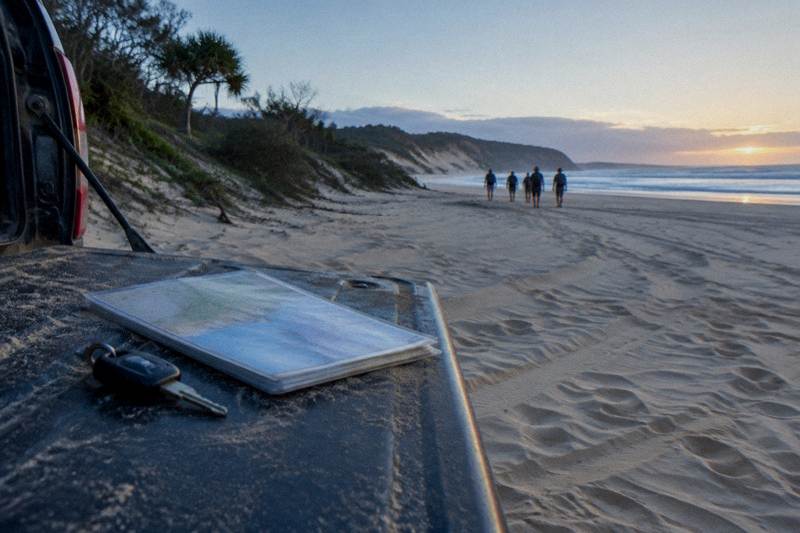
Is Driving On Fraser Island Difficult?
An honest answer to whether driving on Fraser Island (K'gari) is difficult, covering sand conditions, tides, permits, road rules and the tag-along tour option.
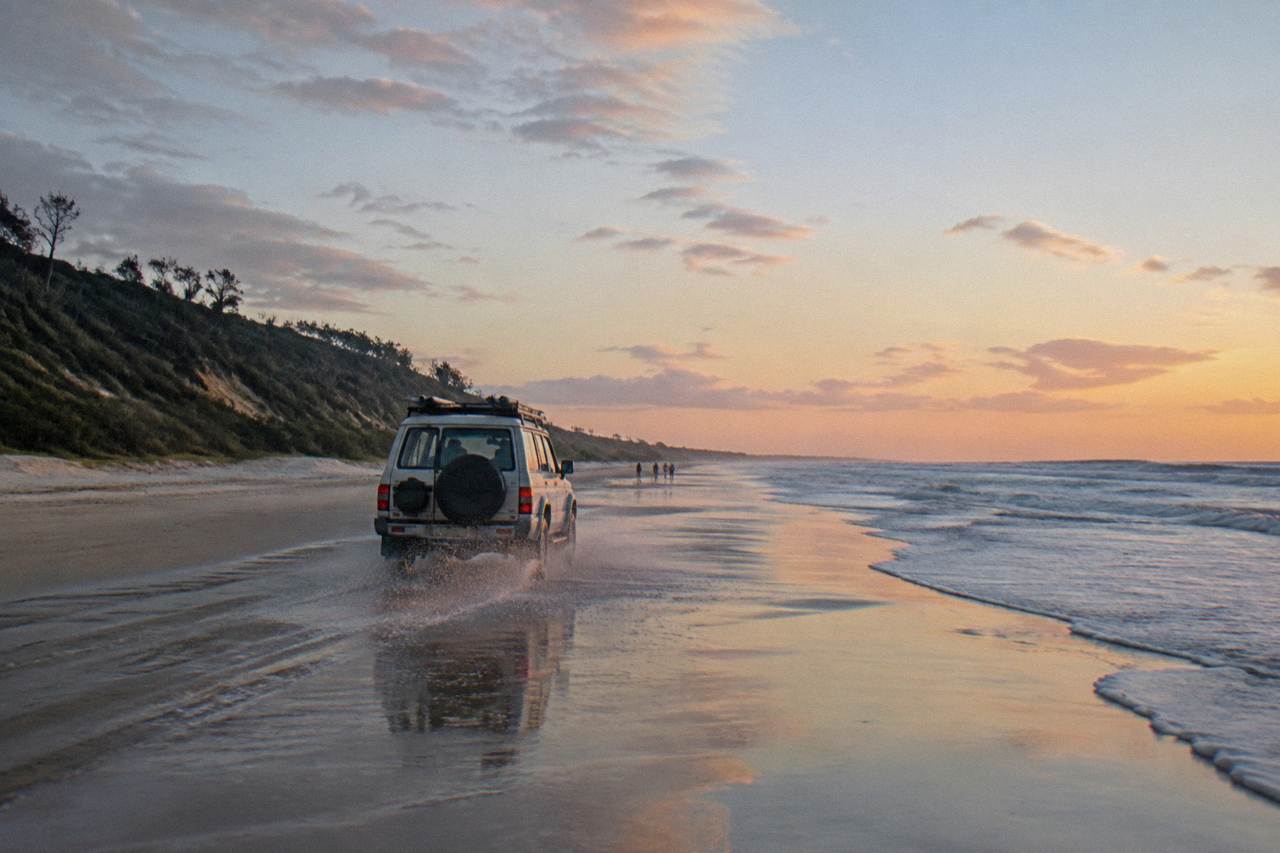
Yes, and that single fact shapes almost every decision visitors make about the island. K'gari, the Butchulla name meaning paradise, is the world's largest sand island at 123 km long, and there is not one sealed road on it. Every journey is driven on sand: the eastern beach highway, soft inland tracks, and creek crossings that change with every tide. Queensland Parks is blunt about it, stating that sandy tracks and beaches are only suitable for high-clearance 4WD vehicles, preferably with low range. A standard rental car cannot go there at all, and even experienced 4WD drivers treat the island with respect. If you're wondering how much ground you can realistically cover in a day, the full breakdown of K'gari's length and what it means for your trip helps you plan your time.
That difficulty is exactly why the guided and tag-along tour market on K'gari is so large. When we compared the listings across this site, from the nine-hour coach day tour with lunch to the two-day tag-along where you drive your own 4WD behind a lead vehicle, the common thread is that someone else carries the risk: the permits, the tide timing, the recovery gear and the local knowledge of which track is passable today. This article answers the question directly, then walks through what actually makes the driving hard, what the rules are, and where a tour earns its price. If you would rather leave the driving to someone who knows the tides, our breakdown of what a Fraser Island day tour actually costs shows what each price includes and how it stacks up against going it alone.
Is Driving On Fraser Island Difficult?
Yes. Driving on K'gari is difficult compared with any sealed-road trip, and Queensland Parks says so plainly: the island's sandy tracks and beaches suit only high-clearance 4WD vehicles, ideally with low range. Sand driving demands lower tyre pressures, momentum management and a feel for soft patches that most drivers have never needed, and the beach itself is a tide-dependent road.
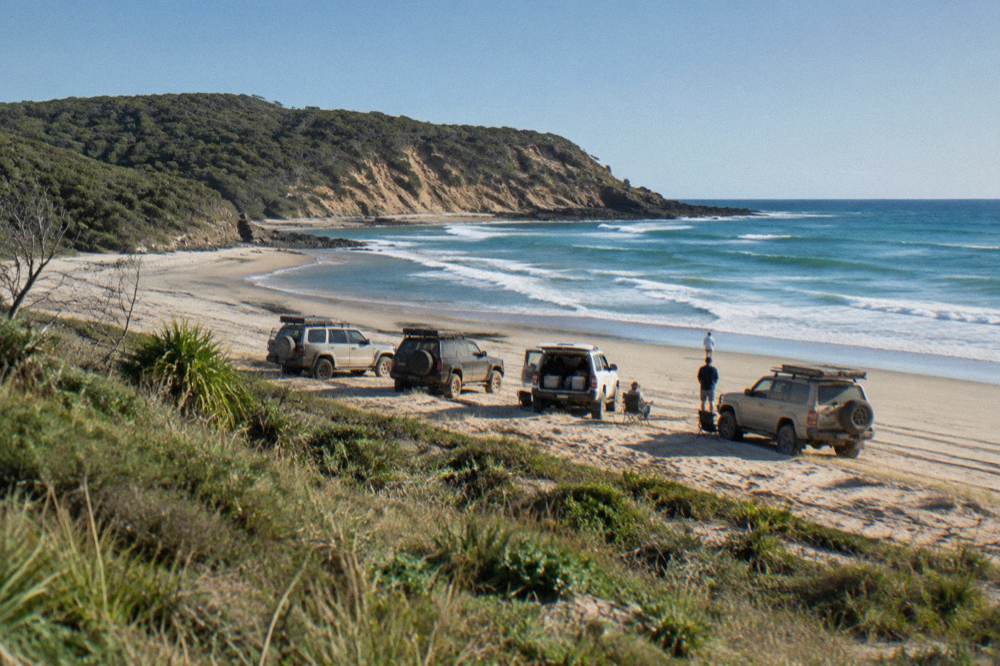
The core problem is that the island's main thoroughfare is the beach itself. The eastern beach acts as the highway, and it is only genuinely drivable around low tide, or within about two hours either side of it. Arrive at the wrong time and the soft sand above the high-tide mark bogs vehicles that would cruise effortlessly two hours later. Queensland Parks advises drivers to travel on the harder sand between the waterline and the high-tide mark, reduce tyre pressures for sand, and re-inflate on hard surfaces, guidance published on its driving on sand page.
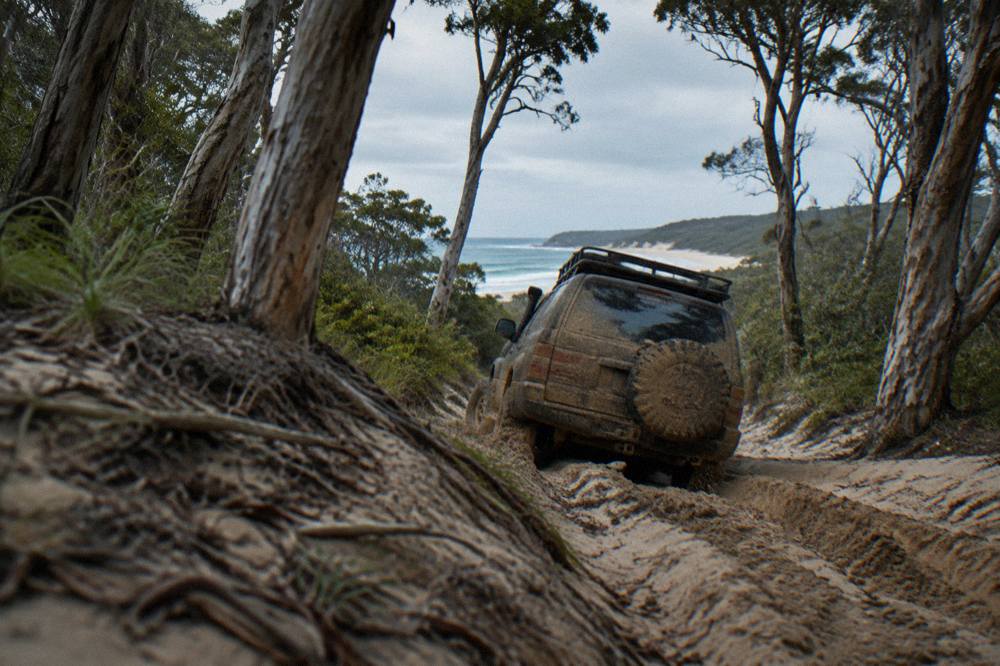
Inland tracks add a second layer of difficulty. They are narrow, deeply rutted in places, and soft after rain, winding through the island's forest between the beach and the lakes. Rollovers and unbelted passengers are listed by Queensland Parks among the common causes of serious accidents on the island, which is why seatbelts are required and ordinary Queensland road rules apply on the sand. For a visitor whose 4WD experience amounts to a gravel road once a year, the honest answer is that a self-drive trip here is a step up in skill, not a novelty. If that sounds like more than you want to take on behind the wheel, our guide to whether a day trip to Fraser Island is worth it lays out how a tour stacks up against driving yourself.
That is the practical fork in the road. Some travellers want the challenge and hire a 4WD, accepting the risk. Many others decide the driving is not the holiday they wanted, and book a seat on a guided coach tour, a small-group 4WD day tour, or a boat trip that never touches the sand at all. A third group splits the difference: a tag-along tour, where you drive a 4WD yourself but follow a professional guide who handles the route, the timing and the recovery calls. If you are weighing that choice now, these three options cover the range.
What Makes Driving On K'gari Hard?
Three things make K'gari driving hard: the surface, the tide and the isolation. The surface is soft sand that demands low tyre pressures and momentum, the tide opens and closes the beach highway twice a day, and help is far away, with unreliable mobile reception and long recovery distances if something goes wrong.
Start with the sand itself. Sand is the least forgiving surface most drivers will ever meet. It rewards steady momentum and punishes hesitation: brake mid-dune or spin the wheels in soft powder and you dig yourself into a hole that takes a shovel, a snatch strap and another vehicle to escape. Tyre pressure is the single biggest lever a driver has, and Queensland Parks tells drivers to reduce pressures within the manufacturer's specifications for sand and to re-inflate before returning to hard surfaces. Getting that wrong is the most common way a self-drive day loses two hours.
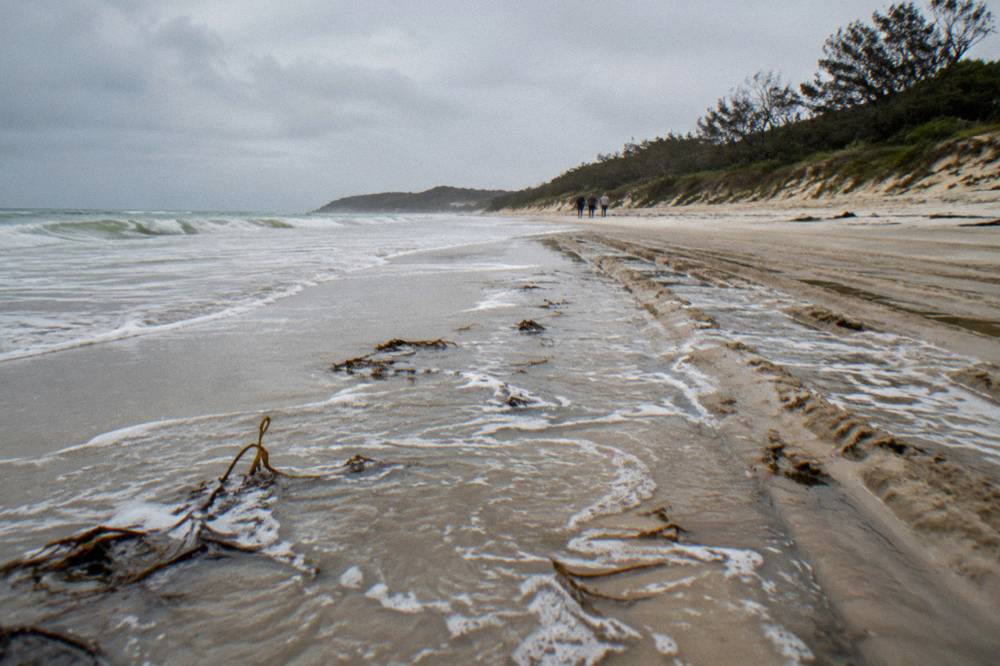
Then there is the tide. The beach is not a road with a fixed width; it is a strip that narrows as the water comes in. Drivers who misjudge the tide can find the safe driving band shrinking to nothing, with soft sand above the high-tide mark the only way forward. Planning a K'gari itinerary is therefore a tide-planning exercise first and a sightseeing plan second, which is why our guide to Fraser Island tide times and beach driving is worth reading before any self-drive trip. Tour drivers do not carry this mental load at all: the operator times the day around the water.
Isolation is the third factor, and it is the one people underestimate. Reception on the island is patchy, so a bogged vehicle can mean a long walk or a long wait. Hire agreements reflect the risk, with heavy excesses for sand damage and strict rules about where the vehicle may go. Against that, every tour on this site's roster includes the crossing and the driving in its price, from the coach day tour with lunch out of Hervey Bay to the two-day tag-along where you drive. The question of who absorbs the risk when things go wrong is really the question this whole article turns on, and if you already know you want the tag-along middle path, the two-day version is the place to start.
Do You Need A 4WD On Fraser Island?
Yes, without exception. Queensland Parks states that every vehicle taken onto K'gari must be a high-clearance 4WD, preferably with low range, because all roads are sand. Two-wheel-drive cars, caravans without clearance and low vehicles cannot complete the crossing and are not permitted on the island's roads.
This is not a soft recommendation. The Manta Ray barge from Inskip Point at Rainbow Beach lands vehicles on the beach at Hook Point, and from that moment every metre of travel is on sand. The SeaLink ferry from River Heads near Hervey Bay lands at the resort jetty, but the moment a vehicle leaves the resort precinct it is on sandy inland tracks. A 2WD car simply cannot make the trip, and hire companies on the mainland will not insure one for the crossing. Unregistered vehicles, quad bikes and ATVs are also not permitted on the island, per the Queensland Parks before-you-visit guidance.
The practical consequence for visitors is that "driving on K'gari" always means "4WD on K'gari". If you own a suitable 4WD, the island is one of Australia's great driving experiences. If you do not, the choices narrow to hiring one, riding in one with a guide, or skipping the driving entirely. Our comparison of 4WD hire versus a guided tour works through the numbers, but the short version is that hire adds a vehicle, a permit, barge logistics and an excess to your risk, while a tour folds all of it into one price.
The tag-along format is the interesting hybrid, and it deserves a proper look. On the Dingos 3 Day K'Gari 4WD Tag-Along Tour, rated 5.0 from 1128 reviews and priced from A$659 per person, you drive a 4WD yourself in a convoy behind a lead guide. The guide carries the local knowledge, calls the tide windows, and is right there when a vehicle needs a hand. One guest review describes it as a "Weekend of a lifetime! We had a fantastic group of people which made the 3 day trip amazing, full of laughs and jokes." Another puts the appeal of the format plainly: "Driving on the beach is so much fun and our tourguide Waide was the best!"
What Are The Road Rules On Fraser Island?
All Queensland road rules apply on K'gari, on the beach as much as on the tracks, and Queensland Parks sets specific island speed limits: 80 km/h maximum on the eastern beach, 30 km/h on inland roads, 40 km/h in beach pedestrian areas, 50 km/h on the Hook Point inland road and 10 km/h in shared-use areas. Seatbelts are required by law.
Because the beach is a road in legal terms, the usual offences carry the usual fines and demerit points. That surprises visitors who picture a beach as a free-for-all. Pedestrians, fishing groups and children share the eastern beach with vehicles, which is why the pedestrian-zone limit drops to 40 km/h and shared-use areas to 10 km/h. The limits are published on the Queensland Parks staying safe page, alongside the driving guidance.
| Where you are driving | Speed limit | Why it matters |
|---|---|---|
| Eastern beach (open stretch) | 80 km/h max | The island's highway, shared with pedestrians and aircraft at times |
| Inland sandy tracks | 30 km/h | Narrow, rutted, blind corners in forest |
| Beach pedestrian areas | 40 km/h | Fishing spots, camp sites and swimming areas |
| Hook Point inland road | 50 km/h | The barge landing link road |
| Shared-use areas | 10 km/h | People walking, cooking and playing beside vehicles |
A valid driver's licence is required, and Queensland Parks notes that rollovers and failure to wear seatbelts are the common causes of serious accidents on the island. Speed on sand is a different skill from speed on bitumen: braking distances are long, the surface can shift under the wheels, and a small error in soft sand at speed becomes a rollover rather than a skid. Guided tours keep this risk off the guest entirely, and tag-along tours keep it within a convoy that sets a sensible pace.
How Do Tides And Weather Change The Driving?
Tides set the schedule for every K'gari beach drive: the best driving window is low tide or within two hours either side of it, and outside that window the hard sand band narrows and the going gets soft and risky. Weather matters too, since rain softens inland tracks and heat makes the mid-day sand looser under the wheels.
The tide is the closest thing K'gari has to a timetable. A driver planning the eastern beach run has to work backwards from the day's low tide, and a trip that ignores it can end with a vehicle caught between the incoming water and the soft dune sand. Queensland Parks is explicit in its guidance: travel at low tide or within two hours either side, drive on the harder sand between the waterline and the high-tide mark, and expect to drop tyre pressures for the soft sections. The conditions on the island also change week to week, and park alerts are updated regularly, so the Queensland Parks conditions and alerts pages are the source to read before any trip. While the tide dictates your schedule on the sand, the question of whether K'gari's waters hold any crocodiles is another thing first-time drivers tend to check before setting off.
Weather compounds the tide problem. After rain, the inland tracks that were firm yesterday can become churned and boggy, and creek crossings deepen. In the warmer months the sand dries out and loosens, which is why experienced drivers prefer the early morning, when the surface is damp and firm and the light is good. None of this is knowledge a first-time visitor can be expected to hold, and it is exactly the knowledge a local guide carries by default.
This is where the tour formats quietly win the argument for most travellers. The nine-hour coach day tour with lunch from Hervey Bay, the small-group 4WD day tours from Noosa and Rainbow Beach, and the multi-day guided trips all have their schedules built by people who read tide tables for a living. The guest never wonders whether the Maheno stretch will be passable at 2 pm; the guide already decided that in the planning office. Difficulty, in the end, is partly just uncertainty, and a tour removes it.
What Does It Cost To Drive Yourself On K'gari?
Self-driving on K'gari carries one fixed published cost before fuel, hire and barge fares: a vehicle access permit, at $61.80 for one month or less or $311.00 for up to a year, which every vehicle must display. Driving without one triggers a $518 penalty infringement notice, and tour guests never need to buy one because the operator holds it.
The vehicle access permit, usually shortened to VAP, is a Queensland Parks requirement for every vehicle driven in the K'gari Recreation Area. It must be bought before arriving, because reception on the island is unreliable and rangers cannot sell them on the sand. The figures are published on the Queensland Parks vehicle permits page. There is no one-day or one-week option: the shortest K'gari permit is the one-month version.
| Cost item | What you pay | Notes |
|---|---|---|
| Vehicle access permit, 1 month or less | $61.80 | Required for every vehicle, bought before arrival |
| Vehicle access permit, up to 1 year | $311.00 | Only worth it for repeat or long trips |
| Driving without a valid permit | $518 penalty | Number plates are recorded |
| Camping permit fees | Set by Queensland Parks, check its camping page | Not printed here; fees change and must be confirmed |
| Barge fares | Set by the operators, check their pages | Not printed here; both crossings run daily |
Around the permit sit the costs this site deliberately does not quote: barge fares set by the operators, camping fees set by Queensland Parks, and 4WD hire rates set by the mainland companies. All of them change, and printing a number here would date the page the month it published. What can be said with confidence is the structural comparison: a self-drive trip stacks permit, barge, fuel, hire and camping fees, plus an insurance excess if the sand wins, while the all-inclusive tours on this site bundle the crossing, the permits and the park fees into one printed from-price, such as the coach day tour from A$279 per person with lunch and park fees included.
Is A Tag-Along Tour A Good Way To Learn The Sand?
Yes, a tag-along tour is the best-supported way to drive K'gari yourself, because you get the steering wheel and the scenery while a professional guide ahead of you handles the route, the tide windows and the recovery calls. You still drive, but the decisions that make the island difficult are made by someone who makes them every week.
The format works like this: the lead vehicle sets off, the convoy follows in its tracks, and the guide reads the conditions for everyone behind. Where a solo hire driver has to guess whether that soft patch ahead is passable, a tag-along driver simply follows the line the guide took. Where a solo driver who bogs is alone with a shovel, a tag-along driver has a convoy and a crew within minutes. The difficulty of the island has not gone away, but it has been shared out across a group and a professional.
The two-day version, the Dingos 2 Day K'Gari 4WD Tag-Along Tour, rated 4.8 from 106 reviews and priced from A$589 per person, is the shorter of the two Dingos tag-along trips on the roster, running from Rainbow Beach with meals listed and free cancellation, with the exact cutoff shown on the live booking page. It suits travellers who want the driving experience without committing three days. The three-day version covers more of the island and has the deeper review pool, and both are listed on the tag-along hub alongside the guided options.
The alternative for visitors who conclude that they do not want to drive at all is the fully guided small-group day tour. The Fraser Experience Small Group Full Day Guided Tour, rated 4.8 from 102 reviews and priced from A$330 per person, caps the group at 17 and includes lunch and pickup in Hervey Bay, so the sand stays someone else's job from the first minute to the last.
Should You Hire A 4WD Or Take A Tour?
Hire suits confident, experienced sand drivers who want full independence and accept the risk, the permit and the excess. A tour suits everyone else, and the honest arithmetic is that a from-price like A$279 for a coach day tour with lunch, park fees and the crossing included is often close to what a self-drive day costs once fuel, barge, permit and hire are stacked up.
The decision really turns on one question: is the driving itself the point of the trip? For some travellers it is, and no tour will replace the satisfaction of driving their own vehicle up the eastern beach at low tide. For those travellers, the honest advice is to hire a proper high-clearance 4WD, buy the permit before arrival, plan strictly around the tide, and read the Queensland Parks driving guidance cover to cover. The island rewards preparation and punishes improvisation.
For everyone else, the tour formats rank by how much driving you want to do yourself. The tag-along trips put you behind the wheel with a safety net. The small-group guided tours put you in a passenger seat with a driver-guide. The large coach tours put you in a big comfortable vehicle with a full commentary, and the boat tours from Hervey Bay skip the sand entirely, reaching remote beaches by water instead. The 4.8-rated coach day tour from Hervey Bay, from A$279 per person, is the most reviewed option on the roster with 3893 reviews, and the Rainbow Beach coach tour's guest feedback captures the appeal: "A great day with great service, an excellent driver with knowledge, and sensational lunch and snacks."
There is also a middle path worth naming: arrive as a passenger on a day tour first, learn how the island works, and come back another year for a tag-along or a self-drive trip. Plenty of visitors do exactly that. The island is not going anywhere, and the second visit is always the better one because the first taught you what the tide does (see Whitsundays Or K'gari). Whatever you choose, the listings on Kgari Island Tours state clearly what is included in each price, so there is no guesswork about permits, crossings or lunch.
If you are still deciding between the formats, these three cover the range from driving yourself in a convoy to riding as a passenger with a guide.
Common Questions About Driving On Fraser Island
Is Driving On Fraser Island Difficult?
Yes. Every road on K'gari is sand or beach, Queensland Parks states the tracks suit only high-clearance 4WD vehicles with low range, and the beach highway is only reliably drivable around low tide. It is a genuine step up in driving skill, which is why so many visitors choose a guided or tag-along tour instead of hiring.
Do You Need A 4WD To Drive On Fraser Island?
Yes, without exception. All vehicles on the island must be high-clearance 4WD, preferably with low range, because the barge lands on sand and every route from there is sand. Two-wheel-drive cars, caravans without clearance, quad bikes and ATVs are not permitted.
What Is The Speed Limit On Fraser Island Beach?
The eastern beach limit is 80 km/h, dropping to 40 km/h in beach pedestrian areas and 10 km/h in shared-use areas. Inland tracks are 30 km/h, and the Hook Point inland road is 50 km/h. All Queensland road rules apply, including seatbelt requirements.
When Is The Best Time To Drive On The Beach?
Low tide, or within about two hours either side of it, is the best window, on the harder sand between the waterline and the high-tide mark. Outside that window the drivable band narrows and the sand above the high-tide mark is soft and slow.
Do Tour Guests Need A Vehicle Access Permit?
No. The operator holds the permit and the listings state that National Park fees are included. The permit, at $61.80 for one month or less, is only needed for private vehicles driven on the island.
Can You Learn To Drive On Sand With A Tag-Along Tour?
Yes, that is the format's main appeal. You drive your own 4WD in a convoy behind a professional guide who chooses the route, times the tides and leads any recovery, so the island's difficulty is managed rather than faced alone.